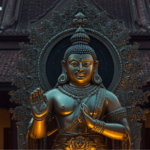
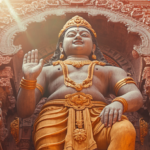
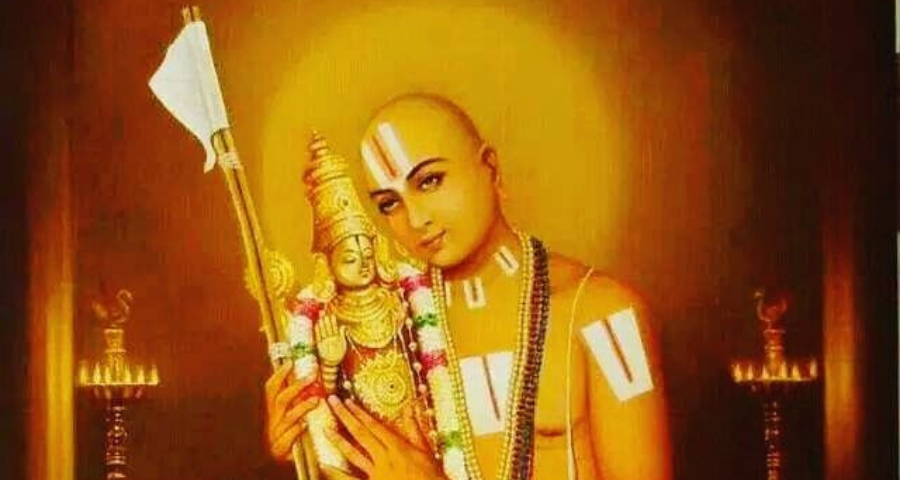
🕉️ Ramanujacharya — The Teacher of Devotion and Divine Grace
Where knowledge meets devotion,
and surrender opens the path to liberation.
Ramanujacharya stands among the most transformative spiritual teachers in Indian philosophy. Emerging in the 11th century, he reshaped the landscape of Vedantic thought by presenting a vision where love, devotion, and surrender to the Divine become central to spiritual realization.
While earlier philosophers emphasized pure metaphysical inquiry, Ramanujacharya brought the heart into philosophy. For him, liberation was not merely intellectual understanding — it was a living relationship with the Divine.
His teachings formed the foundation of Viśiṣṭādvaita Vedānta, a system that harmonizes unity with diversity.
🌍The Birth of a Spiritual Reformer
Ramanujacharya was born in 1017 CE in Sriperumbudur, Tamil Nadu, into a family devoted to Lord Vishnu. From an early age, he displayed extraordinary intelligence and spiritual sensitivity.
His parents, Asuri Keshava Somayaji and Kantimati, ensured that he received traditional Vedic education. Even as a young student, Ramanuja demonstrated both sharp philosophical insight and deep compassion for others.
These two qualities — wisdom and compassion — would later define his entire mission.
📜 Early Education and Philosophical Awakening
Ramanuja initially studied under the scholar Yadava Prakasha, who taught Advaita Vedānta.
However, Ramanuja struggled with interpretations that described the world as purely illusory. His heart resonated with a more personal and devotional vision of reality.
For him, the universe could not be dismissed as mere illusion. Creation appeared to him as a real expression of the Divine presence.
This difference eventually led him to pursue his own philosophical path.
🔱 The Vision of Viśiṣṭādvaita
Ramanujacharya’s central teaching is known as Viśiṣṭādvaita, meaning “qualified non-dualism.”
According to this philosophy:
The Divine (Nārāyaṇa) is the ultimate reality.
But the universe and individual souls are real parts of that divine existence.
The relationship can be compared to:
The body and the soul.
The cosmos and all beings exist within God, while God transcends them.
Thus unity exists — but diversity is also meaningful.
🌺The Path of Bhakti
Ramanujacharya emphasized Bhakti (devotion) as the most accessible path to spiritual liberation.
Rather than relying only on intellectual knowledge, he taught that sincere devotion and love for the Divine purify the heart.
Bhakti is not emotional sentiment alone.
It is:
• constant remembrance of the Divine
• loving service
• surrender of ego
• trust in divine grace
Through devotion, the individual soul gradually reconnects with its divine source.
🙏The Power of Surrender (Prapatti)
One of Ramanuja’s most important teachings is Prapatti, or total surrender to God.
He taught that spiritual liberation does not depend solely on personal effort. Instead, it also arises through divine grace.
Prapatti means placing complete trust in the Divine — just as a child trusts its mother.
In this surrender, fear dissolves.
The seeker realizes that the Divine presence is always guiding and protecting the soul.
🛕Temple Tradition and Sacred Community
Ramanujacharya played a major role in organizing temple worship and devotional communities.
He helped structure rituals, establish temple administration, and encourage collective devotion. Temples became centers of spiritual learning, service, and cultural continuity.
Through these reforms, he strengthened the connection between philosophy and everyday spiritual practice.
Sacred spaces became living environments where devotion could flourish.
🌿 Equality in Spiritual Access
One of Ramanujacharya’s most revolutionary contributions was his emphasis on spiritual inclusiveness.
He believed that divine grace should be accessible to all people, regardless of caste or social background.
Tradition recounts how he openly shared sacred mantras and teachings that were previously restricted.
For Ramanuja, devotion mattered more than birth or status.
This perspective helped expand the Bhakti movement across South India.
📚 Sacred Texts and Philosophical Works
Ramanujacharya authored several influential philosophical works that shaped Vedantic thought.
Among the most important are:
• Śrī Bhāṣya — a detailed commentary on the Brahma Sūtras
• Vedārtha Saṅgraha — a synthesis of Upanishadic teachings
• Bhagavad Gītā Bhāṣya — commentary on the Bhagavad Gita
Through these writings, Ramanuja articulated a system where devotion, knowledge, and ethical living are harmonized.
🔄 The Relationship Between Soul and God
According to Ramanujacharya, the soul (jīva) is eternally distinct yet inseparable from God.
The soul is not identical to the Divine in an absolute sense, but it belongs to God and depends upon Him.
This relationship resembles:
• a ray and the sun
• a wave and the ocean
• a body and its indwelling life
Thus individuality is not erased — it becomes fulfilled through divine connection.
🧘Liberation Through Loving Union
Liberation in Ramanujacharya’s philosophy is not absorption into impersonal consciousness.
Instead, Mokṣa is eternal communion with the Divine.
The liberated soul experiences:
• infinite peace
• divine presence
• loving service to God
This vision transforms liberation into a relationship rather than a disappearance.
The soul does not lose itself — it discovers its true home.
🌏 Influence on the Bhakti Movement
Ramanujacharya’s teachings deeply influenced the Bhakti traditions of South India and beyond.
His work strengthened the devotional traditions connected with:
• Vishnu
• the Alvar saints
• temple-based worship
Later spiritual teachers and movements drew inspiration from his emphasis on personal devotion and divine grace.
Through these traditions, millions of devotees continue to follow the path he illuminated.
🕊️ Legacy Across Centuries
More than nine hundred years after his lifetime, Ramanujacharya’s influence remains powerful.
His philosophy continues to guide:
• temple traditions
• devotional communities
• philosophical study
• spiritual practice
Pilgrimage sites connected to him remain important centers of learning and devotion.
His teachings continue to remind seekers that spiritual realization can be both intellectual and deeply heartfelt.
🌌 Closing Reflection — The Path of Loving Surrender
Ramanujacharya showed that the universe is not separate from the Divine.
Creation is sacred.
Life is meaningful.
Devotion is transformative.
Through love, humility, and surrender, the soul gradually awakens to its divine origin.
Where pure philosophy sometimes speaks only to the mind, Ramanujacharya opened a path where the mind understands, the heart loves, and the soul returns to the Divine.
In this harmony of wisdom and devotion, spiritual life becomes not a distant ideal — but a living relationship with the sacred. 🕉️✨
https://www.instagram.com/sanathanayatra/
https://www.facebook.com/profile.php?id=61583124183564
https://www.linkedin.com/company/sanathana-yatra/
https://x.com/SanathanaY