
🌅 The Eternal Call of the Soul
The Katha Upanishad stands as one of humanity’s most profound spiritual dialogues. It is not merely a text. It is not only philosophy. It is a living transmission — a conversation between innocence and infinity, between mortality and the eternal.
In this Upanishad, a young seeker named Nachiketa stands before Yama, the Lord of Death himself. Instead of fear, he carries inquiry. Instead of trembling, he carries clarity.
He asks the question most of humanity avoids:
“What happens after death?”
This website is a sacred portal — a bridge between scripture and lived experience. Here, we unite:
- 📜 Scriptural Wisdom
- 🧘 Meditative Practice
- 🌄 Sacred Travel
- 🔥 Ritual Immersion
- 🌍 Transformational Pilgrimage
📜 Scriptural Identity & Sacred Context
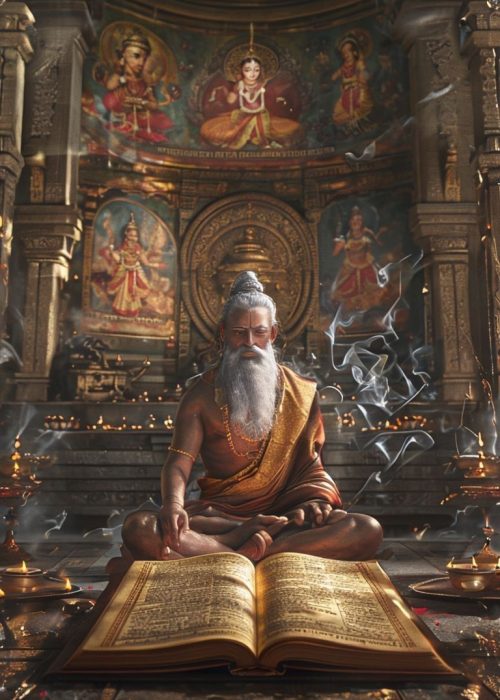
The Katha Upanishad belongs to the Krishna Yajurveda, one of the four Vedas of ancient India. It is considered a Principal Upanishad and later became foundational for Vedantic philosophy.
Its influence extends into the Bhagavad Gita, especially in teachings regarding the immortality of the Self.
Unlike abstract philosophical treatises, the Katha Upanishad is dramatic and poetic. It speaks through dialogue — making it timeless, relatable, and spiritually electrifying.
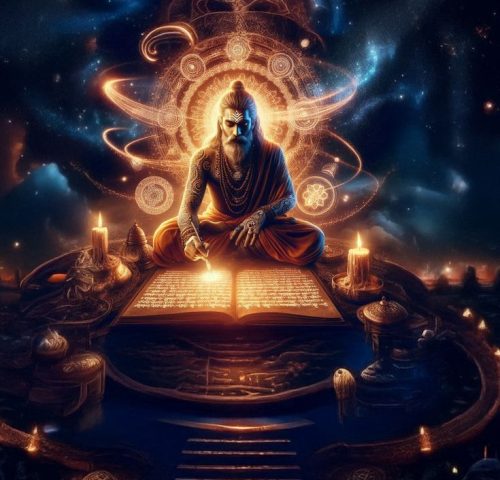
🔥 The Sacred Narrative – The Fire of Inquiry
🏹 The Sacrifice
The story begins with a Vedic sacrifice performed by Sage Vajashrava. Yet the offerings lack sincerity. His son, Nachiketa, notices.
With pure integrity, he questions:
“Father, to whom will you give me?”
In anger, the father responds:
“To Death, I give you.”
🌌 Journey to the Abode of Yama
Nachiketa travels to the realm of Yama and waits three days without hospitality. Upon returning, Yama offers three boons.
- Reconciliation with his father
- Knowledge of sacred fire ritual
- The secret of what lies beyond death
The third boon is revolutionary.
Yama attempts to distract him with:
- Wealth 💰
- Long life 🏰
- Celestial pleasures 🎶
- Divine maidens 🌺
But Nachiketa refuses.
He chooses Shreya (the Good) over Preya (the Pleasant).
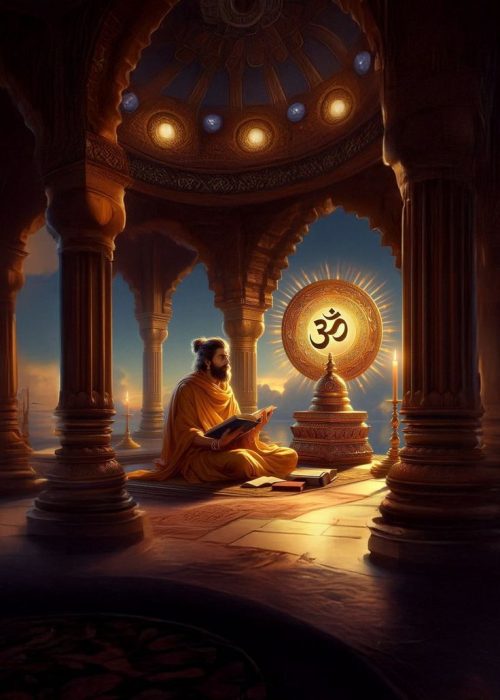
🧠 Core Philosophical Teachings
🚗 The Chariot Allegory
The Upanishad presents a profound metaphor:
- 🚘 Body = Chariot
- 🐎 Senses = Horses
- 🧵 Mind = Reins
- 🧠 Intellect = Charioteer
- ✨ Self = Master
If the senses are uncontrolled, the soul wanders.
If guided by discrimination, it reaches liberation.
🌿 The Nature of the Self (Ātman)
Yama declares:
- The Self is unborn.
- It does not die.
- It is subtler than the subtle.
- Greater than the great.
This realization removes fear of death.
⚖️ Shreya vs Preya
Every human moment presents two paths:
- 🌸 Preya – Immediate pleasure
- 🔥 Shreya – Ultimate liberation
The Upanishad teaches discernment.
🌄 Sacred Geography & Spiritual Travel Experience
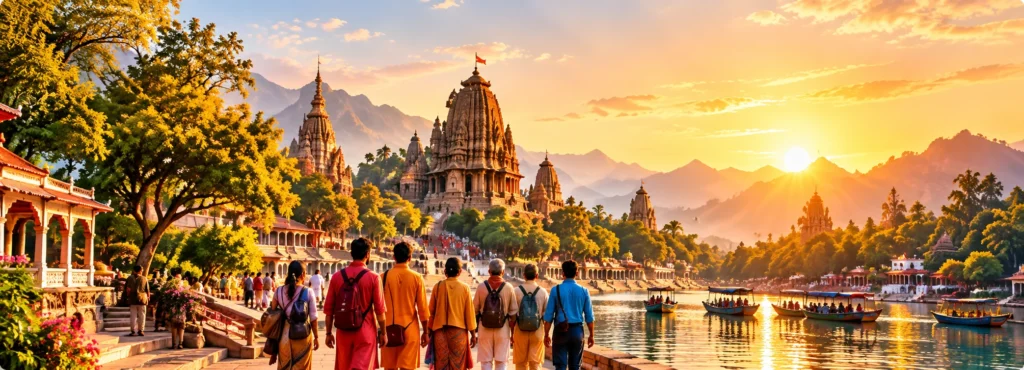
Though the Katha Upaniṣad speaks in metaphysical language, its wisdom was not born in abstraction. It emerged from forests, rivers, and mountains where life was lived with attentiveness and restraint. Vedic sages did not separate knowledge from environment; they allowed nature to refine perception. In such spaces, silence was not emptiness but a teacher, and discipline arose naturally from the rhythm of the land. To approach Nachiketa’s inquiry fully, one must walk where listening becomes deeper than thinking, and awareness sharpens without effort.
Sacred geography, therefore, is not tourism—it is pedagogy through landscape. Certain terrains soften the dominance of the senses and steady the restless mind. Forests cultivate simplicity, rivers reveal impermanence, and mountains instill humility and endurance. In these settings, questions of death and immortality lose their philosophical distance. They become intimate, immediate, and unavoidable, arising not from curiosity alone but from lived encounter.
When the teaching unfolds within such landscapes, the intellect does not merely analyze—it aligns. Concepts turn into recognition, and inquiry becomes embodied rather than theoretical. The Katha Upaniṣad ceases to feel ancient or remote. Nachiketa’s dialogue with Death echoes inwardly, as a present and personal call toward discernment, detachment, and the discovery of the Self.
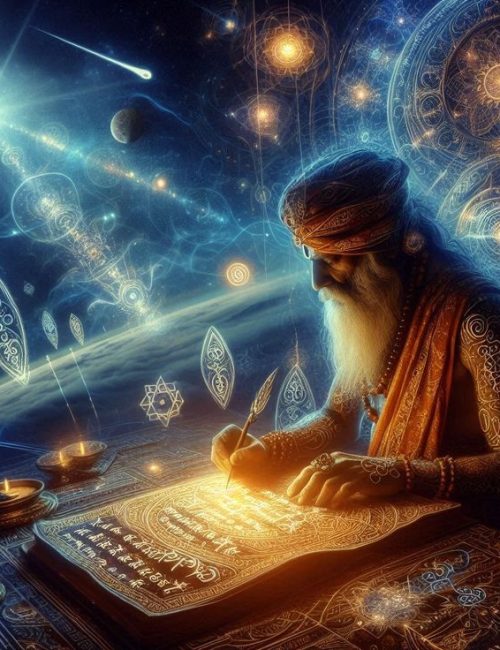
🛕 SPIRITUAL TRAVEL SERIES
“Walk the Path of Nachiketa” ✈️ How to Travel to Learn the Katha Upaniṣad This journey is designed not as a sightseeing itinerary, but as a progressive inner curriculum, where each location corresponds to a layer of the Upaniṣadic teaching.
🛬 Step 1: Arrival in India — Entering the Field of Inquiry
India is not approached as a country, but as a continuum of sacred memory.
Primary Entry Points
✈️ Delhi International Airport
✈️ Varanasi International Airport
✈️ Dehradun Airport
Upon arrival, seekers are gently transitioned from the pace of modern life into a contemplative rhythm.
Our team facilitates:
Airport pickup 🚗 — quiet, grounded arrival
Visa support guidance 📄 — removing logistical friction
Retreat orientation kit 📦 — maps, chants, silence guidelines, and study texts
The first teaching begins here: slowness is not inefficiency; it is accuracy.
🏞️ Step 2: Sacred Locations of Direct Transmission
🏔️ Himalayan Vedic Retreats — Facing the Question of Death
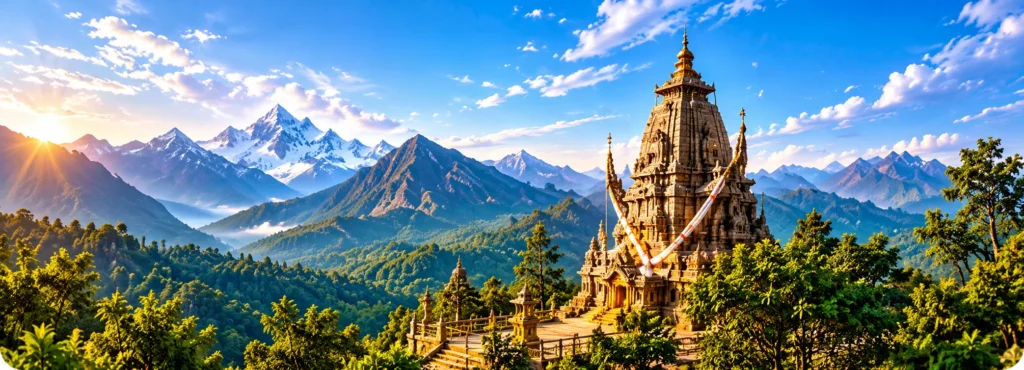
The Himalayas were chosen by sages not for beauty alone, but for ontological clarity. At high altitudes, impermanence becomes undeniable, and the ego naturally loosens its grip.
Why here?
Because the Katha Upaniṣad begins with death—not as fear, but as the doorway to truth.
Practices include:
Riverbank sunrise meditation 🌅 — learning to watch life arise without grasping
Forest contemplation walks 🌲 — training the mind to settle without distraction
Guided scripture chanting 📜 — allowing sound to shape awareness
Fire ceremony immersion 🔥 — witnessing offering, surrender, and transformation
Silence here is not emptiness; it is instruction.
🌊 Ganga River Pilgrimage — Learning to Let Go
The river is the Upaniṣad’s moving metaphor: ever-flowing, never possessed.
Meditation by sacred rivers dissolves the illusion of permanence. The Ganga, in particular, confronts seekers with the truth Nachiketa faced—that death is not the opposite of life, but its completion.
Practices include:
Death-awareness meditation — not morbid, but liberating
Letting-go rituals — symbolic release of identities and fears
Guided silence periods — where insight arises unforced
Here, detachment is not taught. It is felt.
🌿 Gurukul Immersion Experience — Becoming a Student Again
To understand Nachiketa, one must briefly become him.
In the Gurukul setting, seekers step into the rhythm of ancient studentship—where learning was embodied, repetitive, and devotional.
Daily life includes:
Early morning Vedic chanting — tuning breath, sound, and mind
Scriptural memorization — letting wisdom imprint beyond intellect
Fire rituals — reinforcing discipline and continuity
Vegetarian sattvic meals — supporting clarity and restraint
There are no spectators here. Only participants.
✨ The Deeper Purpose of the Journey
This pilgrimage does not promise answers.
It cultivates readiness.
When the body is aligned with place,
the senses calmed by environment,
the mind steadied by rhythm,
and the intellect sharpened by inquiry—
the teaching of the Katha Upaniṣad no longer feels ancient.
It feels immediate.
Nachiketa’s question becomes your own.
And the path reveals itself—not as belief, but as recognition. 🕊️
🧘 Retreat Programs Based on the Three Boons
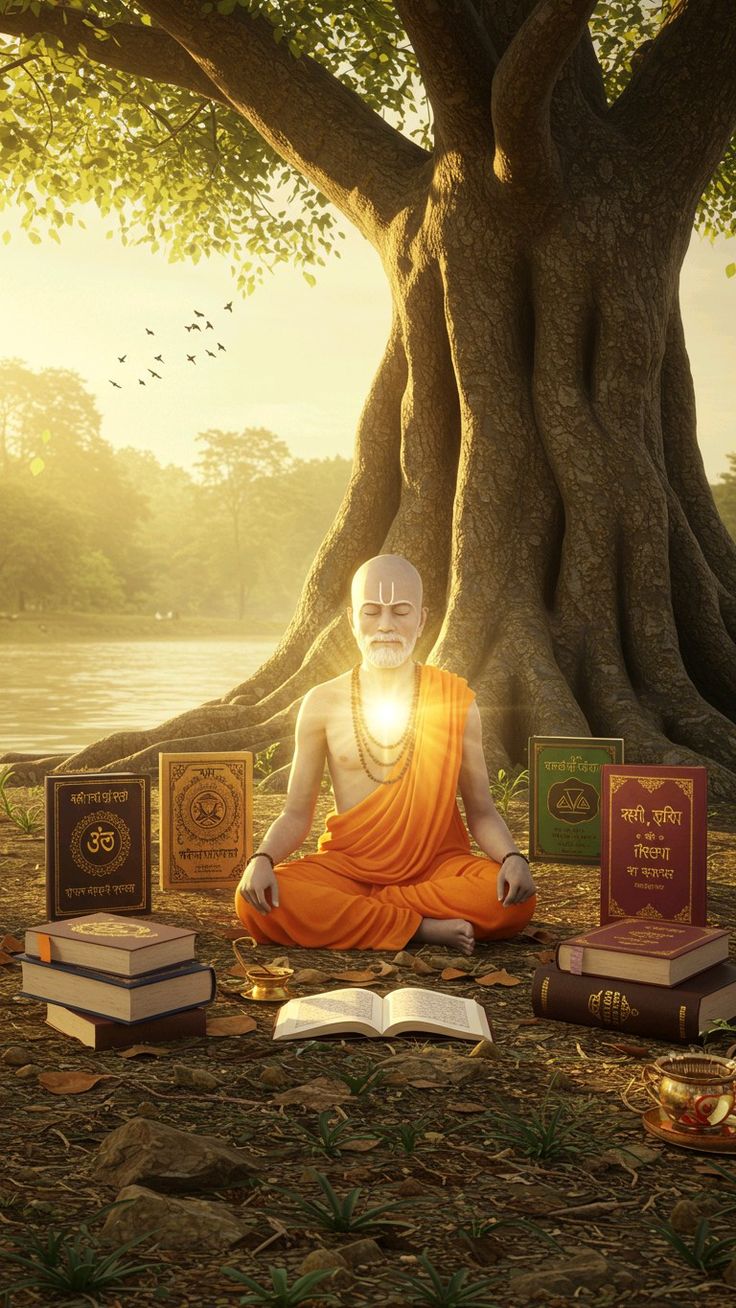
🔥 7-Day Nachiketa Immersion
Day 1–2: Questioning Ritual & Ego
- Exploring sincerity
- Self-reflection journaling
- Guided philosophical dialogue
Day 3–4: Sacred Fire Knowledge
- Agni symbolism workshop
- Chanting sessions
- Ritual participation
Day 5–6: Death Contemplation
- Impermanence meditation
- Silent retreat
- Forest solitude
Day 7: Integration
- Personal life realignment
- Closing ceremony
- Certification
🌌 14-Day Yama Dialogue Advanced Retreat
Deep study of:
- Soul continuity
- Mind control
- Intellect purification
- Detachment practice
Includes night meditation under open sky.
🕯️ 30-Day Liberation Sadhana
Designed for serious seekers.
Includes:
- Daily scripture recitation
- Sanskrit basics
- Meditation intensives
- Karma purification rituals
- Psychological shadow work
🌍 International Study Path
For global participants:
📡 Online Modules
- Recorded verse explanations
- Chanting pronunciation
- Live Q&A sessions
🏡 Residential Completion (India)
Final immersion in sacred geography.
🏨 Accommodation & Travel Infrastructure
We offer:
- 🛏️ Ashram dormitories
- 🏡 Private cottages
- 🌄 Mountain eco-retreats
- 🌊 Riverfront meditation villas
Meals are vegetarian and sattvic.
🛡️ Spiritual Services Disclaimer
Our travel and retreat services are educational and experiential in nature.
⚖️ We do not claim:
- To provide supernatural guarantees
- To promise liberation
- To replace medical or psychological treatment
- To offer instant enlightenment
🕉️ The Katha Upanishad is a philosophical scripture. Interpretations shared are based on traditional Vedantic commentary and scholarly study.
Travel experiences are designed for:
- Cultural immersion
- Spiritual education
- Personal growth
Participants are responsible for:
- Health disclosures
- Travel insurance
- Visa compliance
🧭 Blending Scripture & Travel
We do not separate philosophy from place.
The Katha Upanishad speaks of:
- Inner death → We guide symbolic letting-go rituals
- Self-knowledge → We offer silent Himalayan retreats
- Fire ritual → We conduct authentic Vedic yajnas
- Mind mastery → We train in meditation
The scripture becomes lived experience.
🎓 Academic & Research Programs
We collaborate with:
- Sanskrit scholars
- Vedanta teachers
- Comparative philosophy experts
Annual Symposium:
- Death & Consciousness
- Psychology of the Self
- Eastern-Western metaphysical comparison
🌅 Why Travel to Learn?
Reading gives knowledge.
Travel gives transformation.
When you meditate beside sacred rivers, when you chant in mountain silence, when you sit before ritual fire — the verses breathe.
Nachiketa did not study from distance.
He walked to Death’s door.
🌿The Modern Relevance
In a world of:
- Anxiety
- Fear of loss
- Attachment
- Consumer distraction
The Katha Upanishad offers clarity:
- You are not the body.
- You are not your possessions.
- You are not your fears.
You are the witness.