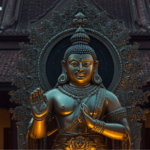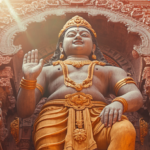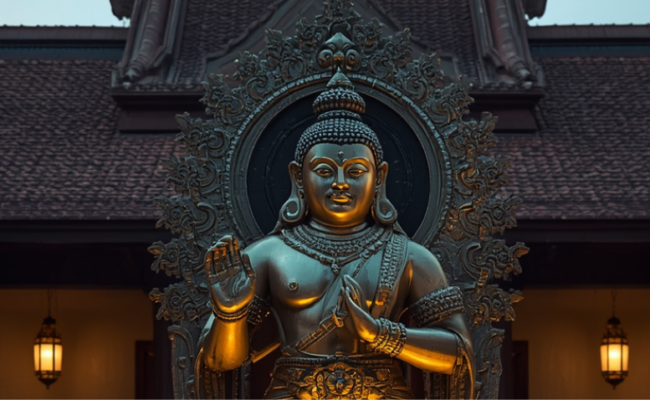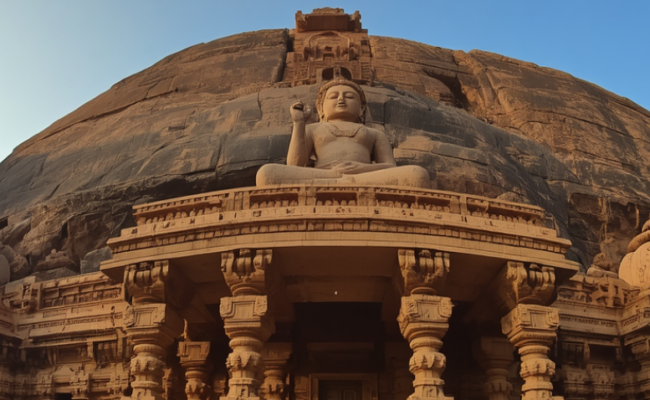
🕉️ Ajitanatha — The Conqueror of the Inner Self
Where victory is not over others, but over attachment, desire, and illusion 🌿✨
An Invocation — When Conquest Changes Direction
There are victories that win kingdoms.
There are victories that earn fame.
And then — there is a victory so profound that it leaves no enemy behind.
A victory over anger.
Over greed.
Over ignorance.
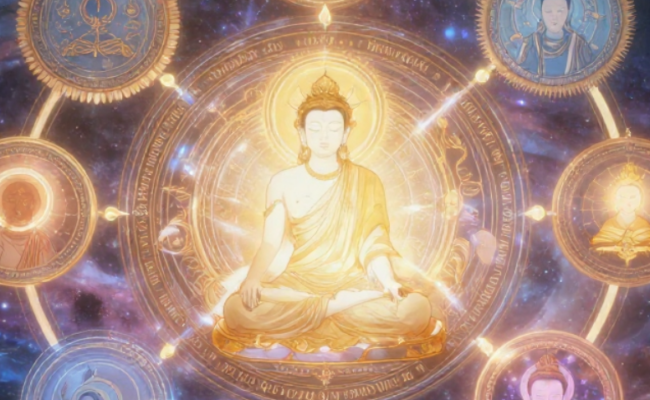
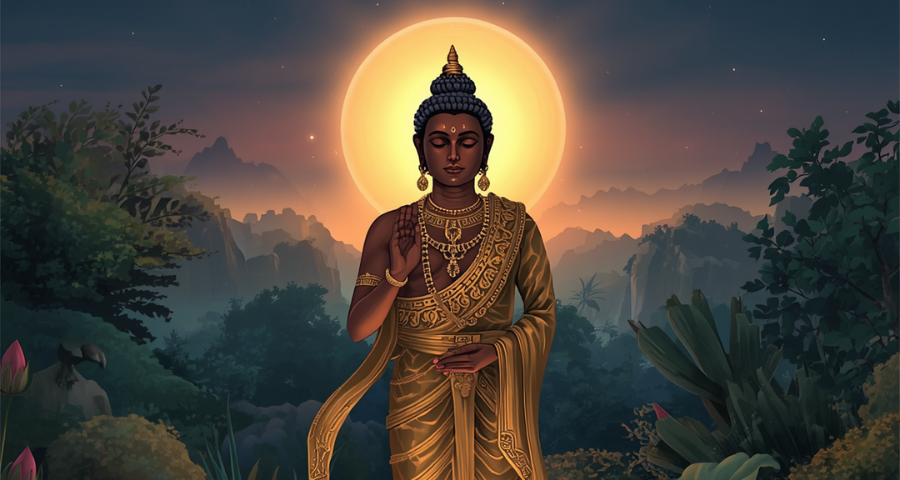
Ajitanatha stands as a symbol of this higher conquest.
His life reminds us that the greatest battles are fought within.
The Meaning of His Name — The Unconquered One
The name Ajitanatha means “The Unconquered Lord.”
Yet he was not unconquered because of physical strength.
Not because of armies.
Not because of power.
He became unconquered because he mastered the forces that enslave the mind.
The person who conquers others gains temporary success.
The person who conquers the self gains lasting freedom.
The Second Tirthankara
In Jain tradition, Ajitanatha is revered as the second Tirthankara.
A Tirthankara is not merely a teacher.
A Tirthankara is a ford-maker.
One who discovers a crossing from bondage to liberation and reveals that path to others.
They do not create truth.
They uncover it.
A Life of Prosperity
Tradition describes Ajitanatha as being born into royal circumstances.
He possessed privilege.
Comfort.
Opportunity.
Yet, like many enlightened beings, he eventually saw the limitations of worldly success.
Wealth can satisfy desires.
But it cannot satisfy the soul’s deepest longing.
The Awakening to Impermanence
Ajitanatha observed a truth that every seeker eventually encounters:
Everything changes.
Youth becomes age.
Possessions come and go.
Pleasures arise and fade.
Nothing material remains permanent.
This realization did not create despair.
It created clarity.
Renunciation — Choosing the Higher Path
Having understood the transient nature of worldly life, Ajitanatha chose renunciation.
This was not rejection of the world.
It was freedom from attachment to it.
He left behind external power in pursuit of inner awakening.
The journey inward became his true kingdom.
The Discipline of Self-Mastery
Ajitanatha emphasized self-control.
Not repression.
Not punishment.
But mastery.
The uncontrolled mind chases endless desires.
The disciplined mind discovers peace.
Freedom is not doing whatever one wishes.
Freedom is no longer being controlled by impulses.
Ahimsa — The Power of Nonviolence
Like all Tirthankaras, Ajitanatha embodied Ahimsa, the principle of nonviolence.
Not merely avoiding physical harm.
But cultivating compassion toward all living beings.
Every life has value.
Every soul seeks happiness.
Violence creates bondage.
Compassion creates liberation.
Detachment as Strength
Many people mistake detachment for indifference.
Ajitanatha taught otherwise.
Detachment is not absence of care.
It is freedom from possessiveness.
You can love deeply without clinging.
You can participate fully without becoming trapped.
True strength lies in engagement without attachment.
The Path of Inner Purification
The soul, according to Jain philosophy, is naturally pure.
Yet it becomes obscured by karmic accumulation.
Anger clouds it.
Pride clouds it.
Deceit clouds it.
Greed clouds it.
Spiritual practice removes these coverings.
Just as a mirror shines when cleaned,
the soul reveals its radiance when purified.
Omniscience — Perfect Awareness
Through intense spiritual discipline and realization, Ajitanatha attained Kevala Jñāna — perfect knowledge.
This is not intellectual information.
It is direct awareness of reality.
Nothing hidden.
Nothing distorted.
Pure, unobstructed knowing.
Such awareness arises when ignorance completely dissolves.
Liberation Beyond Birth and Death
The ultimate goal of Ajitanatha’s path was Moksha.
Freedom from the cycle of birth and death.
Freedom from karmic bondage.
Freedom from ignorance.
Liberation is not reaching another place.
It is awakening to the soul’s true nature.
Infinite knowledge.
Infinite perception.
Infinite peace.
The Teaching — Conquer Yourself
Ajitanatha leaves a timeless message:
Before seeking to change the world,
understand yourself.
Before conquering obstacles,
conquer anger.
Before seeking control,
master desire.
The greatest achievement is not external success.
It is inner freedom.
🕉️ Closing Reflection — The Victory That Cannot Be Lost
Ajitanatha invites us to reconsider what it means to win.
Fame fades.
Power shifts.
Possessions disappear.
But self-mastery endures.
The unconquered one is not the person who defeats others.
It is the one who is no longer defeated by fear, attachment, or ignorance.
And when the inner battle is won,
the soul stands free—
peaceful, radiant, and unconquerable forever 🌿✨🪔