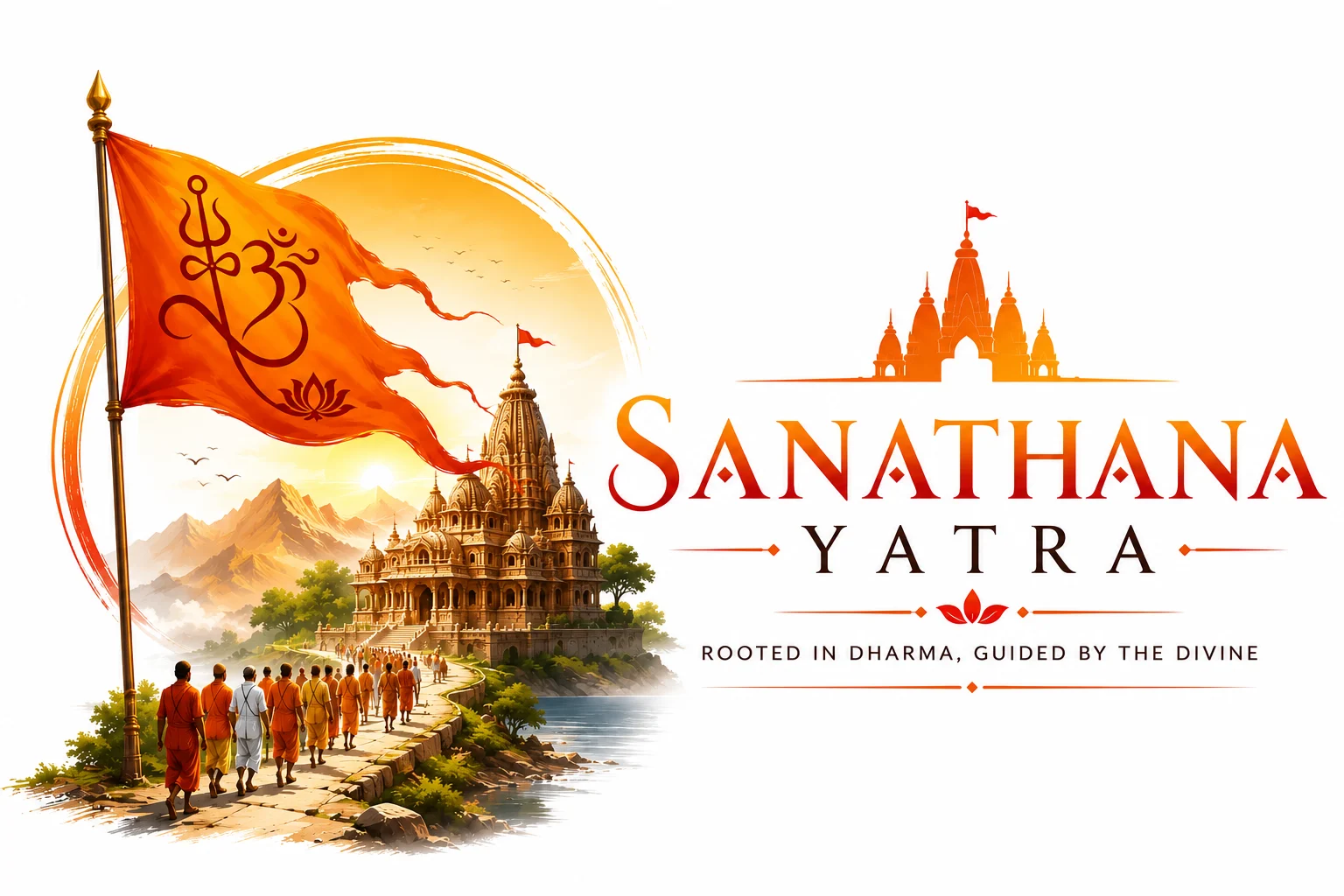

🕉️ Spiritual Energy & Vibrational Significance of Varanasi
Varanasi is not merely a city; it is a living field of cosmic consciousness. Among all sacred cities of Bhāratavarṣa, Varanasi holds a timeless position where life, death, liberation, and divine knowledge intersect. Saints, sages, Nātha yogis, scholars, and seekers across millennia have described Varanasi as a place where the boundary between the mortal and the eternal dissolves. Pilgrims often report a deep stillness here — not the silence of absence, but the silence of awakening.
The vibrational frequency of Varanasi is profoundly connected to Shiva, worshipped here as Kashi Vishwanath, the Lord who grants liberation. Unlike other sacred kṣetras where the energy nurtures devotion or prosperity, Varanasi’s energy is transformative and awakening. It confronts illusions, dissolves fear, and gently guides the soul toward spiritual clarity. This is why seekers carrying existential questions, spiritual longing, ancestral duties, or the desire for mokṣa are instinctively drawn here.
The presence of the sacred Ganges, the ancient spiritual axis of Varanasi, and thousands of years of uninterrupted mantra, yajña, cremation rites, meditation, and temple worship have charged this kṣetra like a cosmic gateway. The sanctum of the Kashi Vishwanath Temple radiates an energy refined through centuries of devotion and renunciation. One does not “visit” Varanasi casually — the city transforms you whether you seek it or not. Even a brief darśan or a moment by the ghāts can leave lasting impressions, inner release, or profound awareness of life’s impermanence. This is why Varanasi is often described as a city of living liberation — where time slows, karma dissolves, and the soul remembers its eternal nature. 🕉️✨
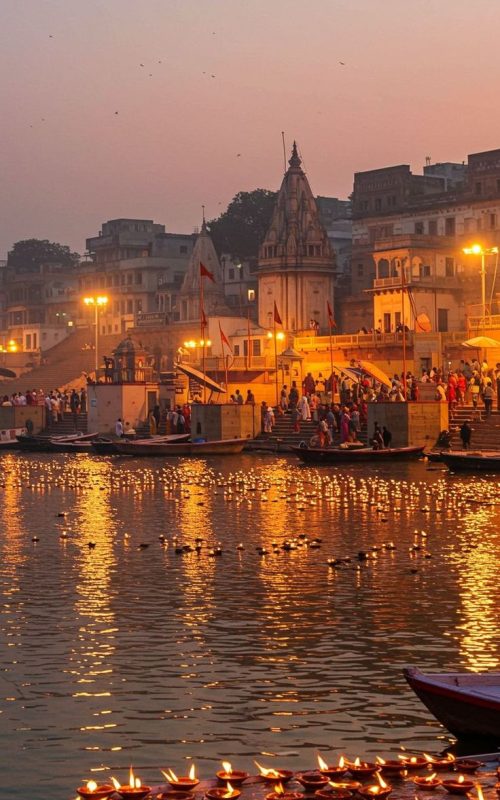
⏳ Varanasi in Vedas, Purāṇas & Itihāsas
Varanasi’s sacredness is not a later construction; it is rooted in the earliest layers of Bhāratīya civilization. References to this eternal city appear in ancient Vedic literature and later in Purāṇic texts as Kāśī — the “City of Light,” believed to be established by Shiva Himself. Texts such as the Skanda Purana, Kashi Khanda, and Brahmanda Purana describe Kāśī as a divinely ordained kṣetra where the cycle of birth and death can be transcended through devotion and spiritual awareness.
Itihāsic traditions connect Varanasi with sages, kings, and seekers who treated the city not merely as a political center, but as a sacred seat of knowledge and liberation. Across centuries, rulers, scholars, and ascetics protected its temples and learning traditions, understanding that the spiritual vitality of Kāśī was inseparable from the preservation of dharma.
Varanasi is also uniquely revered as a gateway to mokṣa. While sacred in all ages, it is believed that those who depart from this world here receive the liberating grace of Kashi Vishwanath, who whispers the tāraka mantra to the departing soul. This continuity has given the city a spiritual depth unmatched anywhere else.
To walk in Varanasi is to walk through layers of living faith — Vedic chants, Purāṇic legends, philosophical inquiry, ascetic practice, and uninterrupted devotion all coexist here without contradiction.
🏵️ Śaiva, Bhakti & Temple Traditions of Varanasi
Varanasi is one of the rare places in Bhārat where Śaiva philosophy, temple ritual, and mass devotion exist in a seamless living tradition. The sacred presence of Kashi Vishwanath Temple represents the divine axis of the city, where the Absolute manifests as a personal deity out of compassion for humanity. Surrounding shrines, ancient ghāts, and sacred temples across the city form an interconnected spiritual landscape that sustains daily worship, learning, and pilgrimage.
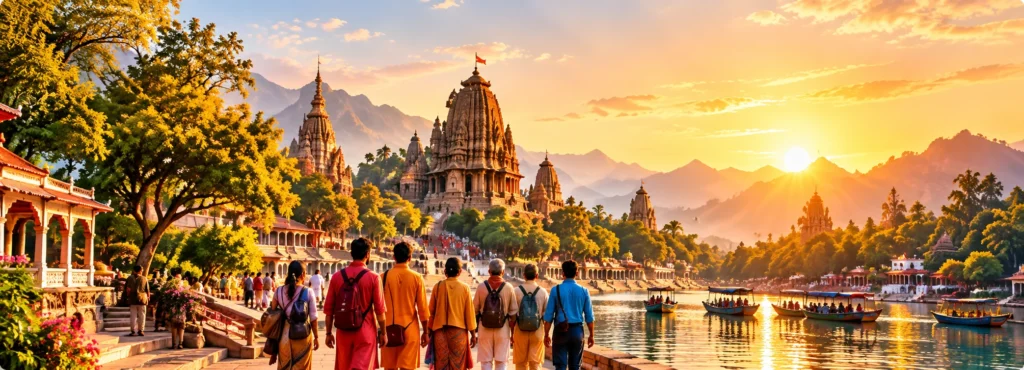
Bhakti traditions see Varanasi not as a place of abstract philosophy alone, but as a sanctuary of direct spiritual experience. Pilgrims bathe in the sacred Ganges, offer prayers at countless shrines, witness the evening āratī, and participate in rituals that have continued for centuries without interruption. These practices are not symbolic; they are lived expressions of devotion.
What makes Varanasi special is its paradoxical harmony. While the city holds the solemn reality of cremation grounds and impermanence, it simultaneously celebrates life through music, learning, ritual, and devotion. The kṣetra teaches that liberation does not require escape from the world — but awareness of its deeper truth. For pilgrims, this diversity offers many paths: meditation, ritual worship, ancestral rites, philosophical learning, or silent contemplation by the river. Varanasi welcomes them all, guiding each seeker toward the same ultimate realization — the eternal presence of Śiva within all existence. 🕉️
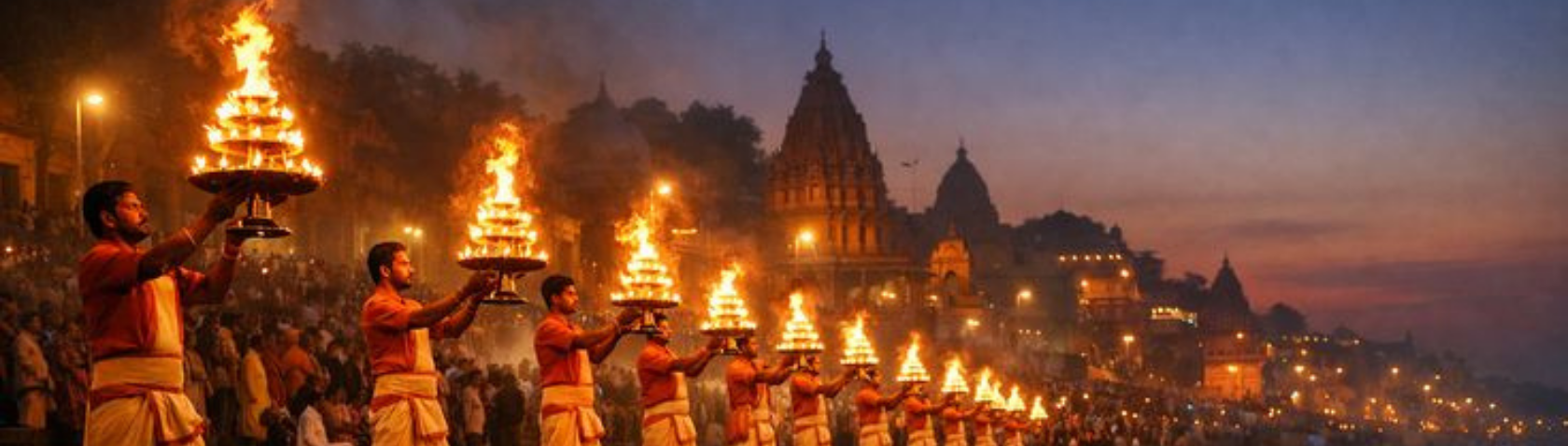
🌊 Varanasi as a Mokṣa Kṣetra
Scriptures declare that even a sincere remembrance of Shiva within the sacred boundary of Varanasi carries immeasurable spiritual merit, for the Lord Himself is believed to eternally reside here as Kashi Vishwanath, the compassionate liberator of souls 🪔. The philosophy of Kāśī is profound yet deeply reassuring: death is not an end but a doorway, and divine grace dissolves the fear of mortality 🔄. This makes Varanasi especially powerful for liberation prayers, ancestral rites (Pitṛ karma), karmic purification, and the final journey of the soul 🌌.
Many elders journey to Varanasi in the later stages of life, not out of despair but with profound faith in spiritual completion. Rituals performed along the sacred Ganges and at the revered Kashi Vishwanath Temple are believed to guide the soul toward release from the cycle of rebirth. Even younger pilgrims feel that prayers offered here carry unusual depth — as if life’s questions soften in the presence of eternity.
Varanasi does not conceal life’s impermanence; it reveals its deeper meaning 🕉️. For those who surrender to the wisdom of Kāśī, fear transforms into acceptance, and devotion becomes a bridge between life and liberation. Every mantra, river offering, cremation fire, and silent prayer resonates with the promise of mokṣa — guiding the soul toward freedom, clarity, and the eternal light of Śiva.
🧭 Sacred Geometry & Cosmic Alignment of Varanasi
Varanasi’s spiritual power is not accidental — it is cosmically and spiritually aligned through sacred geography. Ancient traditions describe Varanasi as a divinely protected mandala, said to rest upon the trident of Shiva itself. Unlike many cities that grew organically, Kāśī is believed to have formed through spiritual intention, where temples, ghāts, and sacred pathways align with the cosmic rhythm of creation. This places Varanasi at the center of sacred geography and spiritual continuity.
The layout of the revered Kashi Vishwanath Temple follows ancient temple principles that preserve divine energy within the sanctum (garbha-gṛha), while its golden spire rises as a symbol of the soul’s upward journey toward liberation. Around it, countless shrines dedicated to various forms of the Divine create a spiritual grid that balances devotion, ritual, and cosmic symbolism. The ghāts along the sacred Ganges form another powerful alignment, where steps descending toward the river mirror the soul’s movement from worldly identity toward spiritual surrender.
Even walking through the narrow lanes of Kāśī becomes part of this sacred design. Pilgrims gradually move from busy streets toward temples, ghāts, and quiet corners of prayer. With every step, outer noise fades and inner awareness grows stronger. This living geometry creates a subtle resonance field that amplifies mantra, ritual, and meditation. Devotees often experience unexpected calm, emotional release, or spiritual clarity — not through effort, but through the quiet power of alignment itself.
Varanasi teaches that spirituality is not only practiced through ritual; it is woven into landscape, architecture, and the sacred rhythm of the city itself.
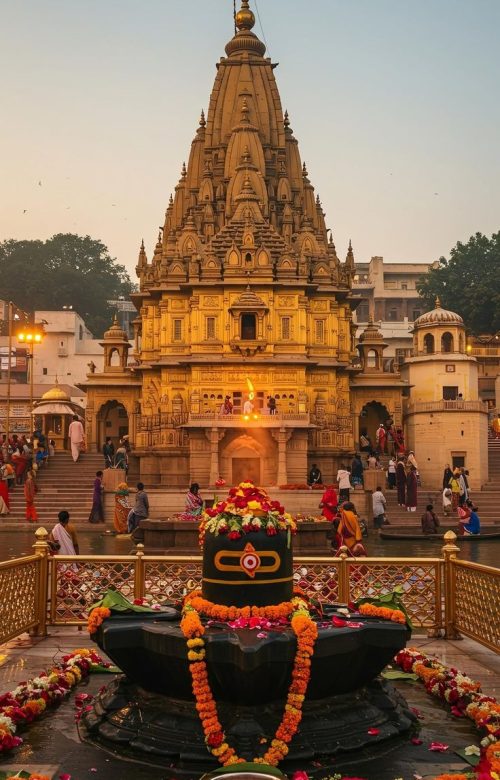
🕰️ Role of Varanasi in Kālacakra (Indian Philosophy of Time)
In Sanātana Dharma, time is not linear — it is cyclical, conscious, and transformative. Varanasi stands as one of the most profound spiritual centers within this philosophy, where time is experienced not merely as passing moments but as a gateway to transcendence. Governed by the presence of Shiva as the eternal Mahākāla, Varanasi is believed to exist slightly outside the ordinary flow of time. Unlike sacred places where time nurtures or stabilizes life, Kāśī is where time dissolves — making it a kṣetra deeply connected to liberation and ultimate truth.
The sacred geography of Varanasi reflects this philosophy. The eternal flame of ritual at Kashi Vishwanath Temple, the continuous flow of the Ganges, and the daily cycles of prayer and cremation at the ancient ghāts all mirror the cosmic rhythm of creation, preservation, and dissolution. Here, life and death coexist openly. Rituals from dawn āratī to night ceremonies symbolize the movement of the soul through the wheel of time. In this environment, prayer becomes not just devotion but a conscious alignment with the deeper rhythm of existence.
Pilgrims often notice that time behaves differently in Kāśī. Hours pass like moments during meditation, yet a single ritual can feel timeless. Many experience clarity about life’s impermanence and the deeper purpose of existence. The city does not soften time — it reveals its true nature. Through this revelation, attachments loosen, fear fades, and awareness deepens.
Varanasi teaches that liberation arises when one understands the nature of time itself. To walk its ghāts, chant a mantra, or sit silently beside the sacred river is to witness the Kālacakra in motion — and to recognize that beyond time’s cycles lies the eternal presence of the Divine.
🕉️ Śrī Kāśī Viśvanātha (Divya Kṣetra)
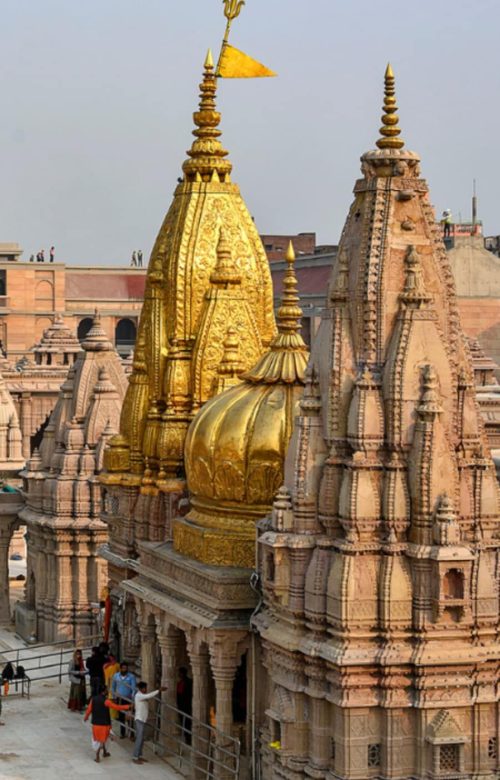
The sacred presence of Kashi Vishwanath Temple stands at the heart of Varanasi as one of the most revered abodes of Shiva. Here the Lord is worshipped as Viśvanātha — the “Lord of the Universe,” embodying both the stillness beyond time and the power that dissolves bondage. Unlike kṣetras centered on preservation or worldly fulfillment, Kāśī radiates a liberating spiritual force. Pilgrims performing darśana, abhiṣeka, japa, or silent meditation here are believed to come under the direct grace of the Lord, who gently dissolves karmic weight and guides the soul toward awakening and Mokṣa.
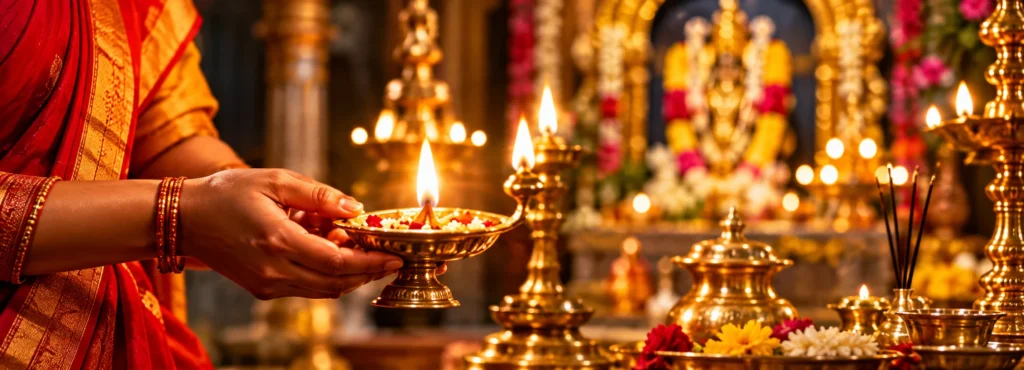
Mahāśivarātri in Varanasi is unlike anywhere else. Devotees gather in vast numbers to worship the Lord through the night with mantra, lamps, and sacred offerings. The ghāts along the Ganges glow with thousands of lights while chants of “Har Har Mahādev” echo through the city. Pilgrims undertake vrata, perform abhiṣeka, and walk between temples in continuous remembrance of the Lord. As dawn rises over the river, the city feels transformed — carrying a sense of purification, surrender, and deep spiritual renewal that leaves devotees with lasting peace.
Varanasi has also long been a center of sacred learning, philosophy, and spiritual discipline. For centuries, scholars, ascetics, and seekers gathered here to study the Vedas, Upaniṣads, and various schools of Hindu thought. Monastic institutions, Sanskrit schools, and temple traditions nurtured generations of teachers, musicians, and ritual specialists. Even today, those who walk through the narrow lanes of Kāśī sense not only devotion but also a profound continuity of knowledge and practice — a living confluence of bhakti, wisdom, austerity, and liberation.
🕉️ Living Wisdom of Varanasi: Guru–Śiṣya Paramparā & Sacred Stays
Varanasi is known for living wisdom transmitted through the Guru–Śiṣya Paramparā, where knowledge flows through presence, discipline, and realization rather than intellectual argument. For centuries, sages, ascetics, and scholars have guided seekers here through Vedic study, meditation, and the path of renunciation centered on Lord Viśvanātha. Teachings in Kāśī emphasize inner awakening, reminding seekers that liberation arises not from accumulation of knowledge but from realization, humility, and sustained spiritual practice.
Priests, scholars, and wandering sādhus connected to the Kashi Vishwanath Temple continue this living current. In Varanasi, guidance often arrives through a simple mantra, a quiet conversation with a teacher, or a moment of stillness on the ghāts of the Ganga. Wisdom here is not imposed — it reveals itself when the seeker becomes inwardly ready. Kāśī teaches detachment: when the mind becomes silent and receptive, the guru appears naturally and knowledge transforms into direct experience.
🔱 Direct transmission through Guru–Śiṣya lineage
🌌 Living traditions of Veda, Tantra, and Yoga
👁️ Wisdom revealed through mantra and silence
📿 Lineages sustained by practice and realization
🚶 Guidance meets inner readiness
🌿 Humility opens the path to liberation
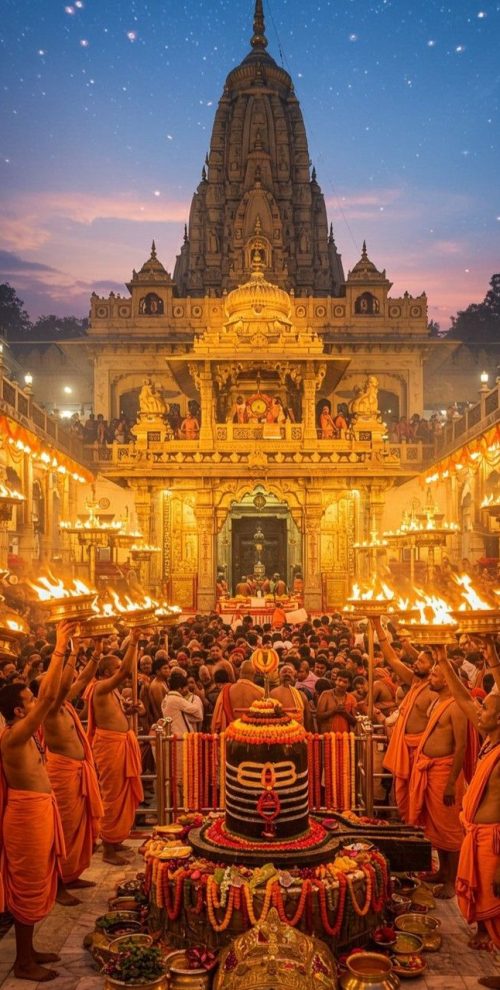
In Varanasi, accommodation shapes the pilgrim’s spiritual rhythm. Traditional dharamśālās near the sacred ghāts offer simple, sattvic spaces suited for meditation, prayer, and quiet reflection after temple visits. Ashrams provide immersive spiritual environments where daily life flows with chanting, study, and ritual, aligning the pilgrim with the timeless rhythm of Kāśī. These spaces encourage inwardness and allow the sacred atmosphere of the city to slowly unfold.
Modern hotels across the city provide comfort and accessibility, yet thoughtful choice remains important to preserve the contemplative mood of the yātra. Staying close to the ghāts or temple zones helps maintain connection with the sacred pulse of Varanasi. When accommodation supports simplicity and awareness, rest itself becomes part of the pilgrimage — allowing the pilgrim to absorb not only darśana, but the profound stillness of the eternal city.
🛕 Sattvic dharamśālās near sacred ghāts
🕯️ Ashrams with chanting and study routines
🌅 Early morning Ganga darśana and prayer
🧘 Rest integrated with meditation and reflection
🔕 Mindful hotel choices maintain sacred atmosphere
🌿 Surroundings deepen the pilgrimage experience
📿 Day-wise Ritual Planner (1-Day, 3-Day & 5-Day Yātra)
Varanasi is not meant to be rushed. Each day spent here corresponds to a deeper layer of purification and spiritual awakening. A structured ritual plan allows the pilgrim to move gradually from sacred darśana to inner realization under the grace of Lord Viśvanātha.
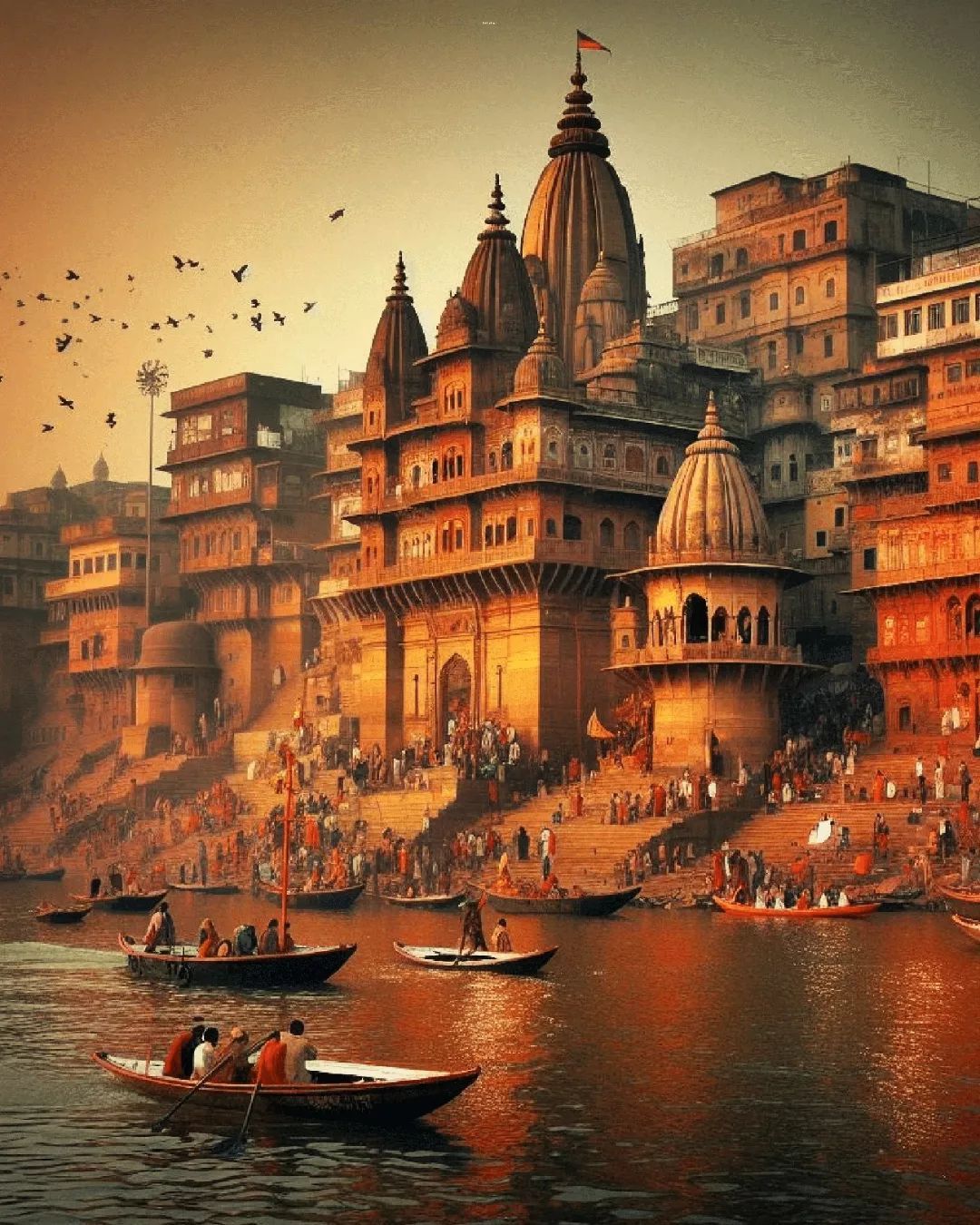
🕉️ 1-Day: Blessing & Sacred Awakening
Ideal for travelers short on time, this Yātra focuses on receiving the blessings of Lord Śiva at the Kashi Vishwanath Temple. The day includes early morning darśana, Ganga snāna at the sacred ghāts, and a brief visit to nearby shrines such as Annapūrṇā Devī. Even in a single day, pilgrims experience purification, devotion, and connection with the timeless spiritual current of Kāśī. This journey offers a powerful spiritual reset, harmonizing mind, body, and soul through the grace of the Ganga and Viśvanātha.
🌅 Early morning Viśvanātha darśana
💧 Ganga snāna at sacred ghāts
🛕 Visit to Annapūrṇā Devī shrine
🌿 Purification & sacred awakening
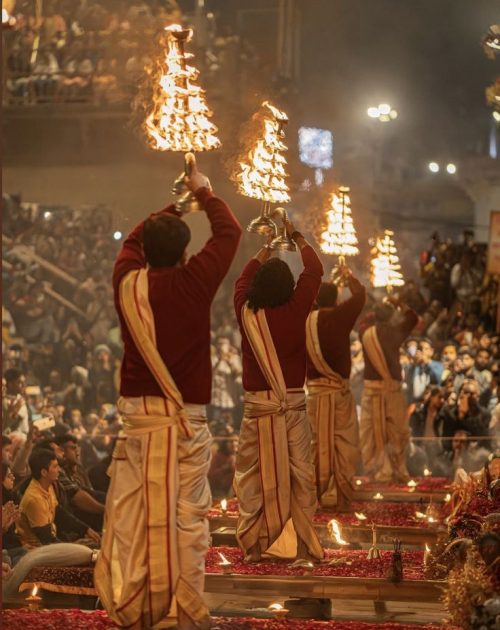
🕉️ 3-Days: Purification & Spiritual Alignment
This Yātra is designed for seekers ready for deeper spiritual immersion. Over three days, pilgrims experience purification, reflection, and inner stabilization through temple worship, mantra japa, and visits to significant ghāts and shrines. The journey may include Ganga āratī at Daśāśvamedha Ghāt, silent meditation along the riverbanks, and circumambulation of sacred temple paths. Many pilgrims feel emotional release, clarity of thought, and a deeper connection with Lord Śiva, making this an ideal pilgrimage for meaningful inner alignment.
🌊 Ganga snāna & temple darśana
🕯️ Mantra japa and quiet meditation
🔄 Sacred ghāt visits and circumambulation
✨ Inner clarity & spiritual alignment
🕉️ 5-Days: Deep Spiritual Immersion
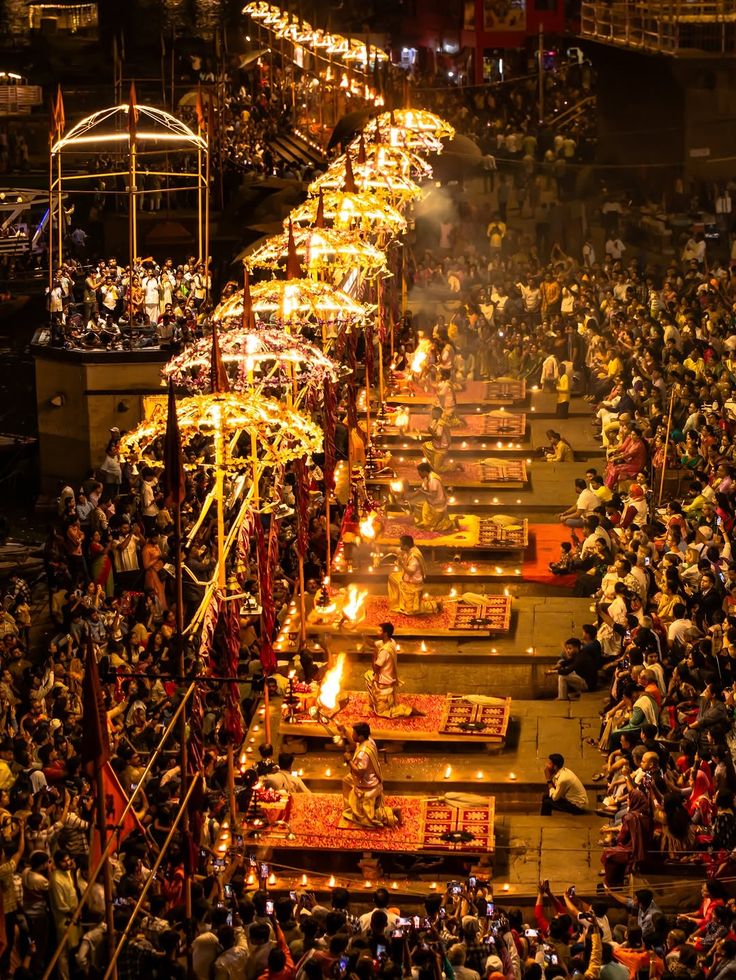
For devoted seekers, this extended Yātra offers profound spiritual transformation and understanding of Kāśī’s sacred rhythm. Pilgrims participate in multiple temple darśanas, attend evening Ganga āratīs, perform ancestral rituals along the river, and spend time studying or meditating within the city’s spiritual environment. Over five days, many experience emotional cleansing, deeper surrender to Lord Śiva, and a strong sense of spiritual purpose. This journey allows the pilgrim to fully absorb the timeless wisdom and liberating presence of Varanasi.
🌙 Evening Ganga āratī participation
🕉️ Extended temple visits & meditation
📿 Ancestral rituals and sacred offerings
🌿 Spiritual purification & inner realization
🧳 First-Time Pilgrim Guide to Varanasi
For first-time pilgrims, Varanasi can feel intense — not overwhelming, but deeply transformative. This is not merely a historic city; it is a living spiritual ecosystem shaped by ritual, ascetic discipline, and continuous remembrance of Lord Śiva. The ideal approach is humility, patience, and openness, allowing the sacred rhythm of the ghāts and temples to guide you rather than rushing through experiences. When approached this way, Varanasi reveals itself gradually, offering purification, clarity, and profound inner awakening.
First-timers are advised to:
• Begin with darśana at the Kashi Vishwanath Temple
• Spend silent moments along the sacred banks of the Ganga River
• Avoid over-scheduling too many rituals in one day
• Observe temple and ghāt traditions before asking questions
Many mistakes arise from treating Varanasi like a checklist destination. The kṣetra unfolds through patience. Even moments of confusion, crowds, or emotional heaviness are considered part of spiritual cleansing. Varanasi welcomes beginners not with spectacle, but with truth.
🕰️ Temple Timings & Crowd Patterns
Understanding temple timings is essential. Early morning hours (before sunrise to mid-morning) are ideal for peaceful darśana at the Kashi Vishwanath Temple. Evening hours bring larger crowds, especially during the famous Ganga āratī at Dashashwamedh Ghat, but they also create an electrifying devotional atmosphere. Strategic planning allows pilgrims to balance sacred rituals, quiet meditation, and observation of ancient traditions. Aligning personal sādhana with these sacred hours allows both stillness and collective devotion to be experienced fully.
🌙 Special Pūjās by Tithi, Nakṣatra & Rāśi
Varanasi is especially powerful for time-aligned rituals and spiritual purification. Many pūjās here are performed according to specific tithis and cosmic timings, amplifying their spiritual significance.
• Amāvasyā is ideal for Pitṛ tarpaṇa and ancestral prayers.
• Pradoṣa enhances Śiva worship and karmic purification.
• Mahāśivarātri becomes profoundly powerful in the presence of Lord Viśvanātha.
Astrologically, Varanasi is considered beneficial for those seeking liberation from karmic cycles, ancestral burdens, or spiritual confusion. Rituals aligned with one’s rāśi and nakṣatra are believed to harmonize life circumstances with divine grace.
Importantly, these pūjās follow ancient temple traditions preserved through centuries of Śaiva worship.
🕉️ Fasting, Vratas & Observances in Varanasi
Fasting in Varanasi is not merely about restraint; it is about purification and spiritual focus. Vratas observed here align the body, mind, and soul with the presence of Lord Śiva. Because Varanasi is revered as the city of liberation, even simple fasts gain profound spiritual significance.
Common vratas include:
• Somavāra fast for connection with Lord Śiva
• Pradoṣa vrata for karmic cleansing
• Amāvasyā observances for ancestral peace
• Mahāśivarātri fasting for deep spiritual awakening
Pilgrims are advised to keep fasts sattvic and mindful. Even partial fasting combined with temple darśana and ghāt meditation creates noticeable inner stillness.
Many report heightened dreams, emotional clarity, or spontaneous insights during vratas in Varanasi — signs of spiritual alignment.
🌙 Evening Rituals & Ganga Āratī
Evenings in Varanasi carry a sacred intensity. The Ganga āratī at Dashashwamedh Ghat transforms the riverfront into a luminous field of devotion. Priests offer lamps, conch sounds echo across the ghāts, and thousands of pilgrims chant together. The atmosphere is both powerful and meditative. Many pilgrims feel that witnessing this ritual deepens faith and gratitude, revealing the timeless spiritual heartbeat of Varanasi.
👴 Senior Citizens & Group Yātra Guidance
Varanasi can be spiritually powerful but physically demanding, especially due to narrow lanes and crowded ghāts. With thoughtful pacing, it remains accessible for elders and group pilgrims.
For elders:
• Choose morning temple visits to avoid crowds
• Take rest intervals between ghāt visits
• Prioritize fewer but meaningful darśanas
Group yātras benefit from shared prayer, calm coordination, and minimal logistical stress. When the body is cared for, the spirit opens naturally.
Varanasi honors those who arrive not to seek spectacle, but to seek truth.
🔥 Prayer & Remedy Guidance (Liberation, Ancestral Peace, Inner Clarity)
Varanasi has long been trusted as a kṣetra for deep karmic resolution and spiritual liberation.
• Life confusion and inner turmoil are addressed through Viśvanātha darśana and mantra japa.
• Ancestral burdens are honored through rituals along the Ganga River.
• Spiritual seekers perform meditation and Śiva worship for liberation (mokṣa).
Pilgrims often feel a profound emotional shift after spending time in the city — not necessarily sudden joy, but deep peace and acceptance.
Varanasi does not promise comfort; it offers awakening.
🌺 Women-Specific Rituals & Devī Worship in Varanasi
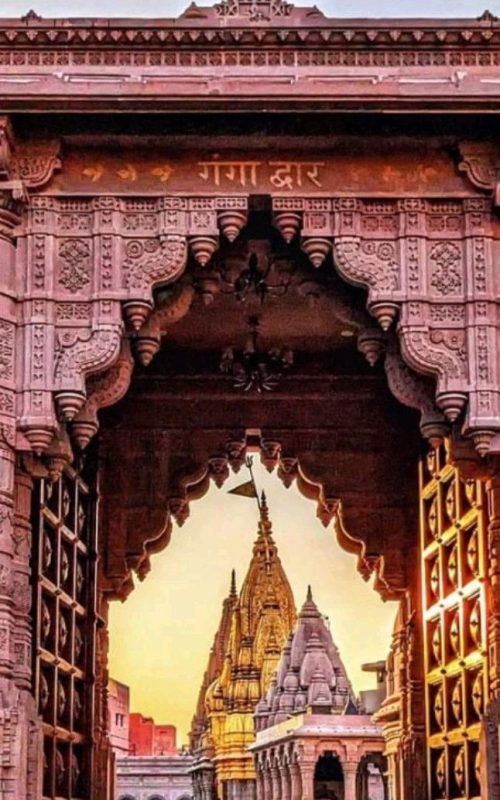
Varanasi holds a deeply revered place for Śakti worship, making it profoundly meaningful for women seekers, mothers, daughters, and guardians of family lineage. Unlike many pilgrimage centers where participation may feel peripheral, Varanasi places feminine divinity at the heart of its sacred landscape through powerful temples dedicated to the Divine Mother. Shrines such as the Annapurna Devi Temple, Durga Temple Varanasi, and Vishalakshi Temple are not symbolic spaces — they are living centers of nourishment, courage, and spiritual protection where Devī is experienced as mother, guardian, and guide.
Women-specific rituals in Varanasi often focus on emotional stability, protection, fertility (of body, creativity, and destiny), and karmic healing. Unmarried women pray for clarity, confidence, and righteous partnership rather than marriage alone; married women seek harmony, resilience, and continuity in family life; mothers offer prayers for children’s wellbeing and dharmic growth. Many women also come during transitional phases — widowhood, grief, major life change, or spiritual seeking — discovering profound emotional grounding within the compassionate presence of the Divine Mother.
Devī worship here is both fierce and nurturing. Annapūrṇā restores nourishment, dignity, and inner fullness, while Durga embodies protection and fearless strength. The sacred presence of Viśālākṣī reflects the all-seeing maternal grace that embraces every pilgrim who arrives in surrender. The experience often leaves women feeling not merely blessed, but deeply restored — as though forgotten parts of their strength and identity have quietly returned.
Varanasi teaches women that devotion is not submission; it is sacred sovereignty rooted in wisdom, courage, and the boundless grace of the Divine Mother.
🌳 Family & Ancestral Rituals (Pitṛs & Lineage Healing)
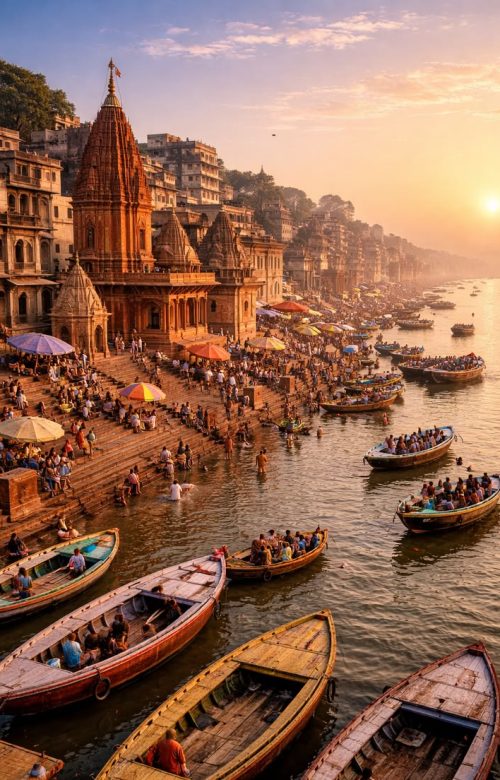
In Sanātana Dharma, an individual is never isolated — they are the living continuation of a lineage. Varanasi is one of the most sacred kṣetras in Bhārat for ancestral reconciliation and spiritual release. Along the banks of the sacred Ganga, rituals performed here are believed to reach the Pitṛ loka directly, making prayers for ancestors especially powerful. Sacred places such as the Manikarnika Ghat and Dashashwamedh Ghat have served for centuries as spaces where life, death, and liberation are acknowledged together.
Family rituals in Varanasi go beyond addressing immediate problems; they seek harmony across generations. Through pitṛ tarpaṇa, piṇḍa dāna, śrāddha ceremonies, and prayers offered near the Ganga before the sacred presence of Kashi Vishwanath Temple, pilgrims acknowledge ancestors, seek peace for departed souls, and release burdens carried unknowingly through family lines.
Many families report a sense of deep settling after these rites — not dramatic miracles, but a quiet realignment of life. Long-standing tensions soften, decisions become clearer, and emotional heaviness gradually lifts. Children appear calmer, relationships grow more compassionate, and family bonds regain balance. This subtle harmony is understood as the blessing of ancestral acknowledgment.
Varanasi reminds pilgrims that healing forward often begins by healing backward — honoring those whose lives, prayers, and sacrifices shaped the path we walk today.
🕉️ Varanasi: The Sacred Hub of Wisdom, Time & Cosmic Liberation
🔮 Varanasi & Spiritual Illumination (Jñāna-Centered Guidance)
Varanasi is revered across centuries as the eternal city of knowledge and liberation, where the pursuit of truth transcends ordinary life. Saints, philosophers, and seekers have come here not merely for blessings, but for awakening. Pilgrims often combine darśana at the sacred Kashi Vishwanath Temple with study, reflection, and mantra recitation aligned to sacred tithis and lunar cycles. The presence of Lord Śiva in Kāśī is believed to illuminate consciousness itself, dissolving ignorance and guiding the soul toward liberation. Thus the city functions as a living sanctuary where spiritual insight aligns human life with cosmic wisdom.
🪐 Planetary Relief Through Awareness
Varanasi is traditionally sought by those facing karmic difficulties, planetary afflictions, or cycles of uncertainty. Rather than focusing solely on ritual remedies, the path here emphasizes purification through prayer, Ganga worship, and surrender before the Lord of Time. Ritual baths in the sacred Ganges River, prayers at ancient ghats like Dashashwamedh Ghat, and offerings to Śiva gradually calm inner turbulence. Devotees often experience mental clarity, release from fear, and renewed courage — signs of karmic burdens dissolving through awareness and devotion.
🧭 Life Path Awakening & Inner Realignment
Spiritual transformation in Varanasi is experienced as deep introspection and clarity about life’s direction. Through mantra japa, scriptural study, and silent meditation along the ghats, pilgrims often feel their personal struggles reorganizing into meaningful understanding. Remedies performed here address existential doubt, grief, and spiritual stagnation by awakening inner wisdom rather than external solutions. The belief is profound: when understanding deepens, karma loosens its hold. Varanasi works not by softening destiny alone, but by illuminating the consciousness that transcends it.
🔭 Sacred Knowledge & Timeless Traditions
Varanasi has long stood as one of Bhārat’s greatest centers of learning, philosophy, and spiritual science. Institutions of Sanskrit study, Vedic chanting, music, and temple traditions flourish alongside the sacred presence of the ghats and temples. Rituals at the Kashi Vishwanath Temple and the nightly Ganga āratī reflect a precise rhythm connecting celestial cycles with human devotion. Pilgrims sense that Varanasi stands as a bridge between knowledge and liberation — a city where divine wisdom continuously guides earthly life toward freedom.