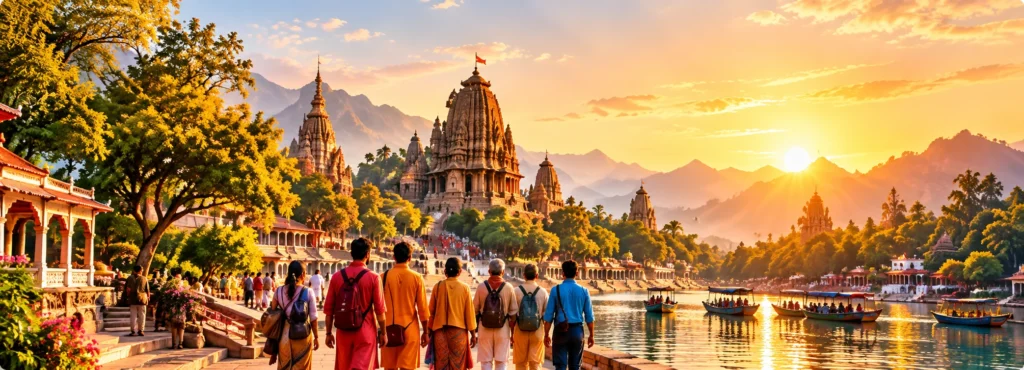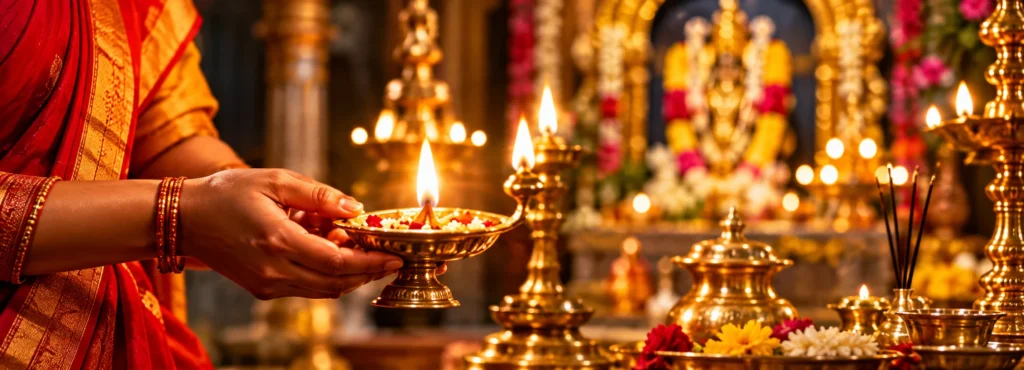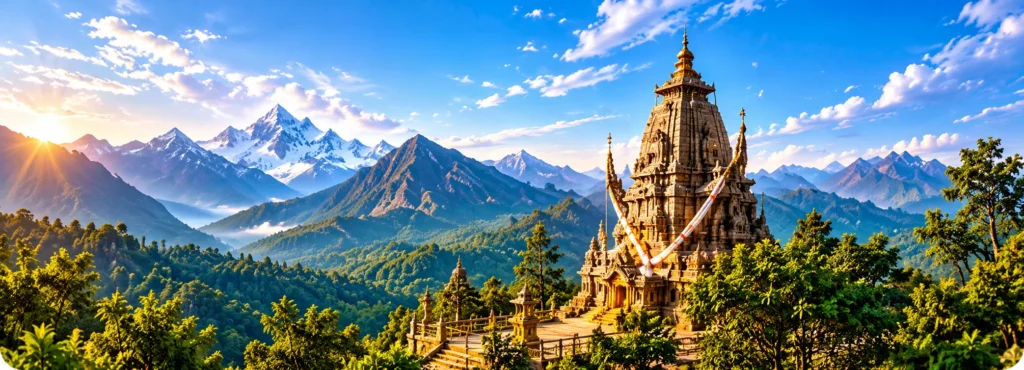

🕉️ Spiritual Energy & Vibrational Significance of Ujjayinī
Ujjayinī is not merely a city; it is a living field of consciousness. Among all sacred cities of Bhāratavarṣa, Ujjayinī holds a rare position where time, space, and spiritual energy intersect. Saints, yogis, and ṛṣis across millennia have described Ujjayinī as a place where the veil between the material and the cosmic becomes thin. Pilgrims often report an unexplainable stillness here — a silence that is not empty, but profoundly alive.
The vibrational frequency of Ujjayinī is deeply connected to Mahākāla, the Lord beyond Time. Unlike other sacred kṣetras where energy feels uplifting or nurturing, Ujjayinī’s energy is transformational and confronting. It dissolves illusions, strips ego, and forces inner alignment. This is why seekers undergoing intense sādhanā, ancestral rites, or karmic remedies are instinctively drawn here.
The flow of the Kṣiprā River, the geomagnetic positioning of the land, and centuries of uninterrupted mantra, yajña, and pūjā have charged this city like a spiritual battery. One does not “visit” Ujjayinī casually — the city works on you whether you are ready or not. Even a short stay can leave lasting impressions, inner churnings, or sudden clarity about life’s direction.
This is why Ujjayinī is often described as a place of spiritual acceleration — where years of inner work can condense into days.
⏳ Ujjayinī in Vedas, Purāṇas & Itihāsas
Ujjayinī’s sacredness is not a later construction; it is rooted in the oldest layers of Bhāratīya civilization. References to Ujjayinī appear indirectly in the Vedas as a center of cosmic order (Ṛta) and later explicitly in Purāṇic literature as Avantikā, one of the seven most sacred cities (Sapta Puri). The Skanda Purāṇa, Matsya Purāṇa, and Agni Purāṇa describe Ujjayinī as a city protected by Mahādeva himself, where liberation is attainable even through sincere remembrance. Itihāsic traditions link Ujjayinī with kings who ruled not merely as administrators, but as dharma-guardians. Vikramāditya’s court, for instance, symbolized the union of political power and spiritual wisdom.
Ujjayinī is also unique in that it is not associated with a single yuga — its relevance spans Satya, Tretā, Dvāpara, and Kali Yuga. Each age re-encountered the city differently, yet always acknowledged its spiritual gravity. This continuity gives Ujjayinī an unmatched civilizational depth.
To walk in Ujjayinī is to walk through layers of time — Vedic chants, Purāṇic legends, tantric rituals, and living bhakti all coexist here without conflict.
🔱 Śaiva, Śākta & Tāntric Traditions of Ujjayinī
Ujjayinī is one of the rare places in Bhārat where Śaiva, Śākta, and Tāntric paths coexist organically. Mahākāleśvara Jyotirliṅga represents the supreme Śaiva principle — the formless becoming form to protect dharma. Simultaneously, temples of Mahākālī, Hara-Siddhi, and Annapūrṇā anchor powerful Śākta energies.
Tantric traditions view Ujjayinī not as a place of fear, but as a laboratory of transformation. Night rituals, bhasma sādhanā, and mantra-based practices here are not symbolic — they are experiential. This is why many aghoris, nāth yogis, and advanced sādhakas make Ujjayinī their temporary or permanent abode.
What makes Ujjayinī special is balance. While tantra exists, it is held within dharma. While renunciation is present, householders are equally honored. The city teaches that liberation does not require escape from life — but mastery over it.
For pilgrims, this diversity offers choice: devotion, discipline, surrender, or silence — Ujjayinī accommodates all sincere paths.

🌊 Ujjayinī as a Mokṣa Kṣetra
Scriptures state that even an unintentional death within Ujjayinī’s sacred boundary carries immense spiritual merit, as Mahākāla himself guards the city 🪔. The philosophy here is profound yet compassionate: time itself dissolves karma, and Mahākāla consumes past deeds without negotiation 🔄. This makes Ujjayinī especially powerful for ancestral liberation (Pitṛ mokṣa), karmic exhaustion, and final-stage spiritual preparation 🌌. Many elders choose Ujjayinī for their last yātra, not out of fear, but out of deep trust in the city’s grace. Even younger seekers feel that rituals here carry an intensity that feels final, as though certain inner chapters permanently close. Ujjayinī does not promise comfort; it offers truth and liberation 🕉️. For those ready, truth becomes freedom, and every act of devotion, ritual, or meditation resonates with Mahākāla’s transformative energy, guiding the soul toward clarity, release, and profound inner alignment.
🧭 Sacred Geometry & Cosmic Alignment of the City
Ujjayinī’s spiritual power is not accidental — it is architecturally and cosmically aligned. Ancient astronomers identified Ujjayinī as the prime meridian of Bhārat, from which time calculations (Kāla Gaṇanā) were measured. This alone places the city at the heart of Indian time-science.
Temples, ghāts, and pathways form subtle geometric patterns aligned with solar and lunar movements. The Mahākāla temple’s south-facing orientation defies conventional norms, symbolizing mastery over death and decay. Even the flow of the Kṣiprā is believed to follow energetic channels (nāḍīs) beneath the earth.
This sacred geometry creates a resonance field, amplifying mantra, prayer, and intention. Pilgrims often feel clarity, heightened intuition, or emotional release without effort — a sign of alignment rather than effort.
Ujjayinī teaches that spirituality is not abstract — it is engineered into space itself.
🕰️ Role of Ujjayinī in Kālacakra (Indian Philosophy of Time)
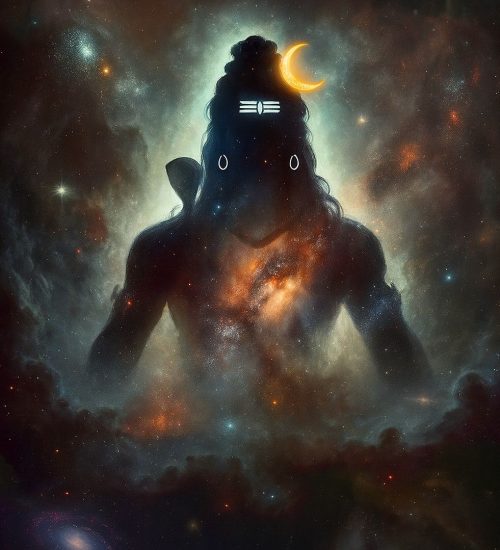
In Sanātana Dharma, time is not linear — it is cyclical, conscious, and corrective. Ujjayinī stands at the very heart of this philosophy as the city governed by Mahākāla, the Lord of Time itself. Unlike other sacred cities where time heals, Ujjayinī is where time judges, dissolves, and liberates. This is why ancient seers identified Ujjayinī as a pivotal node in the Kālacakra, the cosmic wheel of time.
Ujjayinī was historically used as the reference point for calculating tithis, nakṣatras, eclipses, and planetary transitions. Even today, traditional pañcāṅgas acknowledge Ujjayinī’s authority in time reckoning. Spiritually, this means actions performed here are not merely auspicious — they are time-aligned, amplifying their karmic impact.
Pilgrims often experience a strange phenomenon in Ujjayinī: days feel dense, nights feel expansive, and inner timelines shift. Old memories resurface, unresolved karmas demand attention, and decisions that were postponed suddenly crystallize. This is Mahākāla’s grace — compressing time so the soul may evolve faster.
Ujjayinī teaches that liberation is not achieved by escaping time, but by standing still at its center. To perform japa, pūjā, or even silent sitting here is to sit inside time itself — watching it dissolve.
🕉️ Dakṣiṇāmukha Śiva(Jyotirlinga)
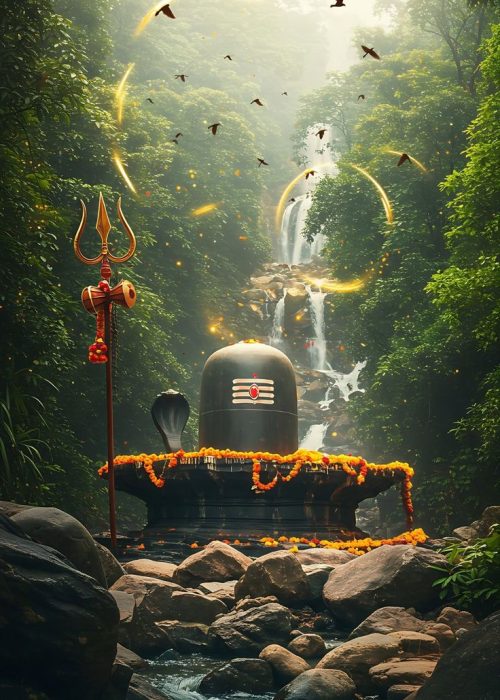
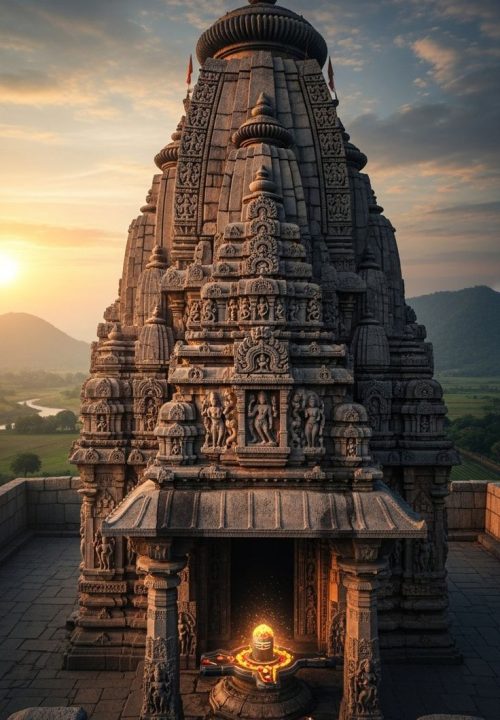
Mahākāleśvara Jyotirliṅga faces south, symbolizing mastery over death and impermanence. Unlike other jyotirlingas, the south-facing orientation aligns with karmic dissolution and liberation energies. Pilgrims performing abhiṣeka, darśana, and japa here are understood to directly interact with the transformative energy of Mahākāla, which consumes karmic residue while guiding consciousness toward Mokṣa.
Mahāśivarātri in Ujjayinī is unlike anywhere else. Devotees gather at the Mahākāleśvara Jyotirliṅga to witness night-long āratīs, the rhythmic tolling of bells, and ceaseless chanting of the divine name. The energy is dense, immersive, and deeply transformational, drawing pilgrims into a shared field of heightened awareness. Many engage in overnight meditation, observing vigil (jāgrat), performing bhasma sādhanā, and participating in collective kīrtan. As dawn approaches, the city becomes a crucible of consciousness, reminding every visitor of the cyclical power of time, dissolution, and renewal embodied by Mahākāla.
Ujjayinī was also a hub of trade, scholarship, and learning. It attracted merchants, scholars, and yogis alike, serving as a crossroads of ideas. Temples doubled as schools and cultural centers. Manuscripts, arithmetic, astronomy, and Sanskrit studies thrived, making the city both spiritually and intellectually vibrant. Pilgrims today can still sense the ancient energy of learning embedded in the city’s streets and temple corridors.
🕉️ Living Wisdom of Ujjayinī: Guru–Śiṣya Paramparā & Sacred Stays
Ujjayinī is known for quiet transmission rather than public preaching. The Guru–Śiṣya Paramparā here is subtle, personal, and rooted in lived experience. Jyotiṣa gurus shared celestial knowledge while Nāth yogis guided seekers through haṭha and kuṇḍalinī practices, often through silence more than speech. These masters did not build institutions; they nurtured lineages carried by disciples. A single initiation, mantra, or glance of grace was believed to sustain lifelong sādhana. Even today, pilgrims meet guidance unexpectedly through a priest, sadhu, or elder whose words seem perfectly timed. Such encounters are seen as responses to inner readiness. Ujjayinī teaches humility: knowledge is received, not accumulated. When the ego softens, the guru appears naturally.
- 🔱 Direct transmission over discourse
- 🌌 Jyotiṣa and Nāth living traditions
- 👁️ Grace through mantra or presence
- 📿 Lineages of experience, not institutions
- 🚶 Guidance meets inner readiness
- 🌿 Humility opens the door to wisdom

In Ujjayinī, accommodation shapes the pilgrim’s inner experience. Dharamśālās provide simple, sattvic spaces ideal for meditation and quiet reflection. Ashrams offer immersive routines with rituals, chanting, and communal meals that align daily life with devotion. These environments help the mind slow down, making rest part of the sādhana. Modern hotels offer comfort but should be chosen carefully to avoid noise and haste that disrupt the contemplative mood. The right surroundings support silence and receptivity, allowing the subtle presence of the city to be absorbed. Thoughtful choices ensure that comfort serves the inner journey rather than distracting from it.
- 🛕 Sattvic dharamśālās for quiet reflection
- 🕯️ Ashrams with rituals and shared rhythm
- 🌅 Simple routines encourage awareness
- 🧘 Rest becomes part of practice
- 🔕 Careful hotel selection avoids distraction
- 🌿 Surroundings deepen the pilgrimage experience
📿Day-wise Ritual Planner (1-Day, 3-Day & 5-Day Yātra)
Ujjayinī is not meant to be rushed. Each day spent here corresponds to a different layer of inner purification. A structured ritual plan allows the pilgrim to move gradually from outer darśana to inner transformation.
🕉️ 1-Day: Surrender And Blessing
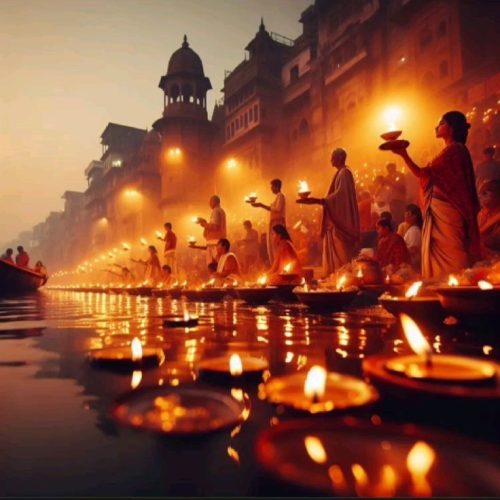
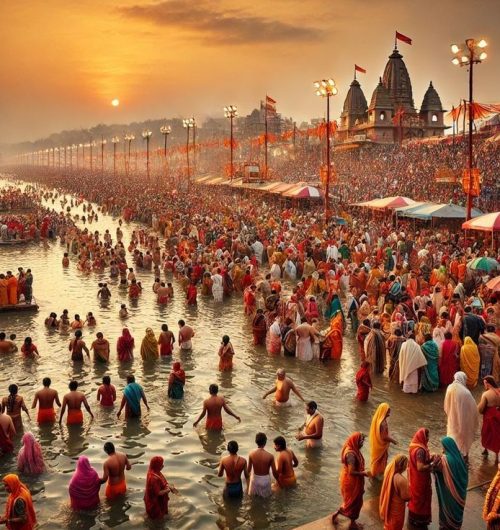
Ideal for travelers short on time, this Yātra focuses on complete surrender to Mahākāleśvara. The day includes Bhasma Ārati, Kṣiprā Snāna, and a brief darśana at Hara-Siddhi, creating immediate energetic alignment. Even in a single day, pilgrims can awaken presence, connect with the cosmic rhythm, and invite Mahākāla’s blessings. This experience offers a quick yet profound spiritual reset, allowing mind, body, and spirit to harmonize with Mahākāla’s energies. A one-day immersive journey that infuses devotion, clarity, and inner balance into daily life.
- 🔥 Mahākāleśvara Bhasma Ārati
- 💧 Kṣiprā snāna (ritual bath)
- 🙏 Brief Hara-Siddhi darśana
- 🌿 Energetic alignment & presence
🕉️ 3-Days: Transformation & Alignment
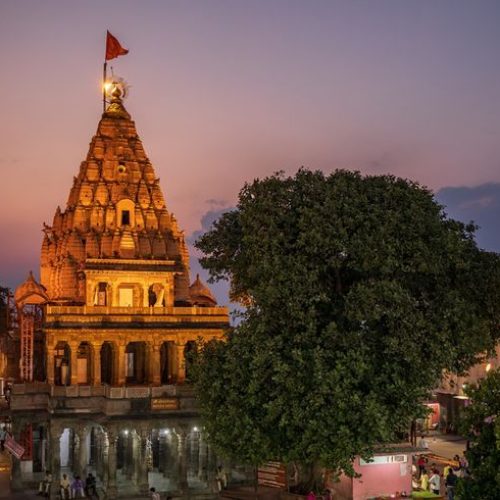
This Yātra is designed for seekers ready for deep inner shifts. Over three days, participants experience purification, stabilization, and integration, allowing karmic patterns to surface and begin resolving. The journey includes temple snāna and darśana, japa and Śani or Pitṛ remedies, and silent temple circumambulation, harmonizing mind, body, and spirit. Even in a short span, pilgrims often feel clarity, emotional release, and a stronger connection with Mahākāleśvara, making this an ideal choice for those seeking compact yet profound transformation.
- 🌊 Snāna & darśana for purification
- 🕯️ Japa and remedies for stabilization
- 🔄 Silent circumambulation for integration
- ✨ Emotional clarity & karmic alignment
🕉️ 5-Days: Deep Spiritual Immersion
For devoted seekers, this extended Yātra offers profound inner transformation and alignment. Participants engage in nakṣatra-specific pūjās, night meditation, extended rituals, and guidance from experienced local pandits, creating a fully immersive spiritual experience. Over five days, pilgrims often experience emotional release, clarity of purpose, closure of long-standing issues, and a strengthened connection with Mahākāleśvara. This journey is perfect for those ready to dive deeply into the energies of Ujjayinī, allowing mind, body, and spirit to harmonize completely.
- 🌙 Nakṣatra-specific pūjās & rituals
- 🕉️ Night meditation & chanting
- 📿 Guidance from local pandits
- 🌿 Emotional release & inner clarity
🧳First-Time Pilgrim Guide to Ujjayinī
For first-time pilgrims, Ujjayinī can feel intense — not overwhelming, but demanding sincerity. This is not a tourist city; it is a living, working spiritual ecosystem shaped by ritual, discipline, and devotion. The ideal approach is humility, patience, and openness, allowing the city’s ancient rhythm to guide you rather than rushing to consume experiences. When approached this way, Ujjayinī reveals itself slowly, offering depth, clarity, and quiet inner transformation.
First-timers are advised to:
• Begin with Mahākāleśvara darśana
• Spend time silently near the Kṣiprā
• Avoid over-scheduling rituals
• Observe rather than question immediately
Many mistakes arise from treating Ujjayinī like a checklist destination. The city reveals itself gradually. Even confusion or emotional heaviness during early days is considered part of the cleansing. Ujjayinī welcomes beginners not with spectacle, but with truth.
🕰️ Temple Timings & Crowd Patterns
Understanding temple timings is essential. Early morning hours (4–7 AM) are ideal for peaceful darśana. Evening āratīs attract more pilgrims but offer a charged devotional energy. Strategic planning ensures that rituals, japa, and meditation can be performed without distraction. Aligning personal sādhana with these sacred hours allows the pilgrim to experience both stillness and collective devotion in harmony.
🌙 Special Pūjās by Tithi, Nakṣatra & Rāśi
Ujjayinī is uniquely powerful for time-specific rituals. Pūjās here are not generic; they are calibrated to cosmic movements. Performing a ritual on the correct tithi or nakṣatra in Ujjayinī can equal months of effort elsewhere.
• Amāvasyā is ideal for Pitṛ tarpaṇa and ancestral healing.
• Pradoṣa amplifies Śiva pūjā and karmic cleansing.
• Maha Nakṣatras like Mṛgaśīrṣa or Puṣya enhance stability and growth.
Astrologically, Ujjayinī is especially potent for people facing repeated delays, time-related blocks, or life stagnation. Rituals aligned to one’s rāśi help reset inner clocks, bringing life back into rhythm.
Importantly, these pūjās are not superstition — they are precision spiritual science, refined over millennia.
🕉️ Fasting, Vratas & Observances in Ujjayinī
Fasting in Ujjayinī is not about deprivation; it is about attunement. Vratas observed here align the body with time, emotion, and intention. Because Ujjayinī operates on Kālacakra principles, even simple fasts here gain spiritual intensity.
Common vratas include:
• Somavāra for mental peace and Śiva connection
• Pradoṣa for karmic cleansing
• Amāvasyā for ancestral peace
• Navarātri for Devī strength
Pilgrims are advised to keep fasts sattvic and mindful, avoiding extremes. Even partial fasting, when combined with japa and temple circumambulation, creates noticeable inner stillness.
Many report heightened dreams, emotional clarity, or spontaneous insights during vratas in Ujjayinī — signs of internal alignment. The city supports restraint not through force, but through natural inward pull.
🌙 Night Rituals & Special Āratīs
Night-time in Ujjayinī has its own spiritual pulse. Temples like Mahākāleśvara perform late-night āratīs, combining mantras, bells, and sacred flames that purify the mind and spirit. Silence zones along the riverbanks allow for personal japa and reflection. Pilgrims often find that meditating at night reveals insights not accessible during daytime activity, as the city’s cosmic energy aligns with lunar cycles and planetary positions.
👴 Senior Citizens & Group Yātra Guidance
Ujjayinī is exceptionally accommodating for senior pilgrims and organized groups, provided the journey is paced respectfully. The city understands age, vulnerability, and collective energy.
For elders:
• Morning rituals are preferred
• Rest intervals are essential
• Simple darśanas often feel deeper than elaborate rites
Group yātras benefit from shared silence, collective prayer, and minimal logistical stress. When the body is cared for, the spirit opens naturally.
Ujjayinī honors those who come not to seek more, but to offer themselves fully.
🐍 Doṣa-wise Remedy Guide (Kālasarpa, Pitṛ, Śani)
Ujjayinī is one of the most trusted kṣetras for doṣa nivāraṇa — not because it removes karma, but because it teaches one to transcend it. Remedies here are intense, honest, and transformative.
• Kālasarpa Doṣa rituals align directly with Mahākāla, addressing fear, stagnation, and cyclical suffering.
• Pitṛ Doṣa rites on the Kṣiprā help release ancestral burdens carried unknowingly across generations.
• Śani Remedies in Ujjayinī are profound because time itself is the teacher; patience and surrender become part of the healing.
Pilgrims often feel emotional heaviness lifting after these rituals — not instantly joyful, but deeply peaceful. Ujjayinī does not offer quick fixes; it offers permanent realignment.
🌺 Women-Specific Rituals & Devī Worship in Ujjayinī
Ujjayinī holds a special place for Śakti worship, making it deeply significant for women seekers, mothers, daughters, and guardians of lineage. Unlike many pilgrimage centers where women participate peripherally, Ujjayinī places feminine spiritual power at the center. Temples like Hara-Siddhi, Gadkalika, and Annapūrṇā are not symbolic shrines — they are living energy centers where Devī is experienced as protector, nurturer, and transformer.
Women-specific rituals in Ujjayinī focus on inner stability, fertility (of body, mind, and purpose), protection, and karmic release. Unmarried women pray for clarity and strength rather than marriage alone; married women seek harmony and continuity; mothers perform rituals for children’s protection and dharmic growth. Many women also come here during transitional phases — menopause, widowhood, personal loss — finding deep emotional grounding.
Devī worship here is fierce yet compassionate. Hara-Siddhi represents courage and boundary-setting, while Annapūrṇā restores nourishment and self-worth. The experience often leaves women feeling not merely blessed, but reclaimed — as if parts of themselves long neglected have returned.
Ujjayinī teaches women that devotion is not submission; it is sovereignty rooted in grace.

🌳 Family & Ancestral Rituals (Pitṛs & Lineage Healing)
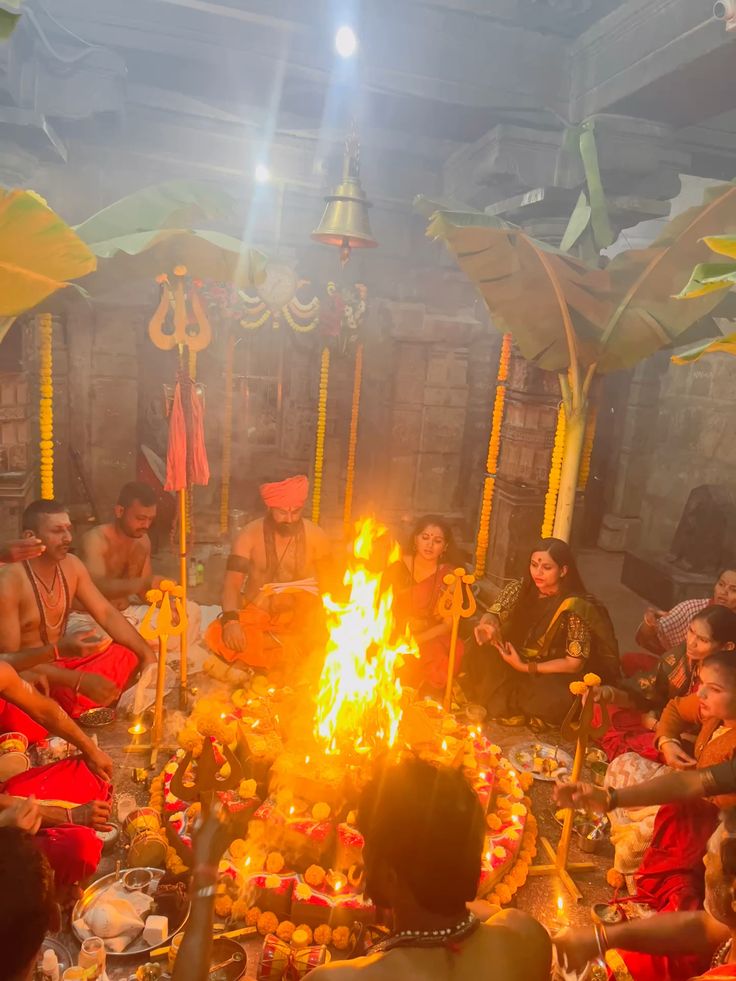
In Sanātana Dharma, an individual is never isolated — they are the continuation of a lineage. Ujjayinī is one of the most powerful places in Bhārat for ancestral reconciliation and lineage healing. The Kṣiprā River is believed to carry prayers directly to the Pitṛ loka, making rituals here exceptionally effective.
Family rituals in Ujjayinī go beyond problem-solving; they address intergenerational patterns — repeated losses, chronic conflicts, financial instability, or emotional disconnection. Through Pitṛ tarpaṇa, piṇḍa dāna, and śrāddha, pilgrims acknowledge forgotten ancestors, unresolved deaths, and unexpressed gratitude.
Many families report a sense of closure after these rites — not dramatic miracles, but a quiet settling of life. Children become calmer, decisions flow more easily, and relationships soften. This is the subtle blessing of ancestral acceptance.
Ujjayinī reminds pilgrims that healing oneself often means healing backward — honoring those whose lives made ours possible.
🕉️ Ujjayinī: The Sacred Hub of Astrology and Wisdom
🔮Ujjayinī & Indian Astrology (Jyotiṣa)
Ujjayinī is historically considered the prime meridian of Indian timekeeping. Jyotishas from centuries past aligned rituals, charts, and planetary remedies using this city as a reference point. Pilgrims seeking astrological guidance often combine temple rituals with precise planetary calculations, amplifying their karmic alignment. The city’s cosmic influence provides a living laboratory for astrology, where spiritual and temporal dimensions intersect.
🪐 Planetary Remedies Specific to Ujjayinī
Ujjayinī is ideal for addressing doshas caused by planetary influences. Specific rituals are performed for Śani, Rahu, Ketu, and Pitṛ dosha, often at designated temples or ghāts. These remedies are designed to recalibrate the individual’s karmic trajectory. The unique geomagnetic layout of Ujjayinī amplifies these practices, making the effect more potent than in other cities. Pilgrims report clarity, release of mental blocks, and energetic stability after such remedies.
🧭 Birth Chart Corrections & Time Re-alignment
Astrological recalibration in Ujjayinī is considered highly effective. Through combination of mantra, ritual, and precise tithi alignment, pilgrims can realign their personal timeline. This includes remedies for karmic delay, ancestral karma, or challenges caused by misaligned planetary positions. The city’s link to Mahākāla ensures that these rituals work on both outer circumstances and inner consciousness, making Ujjayinī uniquely transformative.
🔭 Astronomical Observations & Vedh Śālā Insights
Ujjayinī has been a hub for ancient astronomers. Vedh Śālas (observatories) remain as testimony to scientific and spiritual integration. Observations of planetary transitions, eclipses, and solstices are intertwined with ritual timing. Pilgrims can combine darśana with celestial awareness, deepening the sense that Ujjayinī exists as a bridge between heaven and earth.