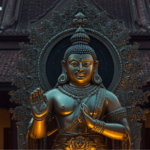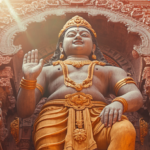

🕉️ Rishabhanatha — The First Teacher of Inner Civilization
Where human life was shaped into discipline, and silence revealed the path to liberation 🪔
An Invocation — When Life Learns to Be ConsciousThere are lives that follow instinct.
There are lives that follow society.
And then — there are lives that create a way of living.
Rishabhanatha stands at that beginning.
Not merely as a spiritual teacher —
but as a civilizational guide.
He did not just show how to worship.
He showed how to live consciously.
The Meaning of His Presence — The First Tirthankara
In Jain tradition, Rishabhanatha is the first Tirthankara — the one who establishes the tirtha, a crossing from ignorance to liberation.
He is not worshipped as a creator.
He is revered as a revealer of truth.
A guide who shows that liberation is not granted —
it is realized through awareness and discipline.
The Dawn of Human Order
Rishabhanatha is said to have lived at a time when human society was unstructured.
He introduced:
- Organized living
- Skills and livelihoods
- Social discipline
He taught people how to cultivate land, cook food, and live in harmony.
Thus, spirituality for him was not separate from life.
It began with order, responsibility, and awareness.
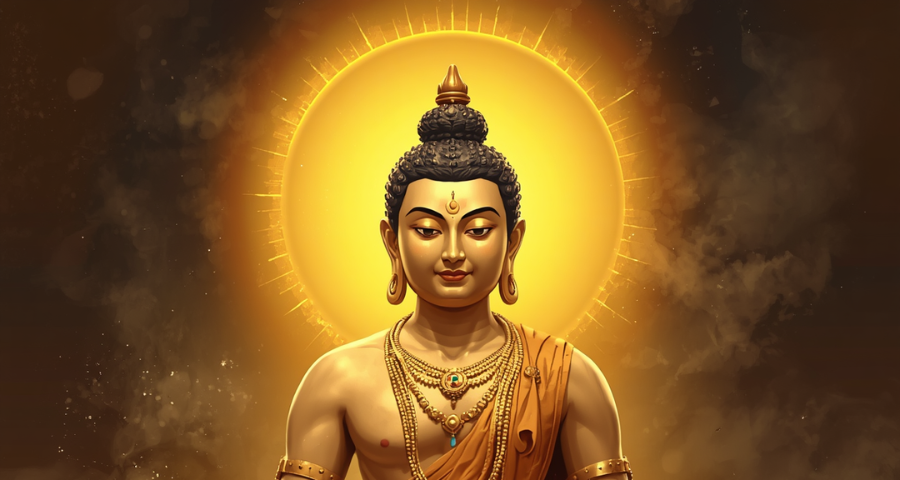
From King to Renunciate
Rishabhanatha was born into royalty.
He experienced power, comfort, and abundance.
Yet, he saw their limitation.
At a certain point, he renounced everything.
Not out of rejection.
But out of clarity.
He recognized that external fulfillment cannot satisfy inner longing.
And so, he turned inward.
Renunciation — Not Loss, But Freedom
Renunciation in his life was not escape.
It was release.
Release from attachment.
Release from identity.
Release from dependence.
To give up what binds is not loss.
It is freedom from burden.
Rishabhanatha’s renunciation marks the beginning of true inquiry.
The Path of Austerity
Rishabhanatha embraced intense austerity (tapas).
Not as punishment.
But as purification.
Through discipline, the senses were mastered.
Through stillness, the mind was quieted.
This path required patience.
Because truth does not reveal itself to restlessness.
It reveals itself to steadiness.
Silence as Teaching
Rishabhanatha did not rely on elaborate explanations.
His presence itself was teaching.
In silence, he revealed:
The Self does not need words.
Truth does not need argument.
When the mind becomes still,
understanding arises naturally.
Ahimsa — The Foundation of His Vision
One of the central principles associated with Rishabhanatha is ahimsa — non-violence.
Not only in action.
But in thought and intention.
To harm another is to disturb the harmony of existence.
To live without harm is to align with truth.
Ahimsa is not moral instruction.
It is awareness in action.
The Discipline of Self-Control
Rishabhanatha emphasized mastery over the self.
Not control over others.
Not domination of the world.
But inner discipline.
To observe desires without being driven by them.
To act consciously rather than react impulsively.
This discipline transforms life from unconscious movement
into intentional living.
Knowledge Through Experience
In his path, knowledge is not theoretical.
It is experiential.
Not learned from books.
But realized through direct observation of the self.
Who am I beyond body and mind?
What remains when everything changes?
These questions guide the seeker inward.
Liberation — Freedom from Bondage
For Rishabhanatha, liberation (moksha) is freedom from karmic bondage.
Not achieved through external rituals.
But through:
- Right perception
- Right knowledge
- Right conduct
When ignorance dissolves,
the soul stands in its pure, luminous state.
Unbound.
Unchanging.
Free.
The Legacy of the First Teacher
As the first Tirthankara, Rishabhanatha’s role is foundational.
He did not simply teach individuals.
He established a path for humanity.
A path of discipline, awareness, and non-violence.
His teachings continue to guide seekers across generations.
The Teaching — Live with Awareness
Rishabhanatha does not ask for belief.
He asks for awareness.
In every action.
In every thought.
In every choice.
Live consciously.
Act responsibly.
Observe deeply.
Because liberation is not distant.
It is uncovered through clarity of living.
🕉️ Closing Reflection — The Discipline Within You
Rishabhanatha leaves us with a silent question:
What governs your life?
Impulse?
Habit?
Desire?
Or awareness?
If even one moment becomes fully conscious,
the path begins.
And if that awareness deepens —
freedom is not far.
Because what you seek
is already within you, waiting to be realized 🪔✨