
🕉️ What Is Bhakti? — The Path of Devotion
Where love becomes the bridge, and the heart becomes the temple 🌺
An Invocation — When Love Seeks the Infinite
There is love that seeks possession.
There is love that seeks recognition.
And then — there is love that seeks nothing.
Bhakti belongs to this sacred space.
It is not desire.
It is not dependency.
It is a quiet, unwavering movement of the heart toward the Divine —
not to gain, but to merge.
The Meaning of Bhakti — To Share, To Belong
The word bhakti comes from a Sanskrit root meaning to share, to partake, to belong.
It is not worship as obligation.
It is relationship.
A relationship where the distance between devotee and Divine begins to soften.
Not through effort alone —
but through feeling.
Bhakti is not practiced.
It is felt into existence.
The Heart of the Path — Love Without Condition
At its essence, Bhakti is unconditional love.
Not love that depends on outcomes.
Not love that changes with circumstances.
But love that remains —
in joy and in difficulty.
To love the Divine not because life is easy,
but because love itself is truth.
This is Bhakti.
The Many Forms of Devotion
Bhakti is not limited to one expression.
It flows through many relationships:
- As a child toward a parent
- As a friend toward a companion
- As a lover toward the beloved
- As a servant toward the master
Each form is valid.
Because Bhakti is not about form —
it is about intensity of connection.
The Role of the Divine — Personal and Near
In Bhakti, the Divine is not abstract.
It becomes personal.
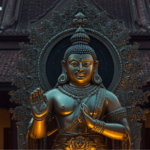
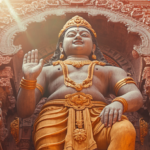
Whether one turns to Krishna, Rama, or Shiva,
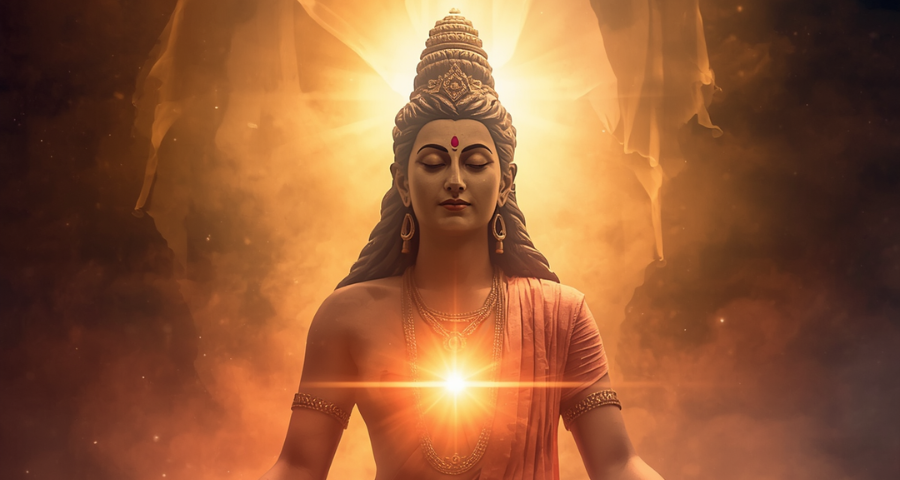
the form becomes a doorway.
Not the final truth —
but a bridge.
Through form, the formless becomes approachable.
Through name, the infinite becomes intimate.
Bhakti Beyond Ritual
Bhakti may include rituals —
but it is not limited to them.
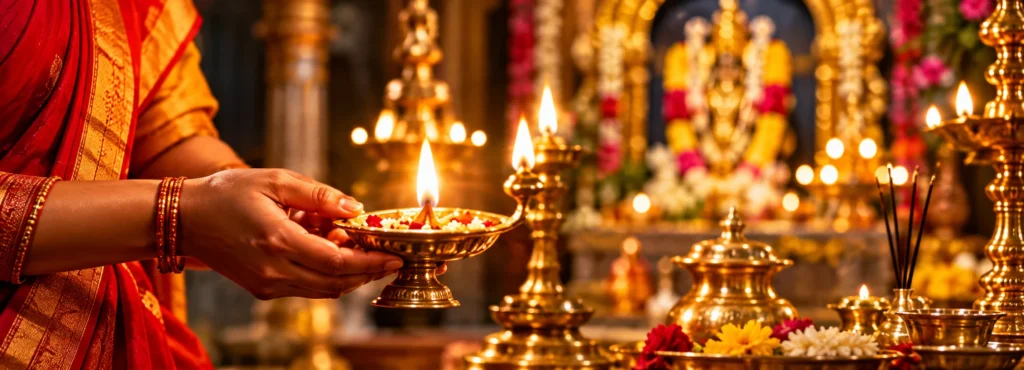
Lighting a lamp, singing a hymn, offering flowers —
these are expressions.
But without feeling, they remain empty.
True Bhakti transforms even simple acts:
A breath becomes prayer.
A moment becomes offering.
Life itself becomes worship in motion.
Surrender — The Core of Devotion
At the heart of Bhakti lies surrender.
Not defeat.
Not helplessness.
But trust.
Trust that the Divine knows what the mind cannot.
Trust that life unfolds with purpose.
Surrender is not giving up control.
It is releasing the illusion of control.
The Dissolution of Ego
Bhakti gently dissolves the ego.
The sense of “I am the doer” begins to soften.
In its place arises:
“I am held.”
“I am guided.”
“I belong.”
As ego fades, separation fades.
And where there is no separation,
there is only union.
Bhakti and Grace
In many paths, effort dominates.
In Bhakti, grace flows.
Effort prepares the heart.
But grace completes the journey.
A single moment of true devotion
can dissolve years of inner struggle.
Because Bhakti does not move step by step.
It leaps.
The Simplicity of the Path
Bhakti does not require scholarship.
It does not demand perfection.
It asks only one thing:
Sincerity.
A pure heart is enough.
Even a single tear of genuine devotion
is more powerful than elaborate rituals without feeling.
Bhakti in Daily Life
Bhakti is not separate from life.
It lives in the ordinary:
- In gratitude for a simple meal
- In kindness toward another
- In patience during difficulty
When awareness is infused with love,
every action becomes sacred.
Devotion is no longer something you do.
It becomes who you are.
Liberation Through Love
Bhakti leads to the same truth as all spiritual paths — liberation (moksha).
But its method is different.
Not through analysis.
Not through renunciation alone.
But through love so complete that separation dissolves.
When the devotee forgets themselves in the Divine,
only the Divine remains.
That is freedom.
The Teaching — Let the Heart Lead
Bhakti gently reminds us:
You do not need to become worthy of the Divine.
You only need to open.
Love does not require qualification.
It requires presence.
Let the mind question.
Let the heart respond.
Because the path of Bhakti is not walked by logic —
but by love.
🕉️ Closing Reflection — The Temple Within
Bhakti leaves you with a simple, powerful question:
Where do you seek the Divine?
In temples?
In rituals?
In distant places?
Or within your own heart?
If even for a moment,
you feel love without condition —
that moment is Bhakti.
And in that moment,
the temple is already lit within you. 🌺✨