🔱🌑 Pātāl Bhuvaneśwar — Entering the Jaṭā of Śiva from Within the Earth
🪨🐍💧🕯️
In the high folds of Kumaon, where mountains rise like silent mantras and clouds drift slowly across pine ridges, there exists a descent that feels less like a journey through space and more like a journey through layers of being. The path to Pātāl Bhuvaneśwar does not begin at the cave mouth. It begins when the mind accepts that it must go downward — away from sky, away from light, away from the comfort of open horizons — into the womb of stone and dripping time.
Many pilgrims come here knowing it as a famous cave shrine. They come prepared to see marvels of rock, to hear stories from guides, to witness formations shaped by centuries of water. They enter with curiosity, with reverence, with expectation.
But very few realize that within this already sacred descent lies an even subtler darśana — an inner Śiva presence that is not marked by lamps or signboards, not circled by offerings, not pointed out loudly. It waits quietly for the one who is willing to look without hurry.
A natural formation of stone shaped uncannily like matted locks of hair flowing downward, and beside it, a curve like the raised hood of a serpent.
It does not announce itself as a liṅga.
It does not demand attention.
It reveals itself only to stillness.
And in that moment, the pilgrim understands — this is not a place where you see Śiva.
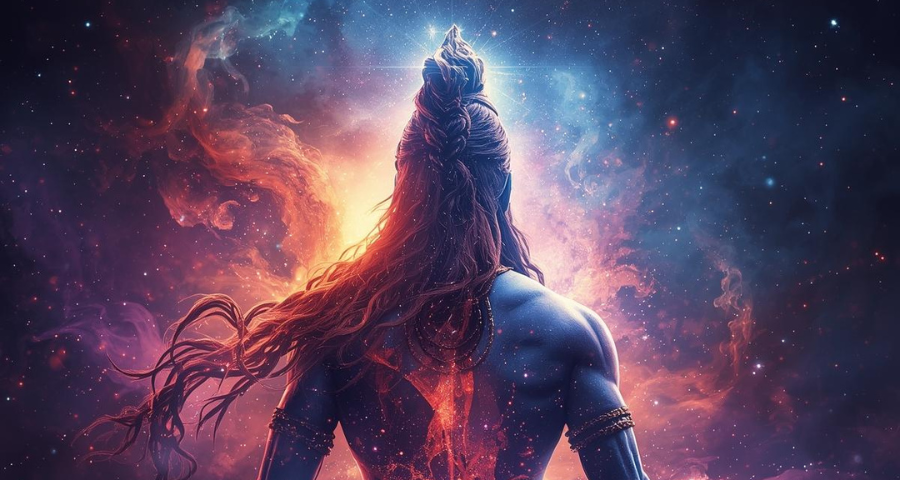
This is a place where you feel you have entered Śiva’s jaṭā from inside the earth.
🌑 The Descent
The entry into Pātāl Bhuvaneśwar is not upright. One must bend. The passage slopes downward, narrowing, forcing the spine to curve and the head to bow. Hands instinctively reach for rock surfaces to balance the descent. The air cools. The smell changes — from pine and wind to mineral and moisture.
With each step downward, sound alters. Footsteps echo. Drops of water fall from unseen ceilings and strike stone with gentle rhythm. Lamps flicker against uneven walls, throwing shadows that appear to move like ancient memories.
It is impossible to walk here casually. The body is made humble by the cave.
And this is the first teaching.
Before the mind can become humble, the body must bow.
💧 Stone Shaped by Time, Not Tools
As one moves deeper into the chambers, the cave opens into spaces that seem sculpted, yet untouched by human hand. Limestone drapes from ceilings like frozen streams. Pillars rise from the ground where water has patiently carved forms over millennia.
The guides speak of many shapes — of forms resembling deities, animals, symbols from Purāṇic lore. The mind tries to match image with imagination.
But then, away from the obvious formations, in a quieter recess of the chamber, the eye falls upon something that does not feel like imagination at all.
Stone strands descending in parallel curves like thick matted hair. Beside it, a rounded upward arc resembling the expanded hood of a nāga.
Water seeps and falls across these shapes, tracing the lines as if continuing an ancient flow.
There are no lamps directly in front of it. No queue. No priest.
And yet, the presence is unmistakable.
🕉️
This is the inner Śiva formation.
🐍 Jaṭā and Nāga — The Purāṇic Imagery in Stone
The Purāṇas describe Śiva as Jaṭādhara — the bearer of matted locks through which Gaṅgā descended to earth. They describe the nāga resting upon His form as both ornament and symbol of awakened awareness.
Standing before this formation, the pilgrim no longer sees these as poetic images. The resemblance feels geological, as though the mountain itself has remembered the form of Śiva and shaped itself accordingly.
The dripping water across the stone resembles Gaṅgā’s descent. The serpent-like curve appears to guard the flowing strands.
It feels less like symbolism and more like revelation.
As if time, water, and earth collaborated to express what scriptures later described in words.
🕯️ The Cave as the Heart — Guhāyām Nihitam Brahma
The Upaniṣads speak repeatedly of the guhā — the cave of the heart where Brahman resides. This metaphor is often contemplated inwardly by seekers in meditation.
Pātāl Bhuvaneśwar makes this metaphor physical.
You do not imagine entering the cave of the heart. You physically crawl into it.
You leave the open world behind. You enter darkness. You move slowly. You speak less. Your senses withdraw.
By the time you stand before the jaṭā formation, the outer world feels distant, as though you have passed through layers of awareness to reach something primordial.
The cave becomes the heart.
And this formation becomes the still center within it.
🌿 The Experience of Stillness
No loud mantra arises here. Even whispering feels excessive. The cave teaches reduction — of voice, of thought, of movement.
One simply stands or sits if space allows, watching water fall across stone that resembles hair carved by eternity.
Time becomes difficult to measure. There is no sunlight to track. No sound except dripping water and soft echoes.
In this environment, meditation is not practiced. It happens.
Breath slows. Thoughts thin. Awareness sharpens.
You begin to feel that the cave is not around you — you are inside something sacred and living.
💧 Bhū-Liṅga of Descent, Not Ascent
Most liṅgas rise upward from the earth, symbolizing emergence. This formation feels like the opposite — a descent from above into the earth.
Like hair flowing downward. Like Gaṅgā descending. Like consciousness turning inward.
It is a Bhū-liṅga expressed not as a pillar but as a flow.
This makes the experience uniquely powerful. It does not elevate the gaze upward. It draws the awareness inward and downward.
Into depth.
Into stillness.
Into origin.
🕉️ Vedic Meaning of This Sacred Spot
🪨 Jaṭā form — Gaṅgā’s descent through Śiva’s locks
🐍 Nāga form — protection and awakened awareness
💧 Continuous water — nature’s unending abhiṣeka
🌑 Cave descent — entry into the guhā of the heart
🕯️ Silence — the highest mantra here
🙏 How to Be Here (Pilgrim Way)
💧 Do not touch the formation
🕉️ Chant very softly or remain silent
🧘 Stand or sit in stillness for a few minutes
🙏 Offer mental reverence, not physical items
🤫 Let others experience the quiet
📍 How to Reach
- Pātāl Bhuvaneśwar, Kumaon region, Uttarakhand
- Guided descent through cave passages with lighting
- Inner formation visible only through patient observation
- Move slowly and respectfully
⚖️ Rules to Follow
- No noise or haste
- Respect natural rock formations
- Follow guide instructions
- Avoid crowding the inner chamber
- Treat the cave as a living sanctum
🏛️ Who Built This?
No artisan. No date. No inscription.
Only time, water, limestone, and silence.
🧭 10 Things Every Bhāratiya Should Know
- An inner Śiva formation many visitors overlook
- Natural jaṭā-like and serpent-shaped rock structure
- Continuous water seepage over the form
- Deepest chamber induces natural humility
- Physical enactment of Upaniṣadic guhā metaphor
- No formal shrine marks this spot
- Requires stillness to recognize
- Rare Bhū-liṅga experience underground
- Teaches inwardness through descent
- Where geology mirrors Purāṇic imagery
Here, you do not stand before Śiva.
You feel as though you are inside Him.
Har Har Mahādev 🔱
https://www.instagram.com/sanathanayatra/
https://www.facebook.com/profile.php?id=61583124183564
https://www.linkedin.com/company/sanathana-yatra/
https://x.com/SanathanaY