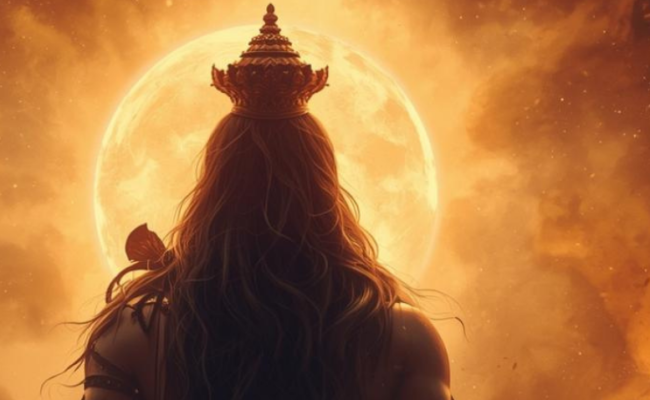

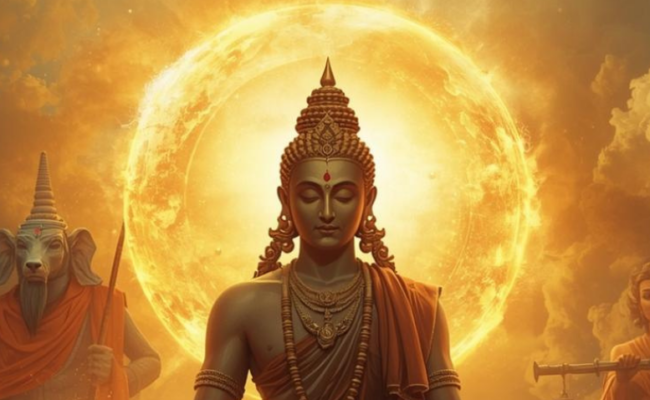
Moksha: The Freedom That Was Never Elsewhere
Moksha is not an escape from life, nor a reward waiting at the end of virtue. It is the ending of a misunderstanding so deep that it shaped the idea of bondage itself.

Where Devotion Becomes Friendship, and God Learns to Listen
There is a devotion that trembles before God.
There is a devotion that bows, retreats, and dissolves into silence.
And then — rarely, courageously —
there is a devotion that stands upright before the Divine,
looks into God’s eyes,
and speaks as one living heart to another.
It questions.
It complains.
It laughs.
It weeps.
It demands.
It trusts.
This devotion does not fear punishment.
It does not perform holiness.
It does not hide its humanity.
This devotion calls God Friend.
Sundarar Nayanār was the embodiment of this fearless love.
In him, bhakti stopped whispering and began to speak aloud.
Through him, devotion stepped down from marble pedestals and entered daily human life — messy, emotional, tender, real.
Sundarar did not approach Śiva as an unreachable cosmic absolute.
He did not seek refuge in abstraction or philosophy.
He did not dissolve himself into metaphysical silence.
He approached Śiva as Thozhan —
Companion. Confidant. Co-traveller.
His hymns were not composed for ritual perfection.
They were born in moments of longing, frustration, gratitude, anger, dependence, and overwhelming love.
They were not offerings laid at a distance.
They were conversations spoken face to face.
To speak of Sundarar is to speak of a saint who dared to say:
“You belong to me — and I belong to You.”
Sundarar was born in the late 7th century CE as Nambi Ārūrār, later revered as Sundaramūrti, in the sacred village of Tirunavalur, in present-day Tamil Nadu.
Tirunavalur is not merely a geographical location.
It is a Śaiva kṣetra — a living sacred field shaped by centuries of devotion, temple rhythms, ritual cycles, and Tamil spiritual consciousness.
Here, Śiva was not a distant theological concept.
He was present — invoked in songs, addressed in prayer, spoken of as kin.
Children grew up hearing hymns before philosophy.
Faith was learned not from texts, but from relationships.
Sundarar was born into this atmosphere of living devotion —
not surrounded by dogma,
but by intimacy with the Divine.
His parents, Sadaiya Nayanar and Isaignaniyar, were themselves deep devotees of Śiva, later honored among the Nayanars. From birth, Sundarar inhaled bhakti as naturally as breath.
Adopted by Narasinga Munaiaraiyar, a Pallava chieftain and ardent Śiva devotee, Sundarar was raised in privilege, education, refinement, and cultural richness. His association with Tiruvarur (Ārūr) — one of the most sacred Śiva temples — shaped both his identity and his destiny.
Yet Sundarar was not born to repeat tradition.
He was born to stretch devotion until it could breathe freely.
From an early age, Sundarar was known for his exceptional beauty, charm, and intelligence. People were drawn to him instinctively — not only by appearance, but by warmth, wit, and emotional openness.
Unlike many saints whose spirituality grew from suffering or withdrawal, Sundarar’s path was forged in abundance.
He experienced:
He lived fully.
This is essential to understand.
Sundarar’s bhakti did not arise from rejecting the world.
It arose from engaging the world so deeply that God could no longer remain distant.
He loved human relationships.
He enjoyed music, companionship, and travel.
He desired, erred, questioned, and felt deeply.
And yet — beneath this fullness — something waited.
Not a renunciation.
Not an escape.
But a claim.
The turning point of Sundarar’s life arrived on the day of his wedding.
The village gathered.
Rituals were prepared.
Life appeared ready to settle into social normalcy.
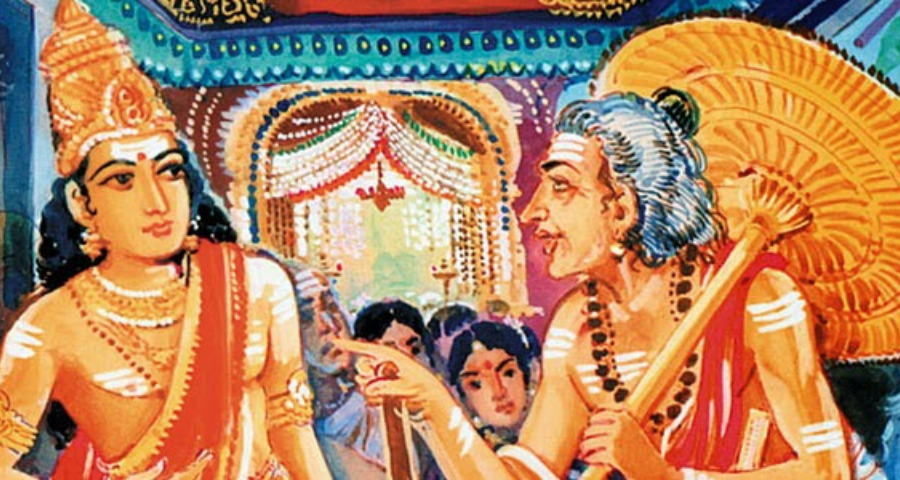
Then — unexpectedly — an old ascetic appeared.
Calm. Unhurried. Unshakable.
He declared, with quiet authority, that Sundarar was his servant, bound by a prior agreement, and therefore could not marry.
The gathering was stunned.
The family protested.
Sundarar burned with anger and humiliation.
A legal inquiry followed — palm-leaf manuscripts, witnesses, public examination.
The claim was valid.
Then the ascetic walked into the temple sanctum.
And vanished.
Only then did realization strike like lightning.
The old man was Śiva Himself.
Not the cosmic destroyer.
Not the remote ascetic of Mount Kailāsa.
But Śiva who intervenes personally, disrupts socially, and claims relationally.
In that instant, Sundarar’s ego did not dissolve into ascetic silence.
It sang.
His first hymn erupted — irreverent, intimate, bold:
“Pittā pirai chūdi…”
“O madman who wears the crescent moon…”
This was surrender without fear.
Recognition without loss of self.
Śiva had not come to erase Sundarar.
He had come to walk with him.
From that moment, Sundarar entered history as one of the 63 Nāyanmārs, and one of the three great Thevaram poets, alongside Appar and Thirugnana Sambandar.
Yet even among saints, Sundarar stood apart.
His hymns — now forming the Seventh Tirumurai — are alive with personality:
He scolds God.
He complains about suffering.
He demands protection.
He jokes.
He weeps.
He trusts completely.
He never pretends to be detached.
He brings his entire humanity into devotion.
And Śiva accepts it.
Sundarar did not retreat to forests or caves.
He walked temple roads.
He married — Paravai Nachiyar and Sangiliyar.
He knew longing, jealousy, illness, separation.
He even experienced blindness, which he bore not as punishment, but as deepened dependence.
He asked Śiva for food.
For wealth.
For relief.
For answers.
And when help came, it came not as miracle spectacle —
but as friendship fulfilled.
At one point, Sundarar says plainly:
“You made me like this. Now You must take responsibility.”
Only a friend can speak this way.
Only a God who loves can listen.
Among Sundarar’s greatest acts of devotion is the Thiruthonda Thogai — a hymn that lovingly lists all 63 Nayanars.
In doing so, Sundarar ensured that devotion would never become self-centered.
His song preserved community, lineage, humility, and memory.
This hymn later became the foundation for Sekkizhar’s Periya Puranam, the great epic of Shaiva saints.
Sundarar did not merely sing of God.
He sang of those who loved God.
Sundarar never wrote philosophy.
He never systematized doctrine.
Yet his life teaches profoundly:
Through Sundarar, bhakti reclaimed its human heart.
Tradition tells us that at the end of his earthly life, Śiva invited Sundarar to Kailāsa.
Not through death as separation.
But through departure as reunion.
The journey ended where friendship began.
Sundarar does not ask you to be pure.
He does not ask you to renounce the world.
He does not ask you to silence your heart.
He asks only this:
Can you speak to God honestly?
If you can —
God will not turn away.
He will walk beside you.
As Friend. 🪔🌺
https://www.instagram.com/sanathanayatra/
https://www.facebook.com/profile.php?id=61583124183564
A curated list of the most popular travel packages based on different destinations.
Moksha is not an escape from life, nor a reward waiting at the end of virtue. It is the ending of a misunderstanding so deep that it shaped the idea of bondage itself.
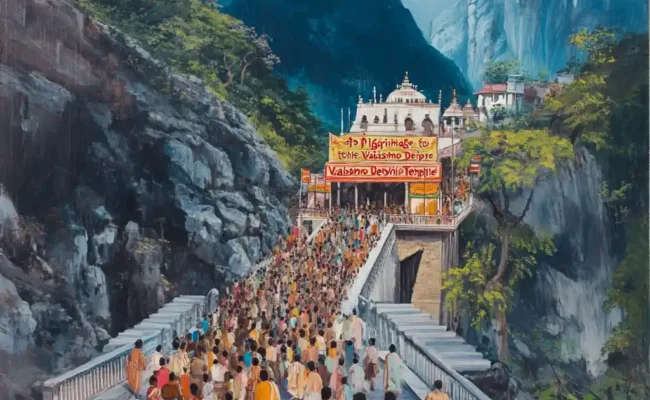
The Vaishno Devi Temple ranks among India’s most revered pilgrimage sites. Nestled in the Trikuta Mountains.
Time did not enter Madurai as a traveler; it awakened here as remembrance.
Khajuraho does not rise from the earth like a monument; it unfolds like a revelation 🌄. In the heart of central Bharata, far from rivers that announce themselves loudly, Time arrived here quietly and chose intimacy over grandeur.
Khajuraho does not rise from the earth like a monument; it unfolds like a revelation 🌄. In the heart of central Bharata, far from rivers that announce themselves loudly, Time arrived here quietly and chose intimacy over grandeur.
Khajuraho does not rise from the earth like a monument; it unfolds like a revelation 🌄. In the heart of central Bharata, far from rivers that announce themselves loudly, Time arrived here quietly and chose intimacy over grandeur.
Before words arise, there is silence.
Before thought forms, there is awareness.
Before the “I” claims ownership, there is Being.
Khajuraho does not rise from the earth like a monument; it unfolds like a revelation 🌄. In the heart of central Bharata, far from rivers that announce themselves loudly, Time arrived here quietly and chose intimacy over grandeur.