
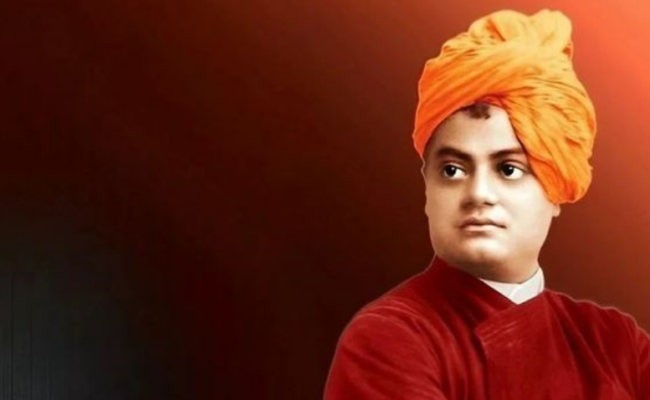
Swami Vivekananda — The Lion Who Carried Vedanta to the World
Time did not enter Madurai as a traveler; it awakened here as remembrance.

❄️🌬️🕉️
Beyond the known footpath to Rudranāth, where most yatris keep to the marked trail and the rhythm of pilgrimage, there is a quieter direction that only shepherds take. No signboard points to it. No shrine announces it. A faint line across grass and stone bends away from the route and slips toward a lonely rise of rock.
There, in the open Himalayan vastness, rests a simple liṅga upon bare earth.
No temple. No walls. No priest. Only sky, wind, and snow for half the year.
This is the Rudranāth side-trail liṅga — known to graziers, unseen by maps, felt more than found.
🌬️🪨
The climb toward it is not difficult, but it is solitary. The soundscape changes as one leaves the main path. Human voices fade. What remains is the whistle of wind through alpine grass, the distant call of birds, and the soft crunch of boots over stone.
When the liṅga finally comes into view, it does not appear placed. It appears present — as if the mountain itself pushed a form upward from within.
Dark stone against pale meadow. Silence against sky.
🕉️🏔️
In Vedic understanding, the Himalaya is not merely geography; it is Devabhūmi — the field where stillness itself becomes a teacher. Here, Śiva is not approached through architecture but through exposure. There is nowhere to hide from the elements. The mind, too, loses its coverings.
The liṅga stands under open heavens, receiving snow, rain, sun, and wind as its abhiṣeka through the seasons. In winter, it disappears beneath white. In summer, it re-emerges, washed and silent.
Nature performs the worship here without interruption.
❄️🌌
Shepherds say that their elders paused here long before the formal yātrā routes were known. They would leave a little water, a leaf, or simply bow their heads before moving on with their flocks. No mantra was required. The place itself induced reverence.
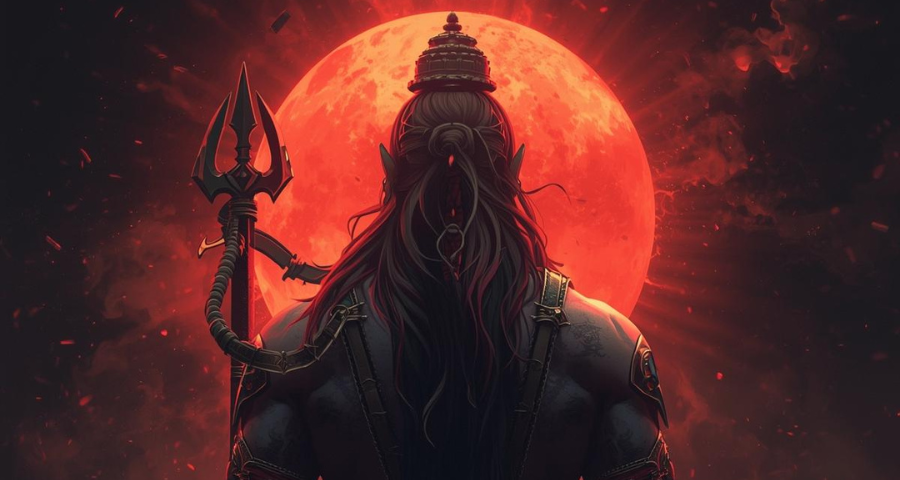
Such spots are called svayaṁ-prakaṭa sthala — where the sacred reveals itself without invitation.
Sitting near the liṅga, one feels the vastness of space pressing gently inward. Thoughts thin out. Breath deepens in the cold, clean air. The sky feels closer than the ground.
🌿🧘
The guhā (cave) spoken of in the Upaniṣads is often inward, but here the entire mountain becomes that cave. The open landscape paradoxically turns the mind inward. There are no distractions to hold on to. Only presence.
Chanting “Om Namaḥ Śivāya” here does not echo from walls. It dissolves into sky.
And that dissolution feels like the teaching.
🏔️ Himalaya as the field of tapas and stillness
🪨 Liṅga as the axis of awareness under open sky
❄️ Snow and seasons as natural abhiṣeka
🌬️ Wind as the carrier of mantra
🌌 Vast space turning the mind inward
💧 Offer a little water if carried
🍃 Place a leaf or simply touch the earth
🕉️ Chant softly or sit in silent meditation
🙏 Bow to the four directions before leaving
🧘 Sit for a few minutes facing the peaks
No elaborate ritual is needed. Presence is the pūjā.
No one. The liṅga stands without history of installation, giving the sense that it belongs to the mountain itself.
Here, there is no bell to ring, no lamp to light.
Only wind, sky, and the still form of Śiva abiding in the heights.
Har Har Mahādev 🔱.
https://www.instagram.com/sanathanayatra/
https://www.facebook.com/profile.php?id=61583124183564
A curated list of the most popular travel packages based on different destinations.
Time did not enter Madurai as a traveler; it awakened here as remembrance.
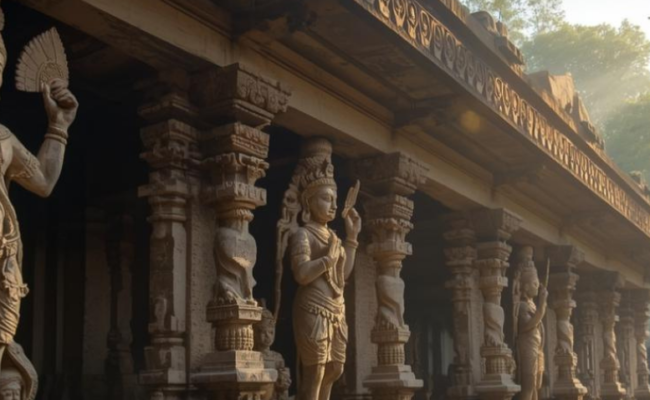
Khajuraho does not rise from the earth like a monument; it unfolds like a revelation 🌄. In the heart of central Bharata, far from rivers that announce themselves loudly, Time arrived here quietly and chose intimacy over grandeur.
Khajuraho does not rise from the earth like a monument; it unfolds like a revelation 🌄. In the heart of central Bharata, far from rivers that announce themselves loudly, Time arrived here quietly and chose intimacy over grandeur.
Before words arise, there is silence.
Before thought forms, there is awareness.
Before the “I” claims ownership, there is Being.
Time did not enter Madurai as a traveler; it awakened here as remembrance.
Khajuraho does not rise from the earth like a monument; it unfolds like a revelation 🌄. In the heart of central Bharata, far from rivers that announce themselves loudly, Time arrived here quietly and chose intimacy over grandeur.
Moksha is not an escape from life, nor a reward waiting at the end of virtue. It is the ending of a misunderstanding so deep that it shaped the idea of bondage itself.
Khajuraho does not rise from the earth like a monument; it unfolds like a revelation 🌄. In the heart of central Bharata, far from rivers that announce themselves loudly, Time arrived here quietly and chose intimacy over grandeur.