🕉️🌌 Moksha: The Freedom That Was Never Elsewhere🕉️🌌
Moksha is not an escape from life, nor a reward waiting at the end of virtue. It is the ending of a misunderstanding so deep that it shaped the idea of bondage itself. Indian philosophy speaks of Moksha not as a journey outward, but as a recognition inward. Nothing new is attained. Nothing external is gained. What falls away is the false belief that one is incomplete, bound, or separate.
Moksha does not arrive in time. It is not postponed to death, heaven, or another world. Time itself belongs to the realm of becoming, while Moksha belongs to Being. It is freedom from becoming, not freedom after becoming. This is why the sages spoke softly about it. Loud claims belong to ambition. Moksha belongs to silence.
🌿 The human experience begins with identification. From childhood, awareness learns to point at objects and say “this is me” or “this is mine.” First the body, then emotions, then roles, achievements, beliefs, and wounds. Gradually, identity thickens. Life begins to feel heavy. Joy becomes fragile. Fear becomes constant. This weight is what Indian philosophy calls bandha — bondage.
Bondage is not imposed by the world. It is not punishment. It is not fate. It is the natural consequence of misidentification. When awareness mistakes itself for something that changes, insecurity is unavoidable. Whatever changes can be lost. Whatever can be lost must be protected. Protection breeds anxiety. Anxiety breeds suffering.
Moksha is the collapse of this chain.
✨ The Upanishads describe Moksha in paradoxes, just as they describe Brahman. They say it is attained by one who knows, yet nothing is attained. They say the knower becomes free, yet there was never a bound soul. These are not contradictions meant to confuse. They are meant to exhaust the mind’s habit of grasping.
Moksha is not becoming divine. It is recognizing that the deepest essence was never non-divine. The individual does not merge into something else. The individual dissolves as a mistaken conclusion.
🔥 Different schools of Indian thought describe Moksha through different lenses, but they do not contradict each other as much as they appear to. They address different temperaments of the human mind.
In Advaita Vedanta, Moksha is jnana — knowledge. Not intellectual knowledge, but direct seeing. Seeing that the self is not the body, not the mind, not the story, but the witnessing awareness in which all stories appear. When this seeing becomes steady, fear collapses. Desire loosens. Freedom stands revealed as one’s own nature.
In Bhakti traditions, Moksha is described as closeness to the Divine. Love dissolves the ego where inquiry dissolves it through clarity. The devotee forgets themselves in surrender. The sense of separation melts. The language is emotional, but the destination is the same — the end of isolation.
In Karma Yoga, Moksha arises through selfless action. When actions are performed without attachment to outcome, the doer thins. Life continues, but the inner claim of ownership fades. Action no longer binds because it no longer reinforces identity.
🧘 What unites all these paths is not method, but result. Moksha is freedom while living. A liberated person does not disappear from the world. They eat, speak, work, love, and age like anyone else. What disappears is the inner compulsion. Life is no longer a negotiation with fear.
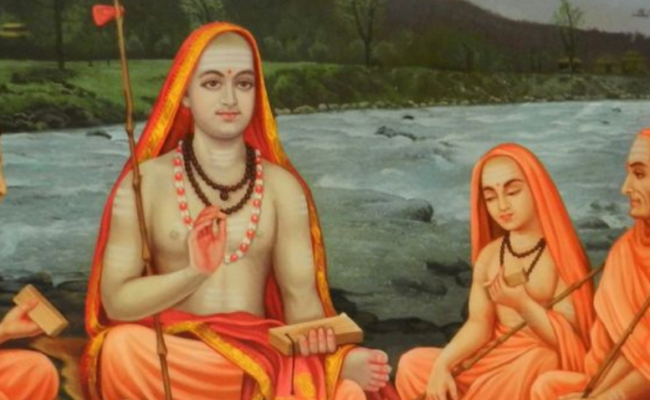
Shankaracharya emphasized this fiercely. For him, Moksha was not an altered state. It was the natural state uncovered. Ignorance veils it. Knowledge removes the veil. Nothing else is required.
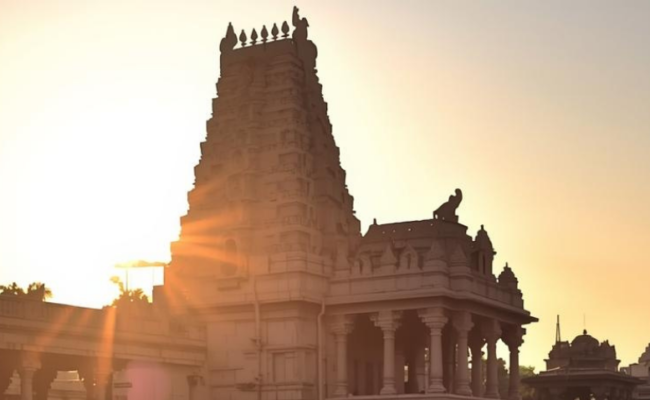
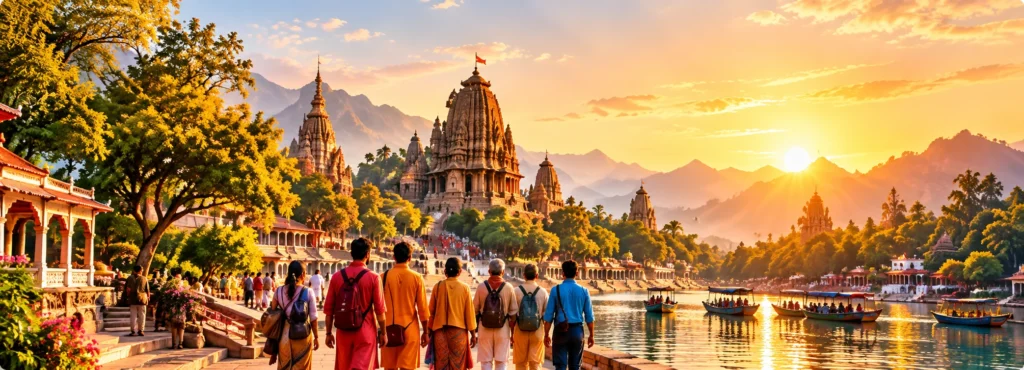
🌍 Over time, Moksha became woven into India’s geography, just as Brahman did. Sacred places were not seen as factories producing liberation, but as environments that weakened ego and strengthened clarity. Travel itself became symbolic. Leaving home mirrored leaving fixed identity. Fatigue humbled the body. Uncertainty loosened control. In this softened condition, insight could arise.
🏞️ Varanasi became associated with Moksha not because death there grants liberation mechanically, but because the city confronts impermanence relentlessly. When death is no longer hidden, clinging weakens. Moksha here is not promised — it is understood.
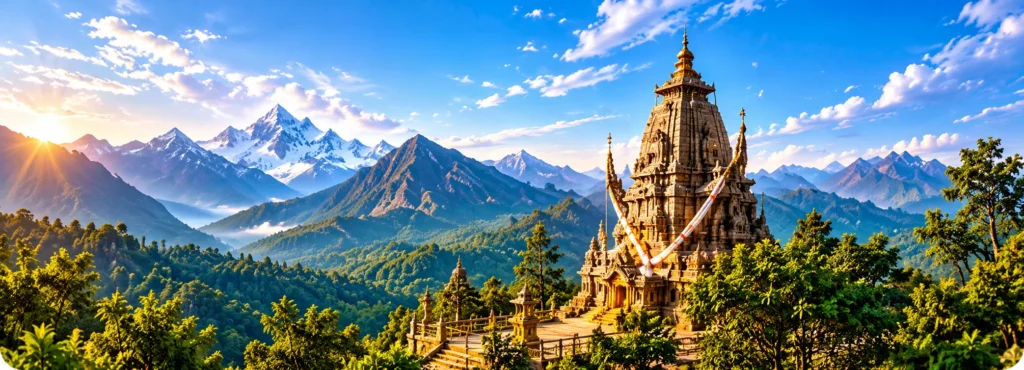
🏔️ The Himalayas express Moksha as renunciation. Their vastness dwarfs personal narrative. In caves and high valleys, the mind’s noise loses momentum. Silence reveals that awareness does not need stimulation to exist. Moksha here feels like weightlessness.
🌊 At Prayagraj, where rivers meet, Moksha is symbolized as convergence. The outer confluence mirrors the inner merging of action, devotion, and knowledge. Pilgrims bathe not to wash sins, but to enact renewal. Moksha is remembered as inner clarity, not moral bookkeeping.
🌴 In Tiruvannamalai, Arunachala stands unmoving while generations pass. Ramana Maharshi pointed to this mountain as the self itself — silent, present, unchanged. Circumambulating the hill becomes a meditation on stillness within movement. Moksha here is intimacy with one’s own being.
🌀 Across centuries, the idea of Moksha protected Indian philosophy from despair. Life was not reduced to survival or achievement. Suffering was acknowledged without being absolutized. Even when conditions were harsh, inner freedom remained possible.
Modern seekers often rediscover Moksha through unexpected doors. Stress leads them to meditation. Anxiety leads them to self-inquiry. Burnout leads them to silence. Many begin seeking relief and end by questioning identity itself. Without realizing it, they step onto the ancient path.
🌟 Moksha reshapes ethics quietly. When the illusion of separation weakens, exploitation loses logic. Compassion stops being an effort. Truthfulness stops being heroic. Simplicity stops being deprivation. Life aligns naturally.
Moksha does not promise happiness as emotion. Emotions still rise and fall. It offers something deeper — unshakeability. Joy is enjoyed fully. Pain is met without collapse. Loss is felt without annihilation.
🕊️ Death loses its terror under the light of Moksha. Not because the body survives, but because identity was never confined to the body. What ends was never the self. What remains was never born.
🕉️ The final teaching is disarmingly simple. You are not moving toward Moksha. You are moving away from ignorance. When ignorance ends, Moksha stands revealed — ordinary, intimate, and undeniable.
🕉️✨ Mantras and Sacred Declarations of Moksha
“Na ayam atma baddhah na muktaḥ”
— The Self is neither bound nor liberated
“Jnānāt eva tu kaivalyam”
— Liberation comes only through knowledge
“Moksho nāma na bhavet prāptih”
— Moksha is not an attainment
“Shivoham”
— I am pure awareness
“Om Shanti Shanti Shantiḥ”
— Peace in body, mind, and existence
🛕🌍 Sacred Places That Reflect the Meaning of Moksha
🔥 Kashi, Varanasi
Moksha through confronting impermanence and transcending fear of death.
🏔️ Arunachala, Tiruvannamalai
Moksha as stillness discovered within awareness itself.
🌊 Prayagraj (Triveni Sangam)
Moksha as inner convergence of knowledge, action, and devotion.
🏔️ Himalayan Ashrams
Moksha through silence, renunciation, and clarity.
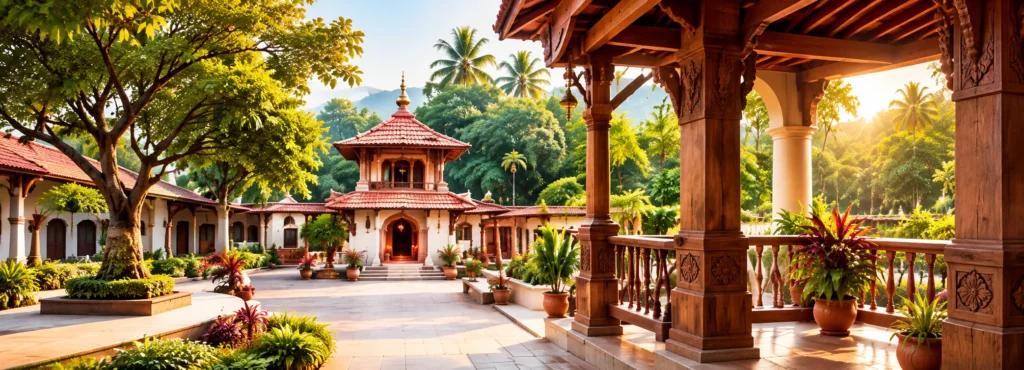
🌴 Sringeri Sharada Peetham
Moksha preserved through knowledge and disciplined inquiry.
🕯️ Badrinath
Moksha as wisdom rooted in austerity and surrender.
https://www.instagram.com/sanathanayatra/
https://www.facebook.com/profile.php?id=61583124183564
https://www.linkedin.com/company/sanathana-yatra/
https://x.com/SanathanaY