🕉️🌿 What Is Dharma? — Living Purposefully 🕉️🌿
Where Action Aligns with Truth, and Life Becomes Sacred Order
Dharma is not merely duty.
It is not a rulebook imposed from outside.
It is not morality enforced by fear.
Dharma is alignment.
Before confusion fragments life into choices,
before desire pulls in opposite directions,
there is a quiet intelligence holding everything together.
Indian thought calls that sustaining intelligence Dharma.
Dharma is not invented by culture.
Culture survives because of Dharma.
It is the principle that allows existence to remain coherent —
from galaxies turning in silence
to conscience whispering in the human heart.
Dharma is not what you are told to do.
It is what becomes clear when you are inwardly aligned.
🌿 The Root Meaning — That Which Sustains
The Sanskrit root dhṛ means “to uphold” or “to sustain.”
Dharma is that which sustains:
• the order of the cosmos
• the balance of society
• the integrity of the individual
Without Dharma, there is movement — but no direction.
There is power — but no wisdom.
There is action — but no harmony.
Dharma is the invisible architecture of rightness.
Not rigid.
Not mechanical.
But alive.
🔥 Beyond Rule — The Living Intelligence of Context
Dharma is often misunderstood as fixed law.
Yet Indian wisdom recognized something subtler:
Dharma is contextual.
What is dharmic for a parent is not the same as for a monk.
What is dharmic in peace may not be dharmic in crisis.
What protects life in one moment may harm it in another.
Dharma requires awareness.
It is not blind obedience.
It is awakened participation.
⚖️ Dharma and Responsibility
Human life carries layers of responsibility:
• To oneself
• To family
• To society
• To nature
• To truth
Dharma is the art of balancing these without violence to the whole.
When personal gain disrupts collective harmony,
Dharma has been compromised.
When fear silences conscience,
Dharma has weakened.
When action serves truth even at personal cost,
Dharma stands firm.
📜 Dharma in the Bhagavad Vision
In the dialogue of Bhagavad Gita, Dharma is not abstract philosophy.
It is crisis lived in real time.
On the battlefield of Kurukṣetra, action cannot be avoided.
Avoidance itself becomes a choice.
Dharma is not escape.
It is clarity within action.
It asks not, “What is comfortable?”
But, “What upholds truth here?”
🧘 Dharma Is Not Suppression
Dharma does not demand repression of individuality.
It refines it.
Your skills, temperament, capacity —
these are not accidents.
Living purposefully means discovering how your unique nature can serve the larger order.
When talent serves ego alone, it fragments.
When talent serves Dharma, it stabilizes.
🌍 Dharma and the Natural World
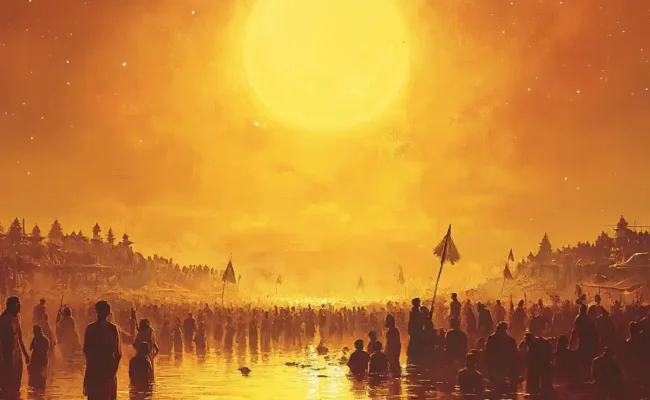
The sun rises without instruction.
Rivers flow without ambition.
Trees offer shade without negotiation.
Nature does not struggle to be dharmic.
It simply expresses its inherent law.
Human beings suffer because they can choose against their nature.
Dharma is remembering how to choose in alignment.
🌀 Inner Conflict — When Dharma Is Ignored
Most anxiety is not random.
It arises when action contradicts inner knowing.
When words betray truth.
When gain violates integrity.
When convenience overrides conscience.
The discomfort is not punishment.
It is signal.
Dharma unsettled creates friction.
Dharma honored creates steadiness.
🌟 Personal Dharma — Discovering Your Role
Dharma is universal — yet personal.
There is sanātana dharma — the eternal principles of truth, compassion, non-harm.
And there is svadharma — your specific expression of them.
To live purposefully is to ask:
• What is mine to uphold?
• What responsibility cannot be outsourced?
• What action would leave me inwardly undivided?
Purpose is not ambition.
Purpose is alignment.
🔔 Dharma Is Not Perfection
Living dharmically does not mean never erring.
It means returning.
It means recalibrating when ego distorts clarity.
It means learning.
Dharma is dynamic.
It evolves as understanding deepens.
The commitment is not to rigid righteousness.
It is to sincerity.
🌺 Dharma in Ordinary Life
Dharma is present in small acts:
• speaking honestly when lying is easier
• fulfilling promises quietly
• caring for aging parents
• choosing fairness over advantage
• protecting someone weaker
No ceremony required.
No recognition needed.
Dharma rarely announces itself.
It simply stabilizes the world around it.
🌄 What Dharma Ultimately Reveals
Dharma is not separate from truth.
When you live in alignment with it:
Life becomes simpler.
Energy becomes cleaner.
Sleep becomes deeper.
Purpose is no longer hunted.
It is lived.
Dharma does not guarantee ease.
It guarantees coherence.
🕊️ Closing Reflection — Listen Before Acting
You do not need a dramatic calling to live purposefully.
Pause before action.
Notice the quiet intelligence beneath impulse.
Ask gently:
Does this uphold harmony?
Does this strengthen truth?
Does this reduce unnecessary harm?
When the answer feels steady rather than loud,
that is Dharma speaking.
Live from there.
And life — however complex —
will remain inwardly whole. 🕉️🌿
https://www.instagram.com/sanathanayatra/
https://www.facebook.com/profile.php?id=61583124183564
https://www.linkedin.com/company/sanathana-yatra/
https://x.com/SanathanaY