A Living Confluence of Architecture, Art, and Devotion 🪔
An Invocation — When Architecture Speaks
Some temples inspire through silence.
Some inspire through ritual.
But Pattadakal inspires through conversation.
Here, stone speaks a language older than words. Pillars, walls, and temple towers quietly communicate the devotion, imagination, and philosophical depth of an ancient civilization. Each carving is more than decoration; it is a reflection of the spiritual thought of the time.
Pattadakal reminds us that sacred spaces are not merely shelters for worship. They are places designed to awaken awareness, inviting visitors to pause, observe, and experience the sacred rhythm of life itself.
Sacred Time — A Golden Age of Creation
Pattadakal flourished during the reign of the Chalukya Dynasty in the 7th and 8th centuries.
This period marked one of the most creative phases in the history of temple architecture in southern India. The Chalukya rulers encouraged artistic innovation and supported sculptors, architects, and craftsmen who brought spiritual imagination into physical form.
Temples constructed during this era were not just religious structures. They were symbols of cultural confidence, reflecting a society that valued knowledge, art, and devotion in equal measure.
A Sacred Landscape by the River
The temple complex of Pattadakal stands gracefully beside the flowing waters of the Malaprabha River.
In Indian sacred traditions, rivers symbolize continuity and purification. They carry stories, prayers, and memories across generations. The presence of the river adds another layer of serenity to the site.
Pilgrims arriving here centuries ago would first encounter the gentle sound of flowing water, preparing their minds for the sacred experience ahead. The river quietly witnessed royal ceremonies, temple rituals, and the daily devotion of countless visitors.
A Place of Royal Consecration
Pattadakal was not only a sacred site for devotees; it also played an important role in royal life.
The Chalukya kings chose this location as the ceremonial ground where their coronations were performed. By being crowned in this sacred environment, rulers symbolically placed their authority under the guidance of divine principles.
The rituals conducted here reminded kings that governance was not merely political power. It was a responsibility to uphold dharma, the moral and cosmic order that sustains society.
Thus, Pattadakal became a place where spirituality and governance were deeply intertwined.
The Meeting of Two Architectural Worlds
One of the most remarkable features of Pattadakal is its architectural diversity.
Across India, temple design evolved through two prominent traditions: the Nagara style of northern India and the Dravidian style of the south.
At Pattadakal, these two traditions meet and coexist beautifully. Some temples feature the curved towers typical of Nagara architecture, while others display the stepped pyramidal towers associated with Dravidian design.
This blending of styles demonstrates the openness and creativity of the Chalukya architects, who were willing to experiment and innovate rather than follow rigid rules.
The Harmony of Diversity
The temples that form the Pattadakal Group of Monuments illustrate how diversity can produce harmony.
Different architectural forms, sculptural techniques, and artistic ideas come together within a single sacred landscape. Instead of appearing fragmented, the temples complement one another and create a unified aesthetic experience.
This harmony reflects a deeper cultural insight: spiritual truth can be expressed in many ways, and each form adds richness to the collective heritage.
Virupaksha Temple — A Monument of Devotion
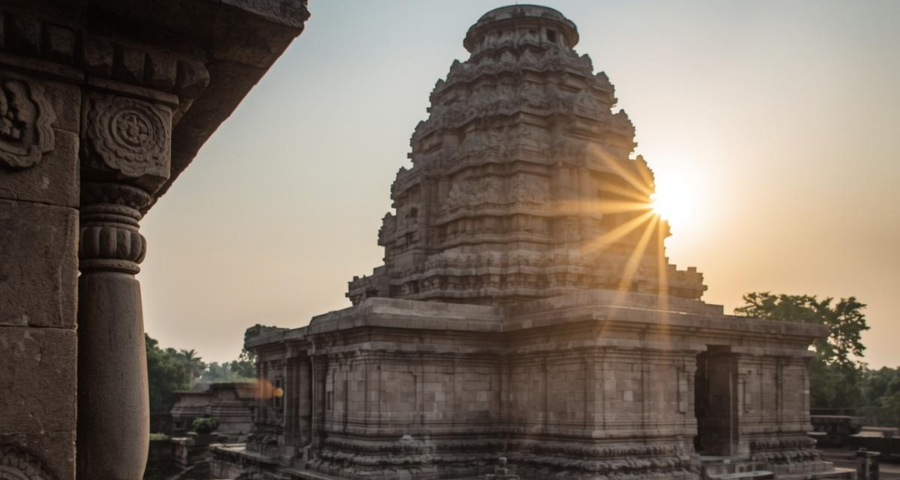
Among the many temples at Pattadakal, the magnificent Virupaksha Temple Pattadakal stands as the most celebrated.
Constructed in the 8th century, the temple showcases the architectural maturity achieved by the Chalukya artisans. Its grand structure, intricate pillars, and spacious halls demonstrate both technical precision and aesthetic brilliance.
Dedicated to Lord Shiva, the temple also reflects the deep devotion of the community that built it. The walls and pillars are adorned with scenes from mythology, presenting a vivid narrative of divine stories and spiritual ideals.
Mallikarjuna Temple — Grace in Stone
Close to the Virupaksha Temple stands the elegant Mallikarjuna Temple Pattadakal.
Though slightly smaller in scale, the temple possesses a refined charm. Its carvings are delicate yet expressive, revealing the artistic sensitivity of the sculptors who created them.
The temple walls depict scenes from mythology alongside images of daily life, reminding visitors that spirituality is woven into the fabric of ordinary existence.
Mythology Carved into Eternity
The temple walls at Pattadakal serve as visual storytellers.
Episodes from the Ramayana and the Mahabharata are carefully sculpted into the stone surfaces.
These carvings illustrate heroic battles, divine encounters, and moments of moral decision. They allowed ancient visitors to connect with sacred narratives even if they could not read written scriptures.
Through art, complex spiritual teachings were made accessible to everyone.
Music and Dance in Stone
Many carvings at Pattadakal depict musicians playing instruments and dancers performing graceful movements.
These sculptures highlight the cultural richness of the Chalukya period, when music and dance were considered sacred expressions of devotion.
Artistic performance was not viewed as entertainment alone. It was seen as a form of worship, a way to honor the divine through rhythm, movement, and melody.
The presence of these images reminds visitors that spirituality can also be joyful and creative.
The Genius of Chalukyan Sculptors
The sculptors who worked at Pattadakal were masters of their craft.
Working with hard sandstone, they created figures that appear almost alive. Facial expressions convey serenity and devotion, while intricate jewelry and garments demonstrate remarkable attention to detail.
These artisans combined technical skill with spiritual dedication. For them, carving stone was not merely a profession; it was an offering to the divine.
Their creations continue to inspire admiration more than a thousand years later.
Recognition as a World Heritage Treasure
Because of its extraordinary historical and artistic significance, Pattadakal has received international recognition.
The site is preserved today as part of the UNESCO World Heritage list.
This recognition ensures that the temples remain protected for future generations while also drawing global attention to India’s rich architectural heritage.
Visitors from across the world come here to witness the harmony of design, art, and spirituality embodied in these ancient monuments.
Closing Reflection — When Stone Becomes Teacher
Pattadakal offers more than historical knowledge.
It invites quiet reflection.
Walking through the temple complex, visitors may feel a sense of connection with the countless artisans, pilgrims, and rulers who once stood in the same spaces centuries ago.
The temples remind us that architecture can express values, beliefs, and aspirations that transcend time.
Pattadakal ultimately teaches a simple yet profound lesson: when human creativity is guided by devotion and awareness, even stone can become a living bridge between the earthly and the divine. 🪔🌺