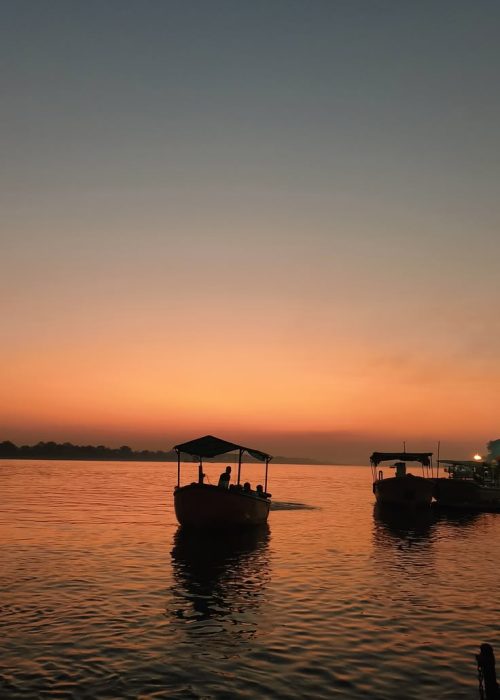
Narmada Nadi — The Sacred Artery of Central India 🌊🕉️
The Narmada River is one of India’s most revered rivers, flowing as a life-giving artery across central India. Originating in the Maikal ranges at Amarkantak and moving westward toward the Arabian Sea, the Narmada has shaped agriculture, temple culture, pilgrimage traditions, and historic settlements for thousands of years. Along its banks lie ancient kshetras, ghats, temples, and spiritual centers, reflecting a deeply integrated civilization where ecology, devotion, and human settlement evolved together.
Formation and Geography — Narmada Nadi 🏔️💧
The Narmada River originates at Amarkantak in the Maikal ranges of present-day Madhya Pradesh, at an elevation of about 1,057 meters above sea level. This region receives seasonal monsoon rainfall, feeding springs and forest streams that give rise to the sacred river. Unlike most major Indian rivers, the Narmada flows westward, carving a unique path across central India.
From its source, the Narmada flows approximately 1,312 km, traversing Madhya Pradesh, Maharashtra, and Gujarat before emptying into the Arabian Sea near Bharuch. Along its course, the river forms deep gorges, marble cliffs, waterfalls like Dhuandhar, and fertile plains that have supported settlements and pilgrimage traditions for centuries.
📊 Geographical Features of Narmada
| Feature | Detail |
|---|---|
| Source | Amarkantak, Maikal Hills |
| Elevation at Source | ~1,057 meters |
| Length | ~1,312 km |
| Major Tributaries | Tawa, Hiran, Orsang, Kolar |
| Basin Area | ~98,800 sq. km |
| Mouth | Arabian Sea (Gulf of Khambhat, Gujarat) |
| States Traversed | Madhya Pradesh, Maharashtra, Gujarat |
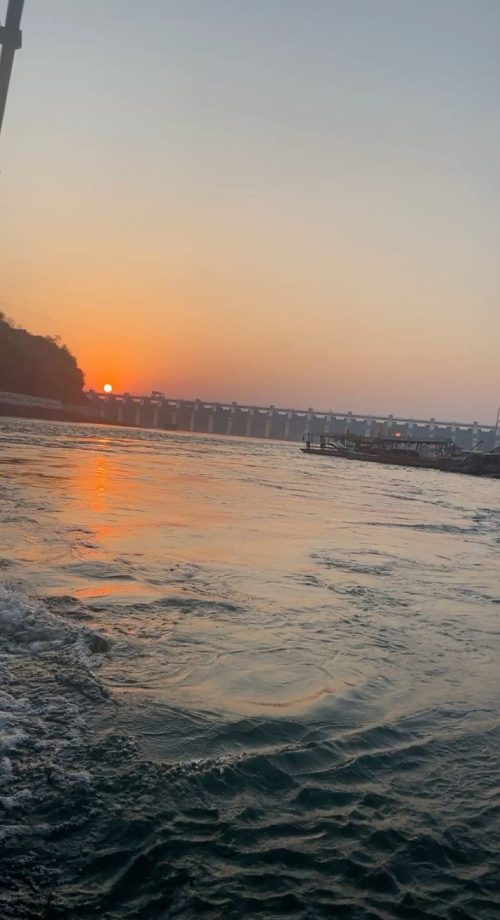
Major tributaries such as the Tawa and Hiran expand the river’s basin, supporting agriculture and settlement across central India. These tributaries create fertile valleys and sacred confluences that nurtured temple sites, pilgrimage routes, and traditional communities along the riverbanks.
Geologically, the Narmada flows through a rift valley between the Vindhya and Satpura ranges, cutting across ancient rock formations and creating dramatic landscapes. As it moves westward, the river spreads into fertile plains before forming an estuarine delta near the Arabian Sea. This unique geography supported agrarian life, trade routes, and sacred centers, making the Narmada a vital lifeline of central India’s ecological and cultural history.
Historical Significance and Civilizational Role — Narmada Nadi 🏛️📜
The Narmada River has been central to human settlement, governance, and economic life across central India for thousands of years. Archaeological and historical evidence indicates Neolithic, Chalcolithic, and Iron Age communities flourished along its basin, adapting to riverine ecology for agriculture, trade, and ritual practices. The river’s steady flow and fertile banks supported early agrarian systems and evolving settlement patterns across the Vindhya–Satpura region.
Its fertile plains enabled the cultivation of wheat, pulses, oilseeds, cotton, and millets, sustaining rural communities and supporting regional economies. Along its course, the river also became a sacred axis for pilgrimage, temple culture, and spiritual traditions, linking forests, hills, and plains into a unified cultural landscape.
Major Cities Along the Narmada
| Ancient Name | Modern Name | Significance |
|---|---|---|
| Amarkantak | Amarkantak | Sacred origin; major pilgrimage center |
| Mahishmati | Maheshwar | Ancient capital; temple and trade hub |
| Omkar Mandhata | Omkareshwar | Jyotirlinga kshetra; spiritual center |
| Bhrigukachchha | Bharuch | Historic port city; trade and maritime hub |
Dynasties such as the Mauryas, Guptas, Paramaras, and later regional kingdoms depended on the Narmada for agriculture, trade routes, and territorial boundaries. The river often served as a natural divide between northern and southern India, shaping political geography and strategic defense.
The Narmada basin also fostered centers of spiritual learning, ashrams, and pilgrimage traditions, especially through the sacred Narmada Parikrama, a unique practice of circumambulating the river. Temples, ghats, and hermitages along its banks became hubs for Vedic study, meditation, and philosophical discourse.
- Served as a civilizational backbone of central India.
- Supported agrarian communities and forest-based economies.
- Hosted spiritual centers and pilgrimage traditions of Sanatana Dharma.
- Enabled inland trade routes connecting central India to western coastal ports.
The Narmada’s westward journey from Amarkantak to the Arabian Sea forms a powerful ecological and cultural corridor — linking sacred origins, forest settlements, temple towns, fortified centers, and coastal trade hubs. Across centuries, the river has nurtured a landscape where spirituality, ecology, governance, and cultural traditions evolved in enduring harmony.
Sacred Kshetras, Temples, and Pilgrimage Circuits — Narmada Nadi 🛕🙏
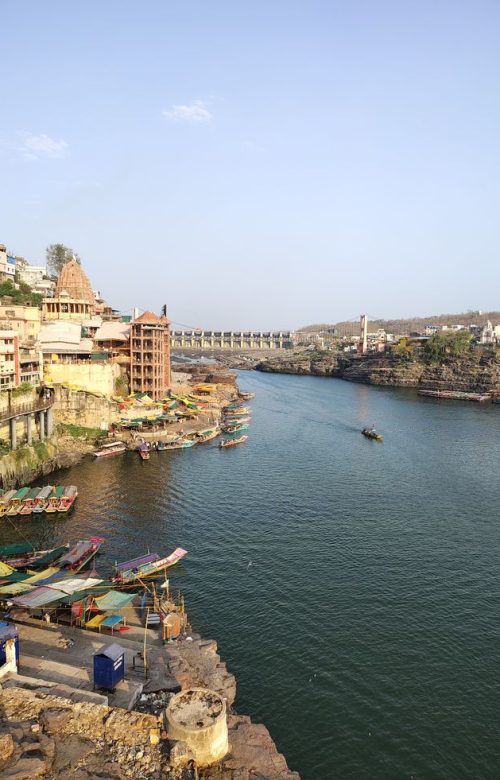
The Narmada River is dotted with kshetras, tirthas, sangamas, and temple towns that form the backbone of central India’s sacred pilgrimage traditions. From its origin at Amarkantak in the Maikal ranges to its confluence with the Arabian Sea, the river connects ancient temples, Jyotirlinga shrines, ashrams, ghats, and spiritual centers into a continuous sacred corridor.
Pilgrims traditionally undertake journeys along the Narmada’s course, visiting Amarkantak, Omkareshwar, Maheshwar, Hoshangabad (Narmadapuram), and Bharuch. A unique spiritual practice known as Narmada Parikrama involves circumambulating the entire river, integrating ritual bathing, temple darshan, meditation, austerity, and continuous devotion over an extended period.
Major Kshetras Along Narmada 📊
| Kshetra | State | Significance |
|---|---|---|
| Amarkantak | Madhya Pradesh | Sacred origin; major pilgrimage source |
| Omkareshwar | Madhya Pradesh | Jyotirlinga kshetra; island temple at sangama |
| Maheshwar | Madhya Pradesh | Historic temple town; spiritual and cultural center |
| Narmadapuram (Hoshangabad) | Madhya Pradesh | Sacred ghats; ritual bathing and festivals |
| Bharuch | Gujarat | Ancient port city; confluence with Arabian Sea |
Rituals and Pilgrimage Practices
Bathing in the Narmada at sacred ghats and sangamas is believed to purify the body and mind, aligning devotees with spiritual rhythms. The flowing waters are revered as self-purifying, making the river itself a living source of spiritual cleansing and renewal.
Visiting temples, ashrams, and hermitages along the river provides opportunities for meditation, Vedic learning, and guidance from sages and spiritual teachers. These sacred spaces cultivate discipline, inner reflection, and continuity of ancient wisdom traditions.
Pilgrims participate in festivals such as Narmada Jayanti and Kartik Purnima, along with ongoing rituals maintained by ascetics and local communities. These observances reinforce the cyclical relationship between time, nature, and spiritual practice.
The Narmada riverbanks are lined with ghats, step wells, and temple complexes that serve both ritual and community needs. These structures reflect Sanatana principles of ecological harmony and sacred geography, where water, worship, and settlement are deeply interconnected.
Ancient settlement patterns along the Narmada aligned temples, ashrams, ghats, and marketplaces along the river’s natural flow. This created a continuous sacred and cultural network, sustaining spiritual life, social interaction, and economic activity across central India.
The Narmada thus stands not merely as a river, but as a living pilgrimage pathway, sustaining devotion, discipline, and civilizational continuity across generations. It embodies a timeless bond between nature and spirituality, guiding seekers toward harmony, resilience, and inner transformation.
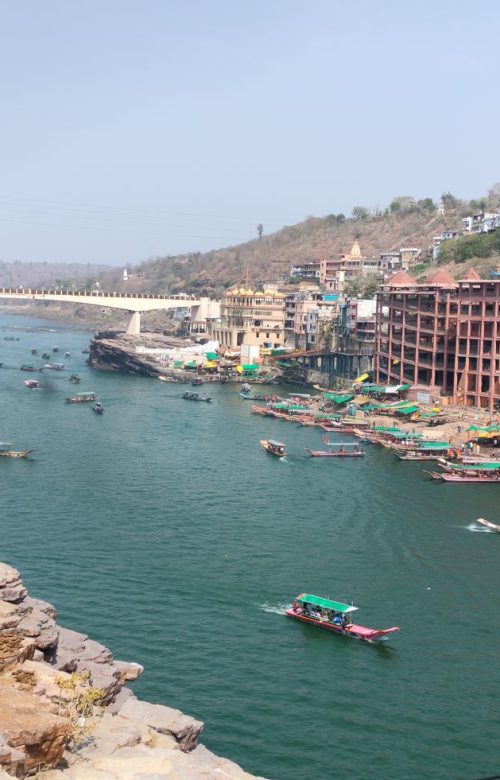
Cultural, Architectural, and Educational Centers — Narmada Nadi 🏛️🎶
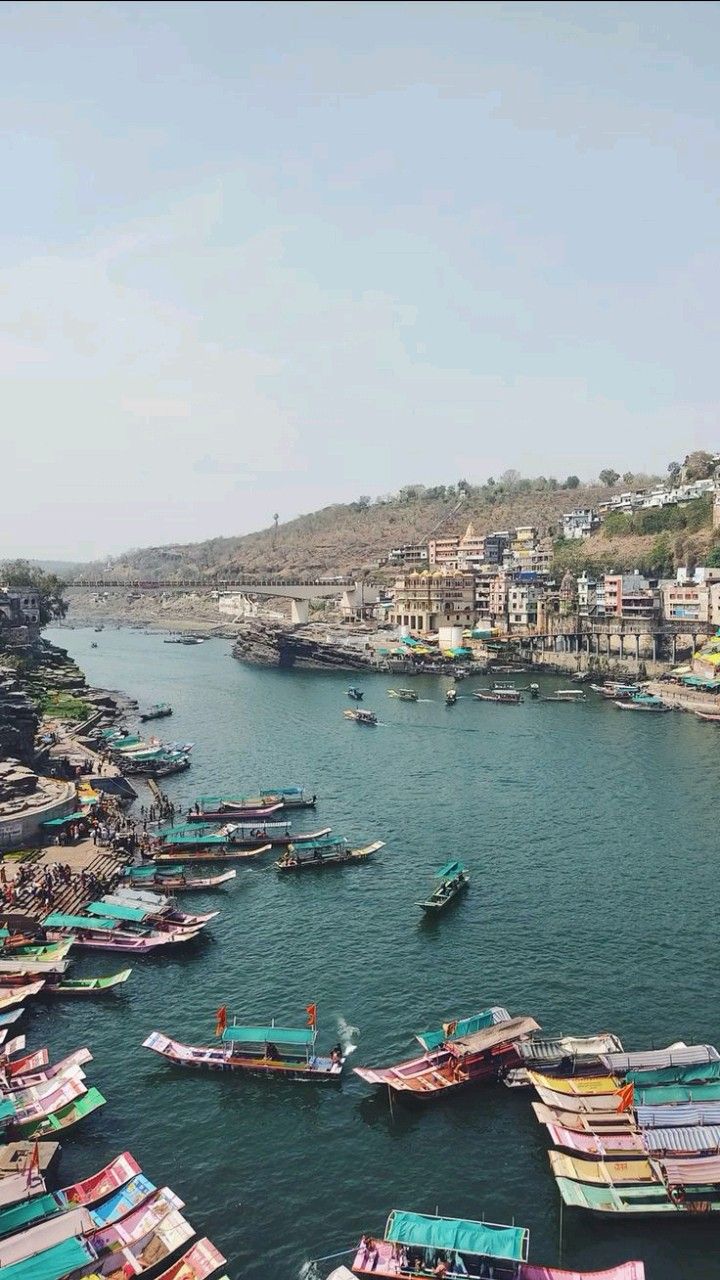
The Narmada River corridor is one of the most spiritually and culturally rich landscapes of central India, nurturing temples, sacred towns, ghats, ashrams, and centers of learning across Madhya Pradesh and Gujarat. Cities such as Amarkantak, Omkareshwar, Maheshwar, and Bharuch developed along its banks, where spirituality, governance, and scholarship evolved together within a dynamic civilizational framework. The river became a cultural axis connecting forest traditions, temple heritage, and pilgrimage networks across central India.
Ashrams and Spiritual Traditions
The Narmada banks have long been home to ashrams, hermitages, and guru-led spiritual centers, where sages guided seekers in meditation, austerity, and philosophical inquiry. Pilgrims undertaking the Narmada Parikrama often stay in these ashrams, engaging in Vedic study, yoga, chanting, and disciplined spiritual practice. These institutions transformed the river corridor into a living path of learning, where knowledge and devotion flow together across generations.
Architectural Highlights
Ghats and stepped riverbanks at places like Maheshwar and Omkareshwar serve both ritual and civic purposes, linking daily life with sacred water. Temples along the Narmada are often built on elevated banks, hills, or islands, integrating natural landscapes with sacred architecture. Stone ghats, fort walls, shrines, and river-facing mandapas reflect a deep understanding of terrain, seasonal flow, and spiritual alignment. Traditional water structures and settlement designs along the river demonstrate ecological sensitivity and continuity.
Cultural Integration
Music, oral traditions, devotional poetry, and storytelling flourish along the Narmada’s sacred belt, sustained by wandering ascetics, local communities, and temple traditions. Festivals such as Narmada Jayanti, Kartik Purnima, and continuous Parikrama rituals bring together pilgrims, saints, and villagers in shared spiritual experience. These gatherings blend devotion, cultural exchange, and community life, strengthening the river’s role as a unifying force across regions.
The Narmada cultural corridor thus represents a living Sanatana tapestry where devotion, learning, architecture, and nature coexist in harmony. Flowing from the forests of Amarkantak to the Arabian Sea, the river continues to nurture sacred spaces, spiritual traditions, and cultural heritage, sustaining a timeless connection between water, wisdom, and civilization in central India.
River Type, Flow, and Hydrological Significance — Narmada Nadi 🌊💧
The Narmada River is classified as a perennial, rain-fed river flowing through a unique rift valley system in central India. Originating at Amarkantak in the Maikal ranges, it flows westward across the Vindhya and Satpura ranges before emptying into the Arabian Sea. Unlike many peninsular rivers that flow east, the Narmada follows a distinct westward course, sustained primarily by monsoon rainfall, forest catchments, and groundwater recharge, enabling stable ecosystems and settlements across Madhya Pradesh and Gujarat.
The river is supported by several tributaries that enhance ecological balance and human habitation across its basin. Major tributaries include the Tawa, Hiran, Orsang, Kolar, and Dudhi rivers. These tributaries enrich soils, sustain agriculture, and form sacred confluences where temples, ghats, and ashrams developed over centuries. Many pilgrimage centers and settlements emerged along these sangamas, creating interconnected spiritual and cultural landscapes along the Narmada corridor.
Hydrological Characteristics:
Flow Pattern: Strong during monsoon seasons; relatively steady flow maintained by forest-fed catchments and groundwater systems.
Silt Deposits: Fertile alluvial and mixed soils support cultivation of wheat, pulses, oilseeds, and cotton.
Flood Plains: Support groundwater recharge, riparian forests, inland fisheries, and diverse ecological habitats.
The hydrology of the Narmada has long been integrated into Sanatana life and settlement planning. Ancient communities established settlements along elevated banks and fertile plains, considering seasonal flow, flood patterns, and water accessibility. Ghats, step wells, and traditional water systems were developed to support ritual use, irrigation, and storage, reflecting a deep understanding of ecological balance.
The river sustained continuous human settlement across central India for thousands of years.
Hydrological cycles influenced agricultural practices, pilgrimage traditions, and festivals such as Narmada Jayanti.
Tributaries and sangamas created secondary tirthas and ashram networks, enriching spiritual and cultural life.
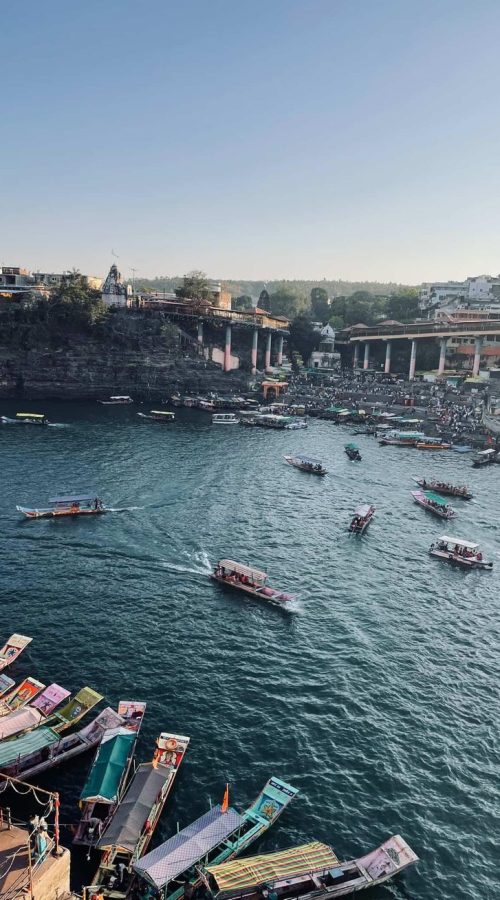
In this sense, the Narmada is more than a river; it is a living hydrological framework, sustaining civilization, pilgrimage, and ecological balance across central India. Its natural flow patterns and ecological systems became deeply embedded in social organization, agricultural stability, and sacred consciousness throughout the region’s history.
Delta, Confluence, and Economic Geography — Narmada Nadi 🌅🏞️
The Narmada River culminates along the western coast of India, where it empties into the Arabian Sea near Bharuch in Gujarat. Unlike the expansive delta systems of east-flowing rivers, the Narmada forms a broad estuarine mouth, shaped by tidal influences and sediment flow. This coastal zone became an important ecological and economic region, supporting fishing communities, trade activity, and maritime connections for centuries.
Over time, sediments carried from the central highlands enriched the lower Narmada basin, creating fertile plains along its course. Regions around Maheshwar, Omkareshwar, and Bharuch developed as productive agricultural zones, supporting crops such as wheat, cotton, pulses, and oilseeds. The integration of natural river flow with traditional irrigation practices enabled stable agrarian communities, even in semi-arid regions of western India.
Major confluences within the Narmada system — including those with the Tawa, Hiran, and Orsang rivers — developed into sacred and strategic centers. These sangamas became hubs for temple activity, pilgrimage gatherings, and regional interaction, linking interior settlements with downstream trade routes.
Economic Significance:
Agriculture: Fertile plains and river-fed irrigation supported agrarian communities and consistent crop production across central and western India.
Trade Routes: The Narmada served as a natural east–west corridor, connecting inland regions of Madhya Pradesh with coastal ports like Bharuch, facilitating trade in textiles, grains, forest produce, and handicrafts.
Pilgrimage Economy: Sacred circuits such as the Narmada Parikrama and festivals like Narmada Jayanti supported local economies through pilgrimage-related activities, hospitality, and ritual commerce.
The Narmada shaped settlement patterns across central India, with towns and spiritual centers aligned along its banks. Settlements integrated ghats, temples, marketplaces, and agricultural systems, reflecting a balance between ecology, livelihood, and spiritual practice. Tributary regions also evolved into important nodes, connected through land routes and river crossings.
Cultural and Historical Impact:
Sacred centers such as Omkareshwar and Maheshwar became major pilgrimage and cultural hubs.
The riverbanks supported networks of temples, ashrams, and spiritual institutions, linking devotion with daily life.
Historic towns like Bharuch flourished as trade and maritime centers, connecting inland civilizations with global commerce.
In essence, the Narmada’s estuary and confluences represent a civilization adapted to river flow, terrain, and seasonal rhythms. Ecology, economy, spirituality, and cultural traditions evolved together along its course, creating a resilient and enduring riverine civilization across central and western India.
Pilgrimage Festivals and Ritual Practices — Narmada Nadi 📿🕉️
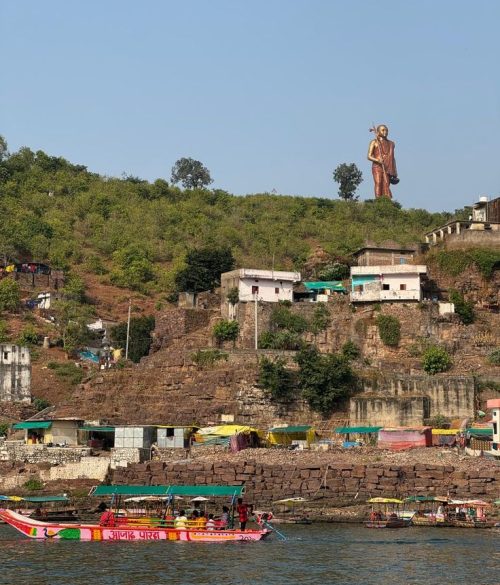
The Narmada River is a sacred pilgrimage corridor in central India, where rituals, festivals, and spiritual traditions have evolved in harmony with its westward flow. Pilgrimage along the Narmada reflects a continuous Sanatana Yatra, centered on purification, devotion, austerity, and spiritual discipline. Devotees undertake journeys along its banks from Amarkantak through sacred centers like Omkareshwar, Maheshwar, and Bharuch, visiting temples, ghats, and ancient ashrams along the way.
Major Ritual Practices
- Holy Dips: Bathing in the Narmada at sacred ghats and sangamas is believed to purify body and mind, aligning devotees with spiritual rhythm and inner balance.
- Temple Offerings: Rituals include jalabhisheka, chanting of Vedic hymns, pradakshina, and offerings at temples and ashrams along the riverbanks.
- Parikrama Tradition: The unique Narmada Parikrama involves circumambulating the entire river on foot, symbolizing devotion, discipline, and surrender to the sacred flow.
Major Festivals
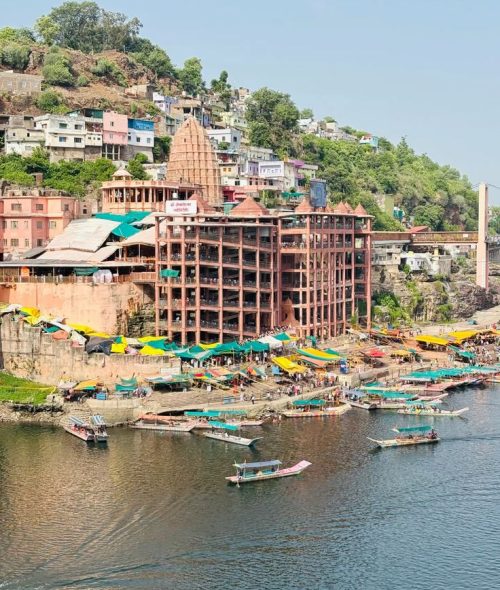
- Narmada Jayanti: Celebrated as the divine birth of the river, marked by deep devotion, lamp offerings, and large gatherings at key ghats.
- Kartik Purnima and Makar Sankranti: Auspicious bathing festivals aligned with lunar and solar cycles, emphasizing purification, charity, and spiritual merit.
- Continuous Pilgrimage Cycles: Throughout the year, ascetics and pilgrims maintain ongoing practices of meditation, austerity, and scriptural recitation along the river.
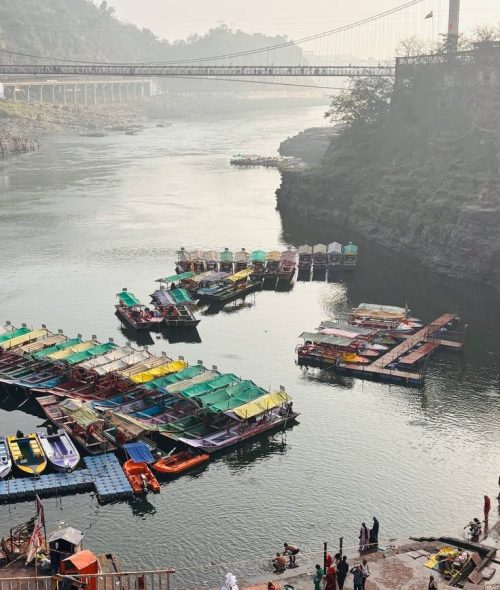
Spiritual Infrastructure
Spiritual Infrastructure Ghats, stone steps, and riverbanks serve both ritual and community functions, enabling access to sacred waters while supporting gatherings and observances.
Ashrams and hermitages along the Narmada provide spiritual instruction, meditation spaces, and preservation of Vedic and yogic traditions.
Major temple centers like Omkareshwar and Maheshwar integrate worship, learning, and cultural life, sustaining the river’s sacred legacy across generations.
The river itself becomes an active participant in Sanatana Yatra along the Narmada. Its seasonal flow, sacred bathing periods, and pilgrimage cycles guide the spiritual rhythm of devotees. Pilgrims align their journeys, vows, and practices with the natural movement of the river, treating it as a living spiritual guide. Narmada’s festivals and rituals reflect deep civilizational wisdom, honoring the connection between nature, devotion, and disciplined living. Traditions such as Parikrama, Narmada Jayanti, and sacred snana celebrate not only the river’s sanctity but also the inner transformation of the pilgrim. Through these enduring practices, the Narmada harmonizes ecology, spirituality, and cultural continuity across central India. The river sustains pilgrimage routes, ashram networks, and riverside communities alike, embodying the timeless unity of water, austerity, and sacred consciousness.
Historical Settlements Along Narmada Nadi 🏛️🌾
The Narmada River has nurtured some of the earliest and most enduring settlements in central India. From its origin at Amarkantak in the Maikal ranges to its estuarine mouth along the Arabian Sea, the river has supported continuous human habitation for centuries. Archaeological, inscriptional, and cultural evidence points to prehistoric, early historic, and medieval settlements along its basin, where communities adapted to riverine ecology to sustain agriculture, trade, spiritual practice, and civic life.
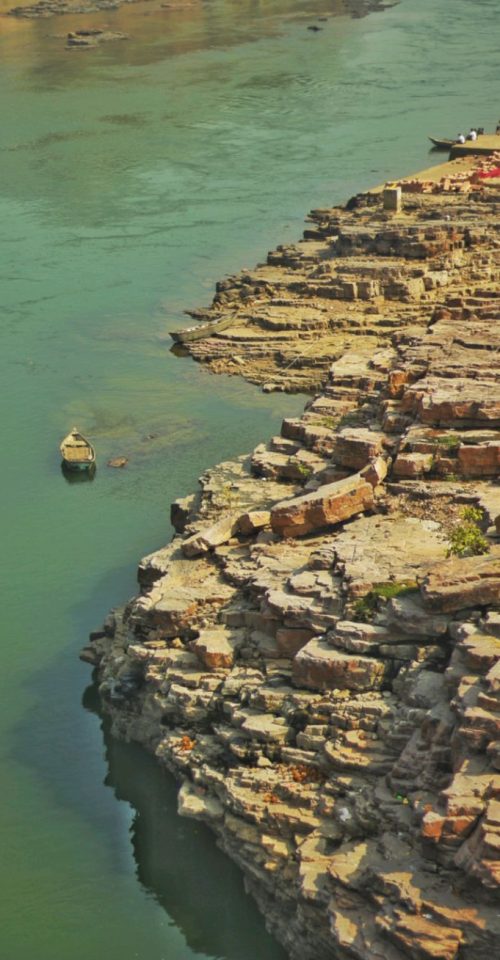
Historical Settlements Along Narmada
- Maheshwar (Ancient Mahishmati): Located along the central Narmada basin, Maheshwar emerged as an ancient urban center and later flourished under the Holkar dynasty. Fortifications, ghats, temples, and weaving traditions reflect a settlement deeply integrated with river-based trade and culture.
- Omkareshwar: Situated on an island in the Narmada, this sacred settlement developed around one of the twelve Jyotirlinga kshetras. The town’s layout, temple complexes, and ghats demonstrate the fusion of pilgrimage, settlement planning, and river ecology.
- Bharuch (Ancient Bhrigukachchha): Positioned near the river’s mouth, Bharuch became one of western India’s most important ancient ports. It connected inland regions with maritime trade networks, supported by the Narmada’s navigable stretches and fertile hinterland.
- Amarkantak: The river’s origin region served as a spiritual and ecological settlement, hosting temples, ashrams, and early communities that revered the source of the Narmada. Its elevated terrain and forest surroundings reflect adaptation to natural geography and sacred significance.
Settlement Patterns:
Early communities settled along the Narmada for fertile soils, reliable water availability, and natural protection offered by elevated banks and valley formations. The river sustained both agrarian life and strategic habitation.
Ghats, step wells, and traditional water systems demonstrate localized hydrological knowledge, supporting irrigation, ritual purification, and water storage across varying seasons.
Urban and semi-urban layouts incorporated temples, ashrams, marketplaces, and riverfront ghats, reflecting the seamless integration of spiritual life, trade, and daily activity.
The Narmada corridor shaped social organization, agricultural cycles, pilgrimage traditions, and trade routes across central India. Continuous habitation along its banks created interconnected settlements where ritual practice, education, economic exchange, and cultural life evolved together. It is no coincidence that major festivals, pilgrimage routes like Narmada Parikrama, and sacred observances align with key Narmada settlements — linking geography, human habitation, seasonal rhythms, and spiritual consciousness into a unified civilizational landscape.
Temples and Spiritual Centers — Narmada Nadi 🛕🙏
The Narmada River banks are lined with temples, ashrams, and sacred settlements, forming a deeply rooted spiritual landscape across central India. Flowing through Madhya Pradesh and Gujarat, the river nurtured pilgrimage centers, monastic traditions, and learning spaces where devotion, austerity, and philosophy evolved together. Historical records indicate that many Narmada temples served not only as places of worship but also as centers for spiritual discipline, community organization, and preservation of sacred knowledge.
Major Spiritual Centers:
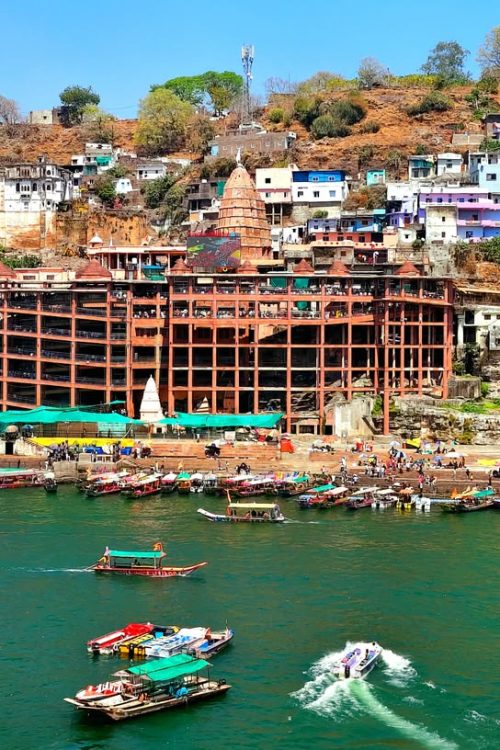
Omkareshwar Temple, Omkareshwar: One of the twelve Jyotirlinga kshetras dedicated to Lord Shiva, situated on a sacred island shaped like “Om” in the Narmada. It serves as a major Shaiva pilgrimage center, integrating temple worship, parikrama traditions, and spiritual learning.
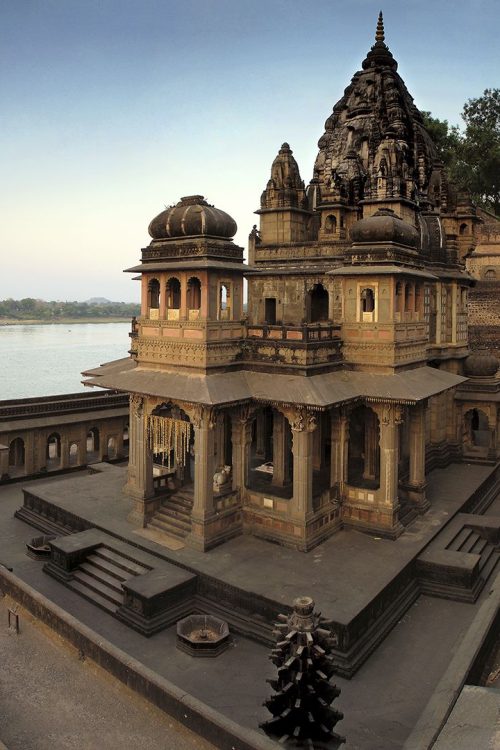
Maheshwar Temples and Ghats: Located along the Narmada’s banks, Maheshwar hosts a cluster of ancient temples and beautifully structured ghats. The town evolved into a center of devotion, art, and cultural activity, especially under royal patronage, reflecting harmony between river, settlement, and spirituality.
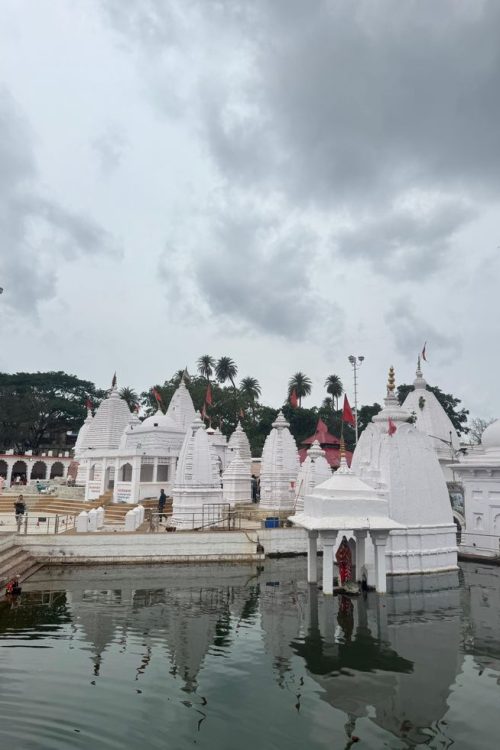
Amarkantak Temples: Situated at the river’s origin, these temples mark the sacred source of the Narmada. The region functions as a major pilgrimage starting point, where devotees begin spiritual journeys and seek purification at the birthplace of the river.
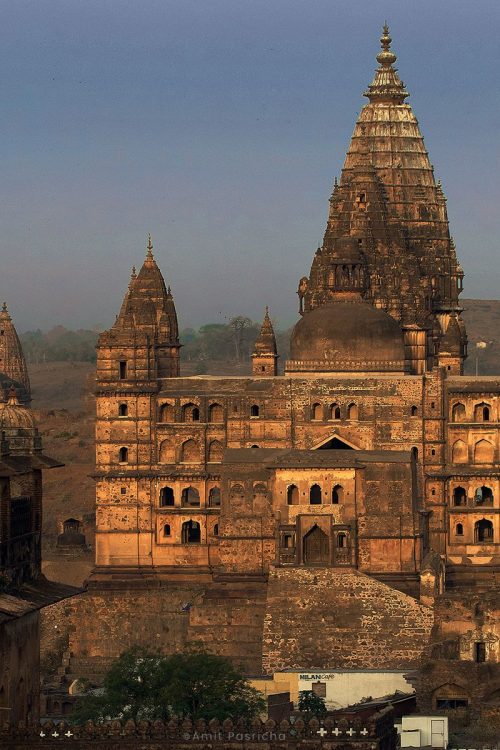
Bharuch Temples and Riverfront Shrines: Near the Narmada’s estuary, Bharuch hosts historic temples and sacred sites connected with trade-era settlements. These centers link river worship with maritime and cultural traditions along the western coast.
- Ghats along the Narmada serve multi-functional roles, supporting ritual bathing, meditation, pilgrimage gatherings, and community interaction. They act as sacred thresholds where devotees engage in daily snana, prayer, and reflection, while also functioning as social spaces for discourse, cultural exchange, and community bonding along the riverbanks.
- Ashrams and hermitages along the river provide spaces for tapas, yoga, Vedic study, and spiritual guidance, sustaining ancient traditions of renunciation and learning. These institutions host seekers, ascetics, and pilgrims, preserving oral traditions, scriptural knowledge, and disciplined practices that continue the lineage of Sanatana wisdom across generations.
- Temples integrate sacred geography, river flow, and cosmic alignment, reflecting the Sanatana understanding of water as a divine medium connecting life, discipline, and liberation. Their architecture, rituals, and placement along the river embody a deep ecological and spiritual awareness, where devotion, natural forces, and human consciousness are harmonized into a unified sacred experience.
The Narmada’s spiritual centers remain deeply interconnected with surrounding settlements, allowing pilgrims to traverse the river as part of a continuous Sanatana Yatra. This sacred network links temples, ashrams, ghats, and villages into a flowing corridor of devotion, where each stop becomes part of a larger spiritual journey guided by the river’s presence.
Ritual worship, meditation, austerity, and sacred observances remain woven into daily life along its banks. From sunrise prayers and holy dips to evening aartis and scriptural recitations, the rhythm of life here aligns with the river’s flow, creating a seamless blend of spirituality and everyday existence.
The river is not merely a physical watercourse — it is a sustaining lifeline of spiritual discipline, temple culture, and communal harmony, where sacred institutions preserve continuity across generations. Through pilgrimage traditions like Narmada Parikrama, oral teachings, and temple rituals, the river continues to nurture collective memory, guiding seekers toward inner transformation and cultural continuity.
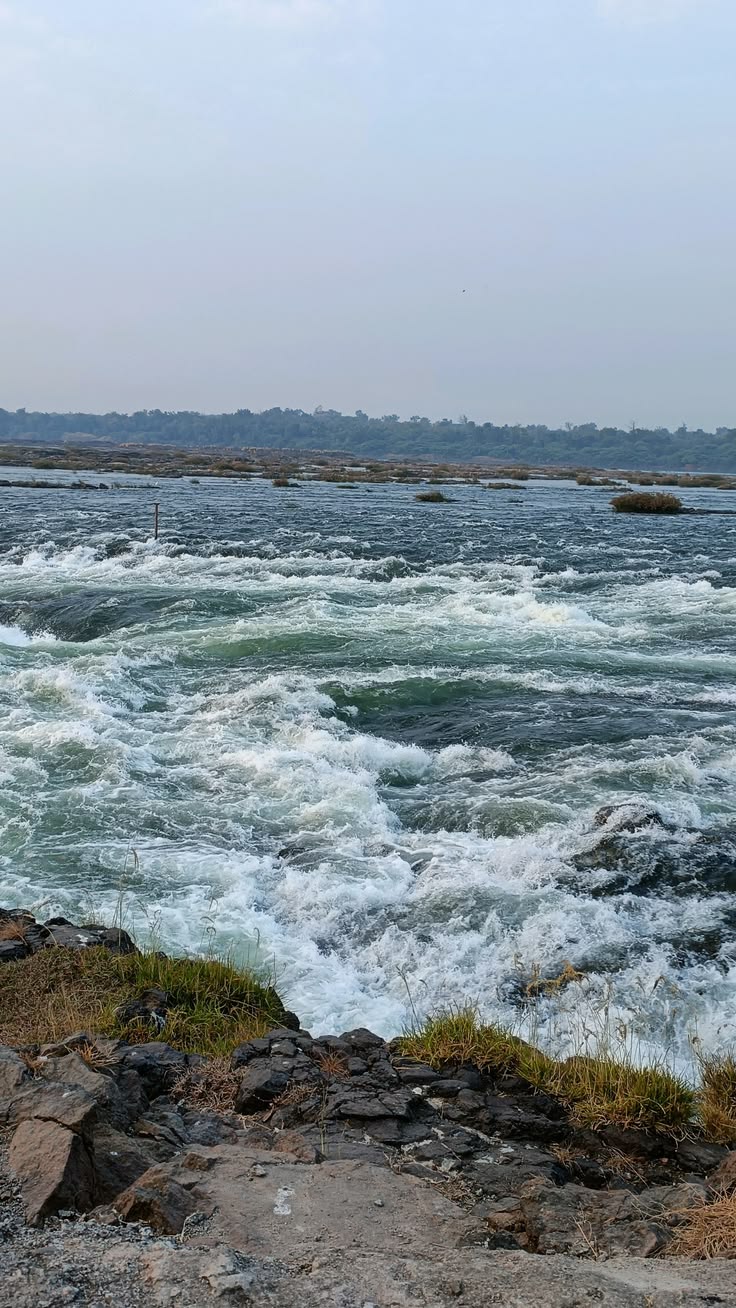
Sacred Ghats and Ritual Architecture — Narmada Nadi 🏞️🕉️
Ghats along the Narmada River are not merely stone steps leading to water — they are living expressions of Sanatana philosophy, austerity, and river-centered spiritual life. These riverfronts function as sacred spaces where ritual purification, meditation, pilgrimage, and community interaction unfold naturally. From the origin at Amarkantak to sacred towns like Omkareshwar, Maheshwar, and Bharuch, each ghat reflects devotion, ecological awareness, and civilizational continuity.
Functions of Ghats
- Ritual Purification: Devotees perform snana (holy bathing) in the Narmada during auspicious occasions such as Narmada Jayanti, Kartik Purnima, and Makar Sankranti, aligning body, mind, and spirit with sacred rhythm and inner purification.
- Life-Cycle Events: Ghats host important rites including naming ceremonies, vratas, marriages, and antyeshti (last rites). These rituals reflect the belief that the Narmada accompanies the soul through all stages of life, symbolizing continuity, detachment, and renewal.
- Community Engagement: Riverfront ghats serve as spaces for bhajans, pravachanas, spiritual discourses, and gatherings of ascetics and pilgrims. They foster interaction between communities, seekers, and teachers, blending social life with sacred observance.
Notable Ghats
| Ghat | Location | Historical / Cultural Role |
|---|---|---|
| Maheshwar Ghats | Maheshwar (Madhya Pradesh) | Ritual bathing, temple-centered worship, cultural gatherings |
| Omkareshwar Ghats | Omkareshwar (Madhya Pradesh) | Jyotirlinga pilgrimage, parikrama rituals, sacred island worship |
| Amarkantak Ghats | Amarkantak (Madhya Pradesh) | Source rituals, spiritual origin point of the river |
| Bharuch Ghats | Bharuch (Gujarat) | Estuary rituals, trade-linked pilgrimage and community activity |
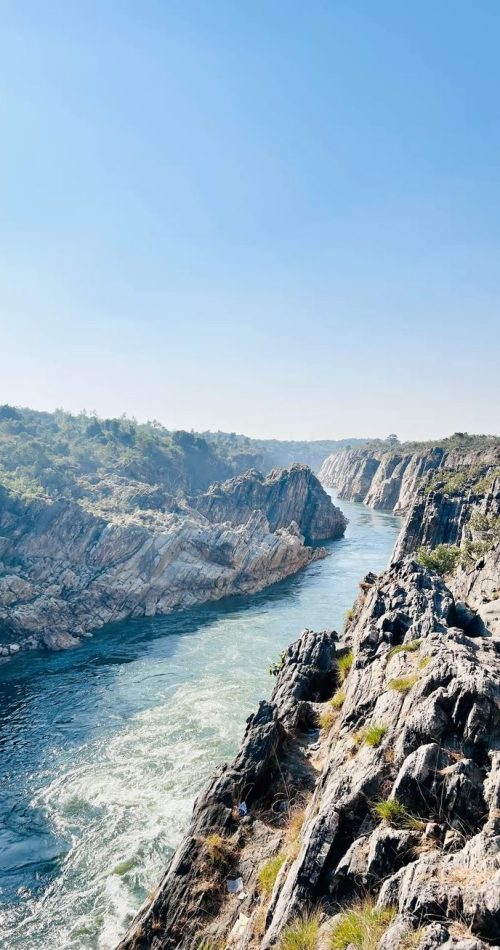
Ghats along the Narmada are multi-layered in purpose, reflecting the Sanatana understanding of water as a sacred medium connecting birth, life, death, and liberation. Their architecture harmonizes with the river’s natural flow, valley formations, and pilgrimage routes, ensuring both ritual continuity and ecological sensitivity. Through these sacred riverfronts, the Narmada sustains a living dialogue between nature and civilization, where flowing water, stone steps, temple chants, and ascetic practices together shape the spiritual and cultural life of central India across generations.
Pilgrimage Networks and Ashrams 🛕🌿
The Narmada River supports deeply rooted pilgrimage networks that connect sacred kshetras, sangamas, temples, ashrams, and hermitages across central India. Devotees traverse these interconnected paths to perform ritual practices, seek spiritual guidance, and engage in disciplines that preserve Sanatana traditions. From its origin at Amarkantak to sacred centers like Omkareshwar, Maheshwar, and Bharuch, the Narmada forms a continuous spiritual pathway.
Ashrams and Hermitages: Located along riverbanks, forest regions, and sacred ghats, these institutions serve as centers for tapas, meditation, Vedic learning, anna-dana, and shelter for pilgrims undertaking long spiritual journeys such as the Narmada Parikrama.
Interconnected Tirthas: Sacred sites such as Amarkantak, Omkareshwar, Maheshwar, and numerous smaller sangamas and riverbank shrines create layered pilgrimage circuits that sustain spiritual continuity across Madhya Pradesh and Gujarat.
Pilgrimage Cycles: Yatras often follow the natural westward course of the river, especially through the disciplined practice of Parikrama, along with seasonal observances like Narmada Jayanti, Kartik Purnima, and Makar Sankranti, aligning ecological rhythms with spiritual discipline.
The Narmada’s sacred network sustains uninterrupted Sanatana Yatra traditions, making the river a living spiritual artery rather than merely a geographical feature. Pilgrimage along its banks is not tourism — it is a path of austerity, devotion, and inner transformation, where nature, discipline, and spirituality converge.
Urban Development and Cultural Continuity 🏙️🎨
Cities along the Narmada, from the forested highlands of Amarkantak to historic centers like Maheshwar, Omkareshwar, and Bharuch, developed organically along the river’s course. Their growth reflects a harmonious integration of ecology, spiritual practice, agrarian life, and human settlement. Traditional layouts incorporated ghats, temples, ashrams, marketplaces, and agricultural systems, embodying a balanced civilizational design.
Riverfront planning ensured access to sacred waters while adapting to seasonal flow variations through elevated settlements and traditional embankments.
Temples and ashrams were integrated into daily life, functioning as centers of spiritual learning, cultural activity, and social organization.
Ghats, step wells, and localized irrigation practices supported both ritual usage and agricultural sustainability across varying terrains.
These settlements preserved spiritual traditions, oral teachings, devotional practices, and regional crafts for centuries, shaping the cultural landscape of central India. Temple towns along the Narmada became spaces where philosophy, ascetic traditions, storytelling, and devotional expression flourished under the guidance of sages and spiritual lineages. Sacred spaces encouraged the preservation of Vedic recitation, yogic practices, temple rituals, and local art forms, ensuring continuity of knowledge and culture across generations.
Closing Reflection — Narmada as Civilizational Lifeline 🕉️💧
The Narmada River is not merely a flowing stream of water; it is a living civilizational presence that has sustained settlements, spiritual practice, and cultural traditions across central India for centuries. Pilgrimage paths, sacred temples, ghats, and ashrams along its course reflect the continuity of Sanatana traditions, where ecology, devotion, austerity, and community life remain deeply interconnected.
Its waters nourish fertile valleys, sacred towns, and historic centers from the forests of Amarkantak to the coastal plains near the Arabian Sea. The river has guided sages, ascetics, seekers, and communities who shaped its banks into spaces of discipline and devotion. The Narmada embodies harmony between natural flow, ecological balance, sacred geography, and human life.
Narmada supports life in physical, cultural, and spiritual dimensions.
Pilgrimage along the river integrates austerity, meditation, ritual observance, and spiritual learning.
Its ghats, temples, ashrams, and parikrama traditions reflect centuries of civilizational wisdom, sustaining both livelihood and inner transformation.
As long as the Narmada flows — from the Maikal ranges to the Arabian Sea — it continues to connect humanity with sacred landscape, natural rhythm, and collective memory. The river remains a living teacher, a sustaining lifeline, and a silent witness to the enduring spiritual and cultural heritage of central India.