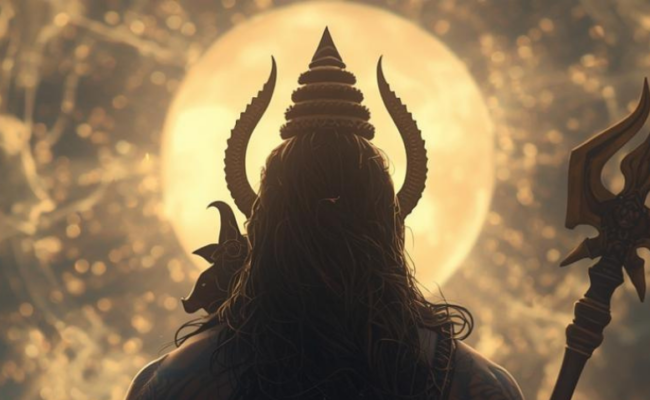
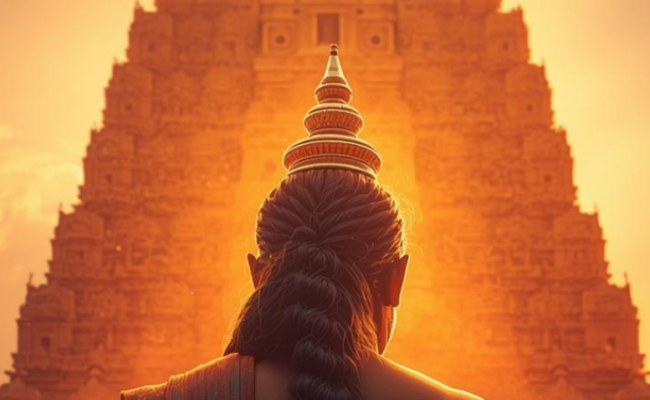
🌺 Meenakshi Amman Temple: Where Time Learned to Become Sacred 🌺
Time did not enter Madurai as a traveler; it awakened here as remembrance. Long before calendars learned to count, the land between the Vaigai River 🌊 and the rising sun had already chosen devotion as its rhythm. The air carried bells 🔔 not to announce moments but to dissolve them, and jasmine 🌼 bloomed with such certainty that even Time paused to inhale. Madurai did not grow outward like other cities; it folded inward, layer by layer, toward a living center where the divine feminine waited, not hidden, but sovereign. This inward pull is the first lesson of Meenakshi Amman Temple, where Kāla Yātrā — the journey of Time itself — begins not at the gates, but in the heart.
Legend remembers that Meenakshi was not born gently into the world but emerged from fire 🔥 during a sacred yajña performed by the Pandya king Malayadwaja and queen Kanchanamala, and when she appeared, she bore three breasts, a sign that unsettled the court yet echoed with prophecy. A celestial voice declared that the third breast would vanish when she met her destined equal, and so Meenakshi grew not as a princess waiting to be protected, but as a ruler trained in warfare ⚔️, governance, and wisdom. Time watched as she conquered lands, not to expand territory, but to establish dharma, and when she finally stood before Shiva — appearing as Sundareswarar — the third breast dissolved, not as submission, but as recognition. This union was not marriage alone; it was the merging of Shakti and Consciousness ⚡, the moment when Time itself bent into sacred symmetry.
The temple that rose around this cosmic union did not follow straight lines or rigid axes; instead, it mirrored the Tamil understanding of the universe 🌺, where life spirals inward toward essence. Every wall became a boundary of memory, every corridor a passage through centuries, and every step a negotiation between mortal breath and eternal presence. Dynasties rose and fell like tides 🌊 — Pandyas, Nayaks, Cholas — yet the temple did not belong to rulers. It absorbed them. Kings added stones, sculptors added stories, painters added color 🎨, but Meenakshi remained the axis, the stillness around which Time kept moving.
Then come the gopurams 🛕 — not towers, but mountains of narration. Rising impossibly high and drenched in color, they are not decorative entrances but visual scriptures. Each gopuram is a universe stacked upon itself, populated by gods, demons, saints, animals, dancers, lovers, warriors, and celestial beings 🐘🦚, all frozen in motion, all telling different stories at once. Time learned to read vertically here. Blue gods laugh beside green demons, sages bless beside musicians, and no figure repeats another, because creation itself does not repeat. The colors are not aesthetic choices but emotional frequencies — reds of power, blues of infinity, greens of fertility, golds of transcendence ✨ — and when the sun moves across them, the temple changes its mood hour by hour, reminding Time that even stone can breathe.
As Kāla Yātrā moves inward past the towering gopurams, sculptural corridors unfold like spoken memory. Pillars rise not merely to support roofs but to hold narratives 🪨. A yali snarls mid-leap, muscles taut with cosmic tension, while nearby a dancer’s ankle bells seem ready to ring 👣. Gods do not stand apart from humans here; they lean toward them, teach them, challenge them. Every sculpture is a paused sentence in an epic that never fully ends. The Nayaka period left behind halls where pillars multiply endlessly, creating forests of stone 🌳 where light struggles and triumphs at once, and Time slows instinctively, because walking faster would be disrespectful to so much waiting.
At the heart of this sculpted universe lies the sanctum of Meenakshi Amman 🕯️, cool, dark, and profoundly alive. She is not portrayed as distant or abstract, but as a queen who sees. Her emerald-hued form reflects fertility, compassion, and fierce protection 💚, and devotees approach not with fear but familiarity. Time noticed something unusual here: prayers were not requests but conversations. Mothers whispered hopes for children, merchants spoke of journeys, artists offered gratitude, and the goddess listened without hierarchy. In Meenakshi’s presence, Time softened, shedding its sharp edges, learning patience from devotion.
Across the sacred axis waits Sundareswarar 🔱, Shiva in his aspect of beauty, whose stillness balances Meenakshi’s dynamism. Their shrines face each other, not in opposition but in eternal dialogue, and the temple itself becomes their shared body. Between them, festivals erupt 🌸 — processions where bronze deities move through streets, drums thunder, lamps flicker, and the entire city becomes an extension of the temple. During Meenakshi Thirukalyanam, Time dissolves completely, as marriage becomes metaphysics, and the divine union renews the universe yet again.
The sculptural stories do not remain silent during these moments. They awaken. Gods carved centuries ago seem to lean closer, animals appear alert, dancers regain rhythm 🎶. The temple proves that art here was never meant to be observed passively; it was meant to participate. Even ceilings tell stories — lotuses blooming outward, mandalas expanding infinitely — reminding the seeker that the divine is not above or below, but everywhere at once.
Kāla Yātrā lingers in the thousand-pillared hall, where mathematics, music, and metaphysics coexist 📐🎵. Each pillar produces sound when touched, a reminder that vibration precedes form. Time recognized itself here not as ruler but as servant, moving to the rhythm of something older. The hall does not impress through scale alone but through intention, revealing that architecture in Bharata was never about domination of space, but alignment with cosmic law.
As dusk approaches, oil lamps are lit 🪔, and shadows dance across sculptures that have watched millennia pass. The gopurams absorb the fading light, colors deepening into reverence, and the city exhales. Vendors call softly, priests chant steadily, devotees circumambulate slowly 🔄. Time prepares to leave, but realizes it cannot. It has been absorbed into ritual, stone, color, and memory.
Meenakshi Amman Temple does not tell history as a sequence of events; it holds history as presence. It teaches that Time is not linear but cyclical, not external but experiential. In this Kāla Yātrā, Time learned humility, learning that some places do not exist within time — time exists within them.
And as the bells ring once more 🔔 and jasmine returns to the night air 🌼, Madurai sleeps, not because the temple rests, but because it never needs to wake. It has always been awake.
https://www.instagram.com/sanathanayatra/
https://www.facebook.com/profile.php?id=61583124183564
https://www.linkedin.com/company/sanathana-yatra/
https://x.com/SanathanaY