🕉️🌌 Brahman: The Reality That Travels Through Us
Brahman is not a destination reached by effort, nor a belief adopted by tradition. It is the silent presence that exists before belief, before effort, before even the idea of a seeker arises. Indian philosophy does not approach Brahman with conquest or certainty, but with wonder and humility. It speaks of Brahman as that which cannot be grasped, yet without which nothing can be grasped at all. Like space, it holds everything while remaining untouched by what it holds.
The sages who first spoke of Brahman were not interested in creating systems. They were observers of life itself. They noticed that everything visible changes. Bodies age, emotions shift, civilizations rise and fall. Yet something remains constant through all experience — the simple fact of awareness. That awareness does not grow old. It does not belong to one person more than another. It is present in joy and sorrow alike. This unbroken awareness is what they named Brahman.
🌿 Brahman is not hidden somewhere behind the world. It is hidden by the world. When attention is absorbed completely in names, forms, roles, and desires, the underlying unity is forgotten. This forgetting is not a sin; it is a misunderstanding. Indian philosophy calls it ignorance, not as an insult, but as a description. Ignorance simply means not seeing clearly.
The Upanishads speak of Brahman in a language that feels more like poetry than philosophy. They say Brahman is smaller than the smallest and greater than the greatest. They say it is nearer than the nearest and farther than the farthest. These contradictions are deliberate. They force the mind to stop trying to capture Brahman as an object. Brahman is not something you look at. It is that by which looking happens.
✨ One of the most powerful declarations in this tradition is the identity between Brahman and the inner self. The self we usually identify with — the body, the name, the personality — is only a surface appearance. Beneath it lies Atman, the witnessing presence. The Upanishads insist that this Atman is not different from Brahman. This is not meant as comfort or flattery. It is a statement of fact meant to be tested through inquiry.
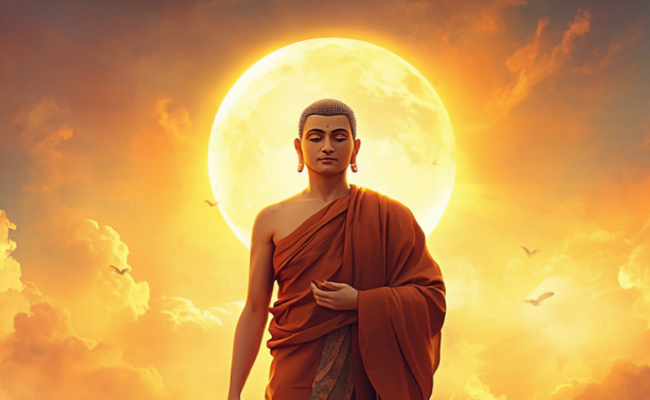
Yet such inquiry is not easy. The world constantly reinforces difference. Pleasure feels personal. Pain feels personal. Success and failure feel intensely individual. Over time, ritual, worship, and social identity grew stronger than philosophical reflection. The idea of Brahman risked becoming distant and abstract. It was at this moment in history that Adi Shankaracharya appeared like a sharp wind clearing heavy clouds.
🔥 Shankaracharya’s genius was clarity. He did not add complexity. He removed confusion. He asked people to look directly at experience and ask what truly remains unchanged. His answer echoed the Upanishads with uncompromising precision: Brahman alone is absolutely real. The world exists, but it does not exist independently. The individual self exists, but not as separate from the whole.
This teaching, known as Advaita, does not deny the world. It explains it. The world is real in everyday experience, but it is not ultimate. It depends entirely on Brahman, just as a reflection depends on a mirror. When the mirror is removed, the reflection vanishes. When Brahman is not recognized, the world appears fragmented and threatening.
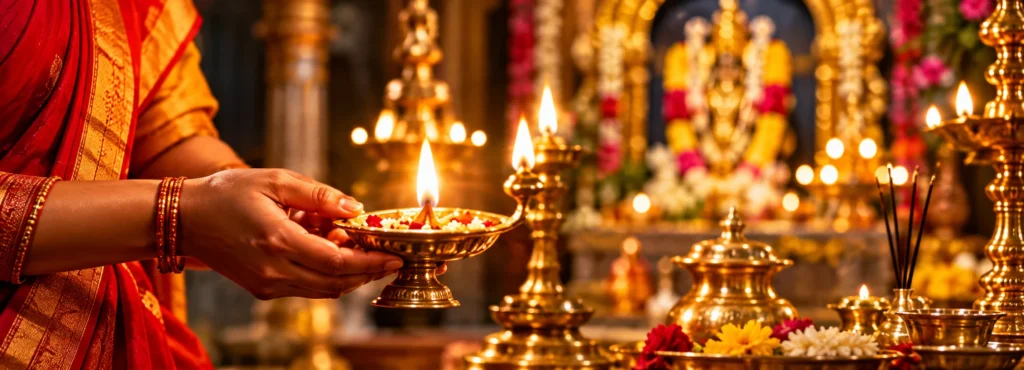
🧘 Shankaracharya understood human psychology deeply. He knew that not everyone could sit quietly and inquire into the nature of consciousness. Most people need action, devotion, discipline, and symbol. Instead of rejecting these needs, he placed them within a larger framework. Ritual purifies action. Devotion refines emotion. Study sharpens intellect. All of them prepare the mind to recognize Brahman.
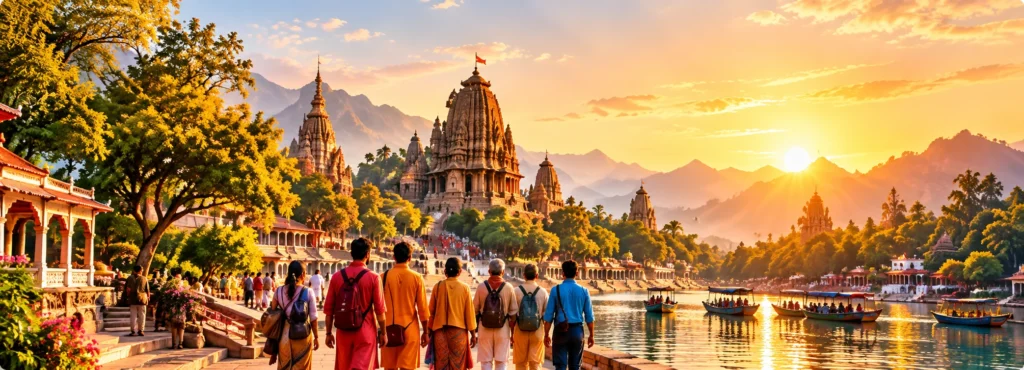
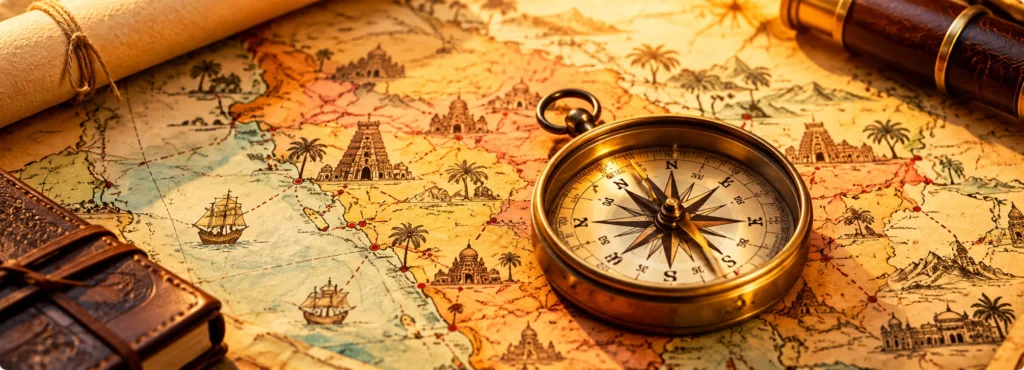
This understanding transformed India itself into a living classroom. Sacred geography became a teaching method. Pilgrimage was no longer just an act of faith; it became an inner journey expressed through outer movement. Travel demanded endurance, humility, and patience. The ego weakened with every mile. Familiar identity loosened. In this softened state, insight could arise.
🌍 India’s spiritual landscape thus evolved into a map of consciousness. Mountains pointed toward transcendence. Rivers symbolized continuity. Oceans suggested surrender. Ancient cities whispered of impermanence. None of these places claimed ownership of Brahman. Instead, they reflected it, each in its own language.
Kashi, standing along the Ganga, speaks the language of eternity. Here, life and death are not hidden away. Funeral fires burn openly, day and night. The shock of mortality strips away superficial concerns. In this city, Brahman is felt as that which survives both birth and death. Liberation here is not escape, but understanding.
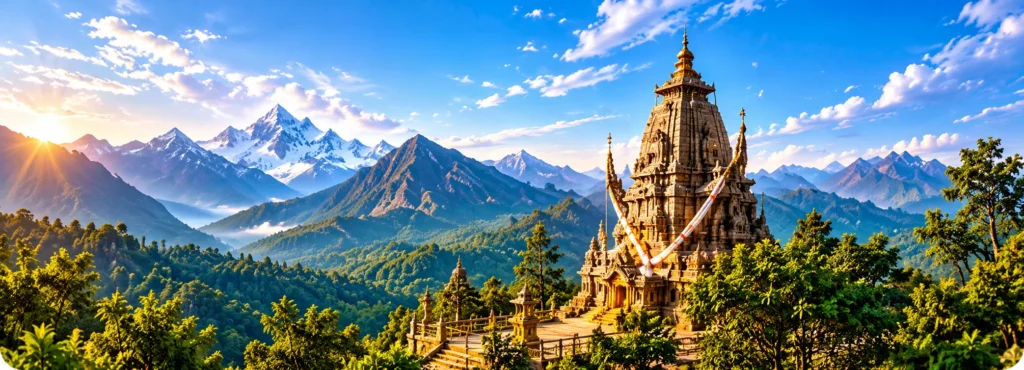
🏔️ The Himalayas speak a different dialect altogether. Their scale overwhelms thought. Their silence interrupts inner noise. In places like Badrinath and Kedarnath, the landscape itself becomes the teacher. Words feel unnecessary. The mind naturally becomes still. Brahman here is not discussed; it is sensed as vastness and stillness beyond human measure.
🌊 Coastal sacred sites such as Dwarka express another face of Brahman. The endless horizon dissolves the sense of boundary. Waves rise and fall endlessly without effort. Creation and dissolution appear as a single rhythm. Devotion practiced here slowly matures into surrender, and surrender opens into non-duality.
🌅 In Puri, ritual and philosophy merge seamlessly. The Jagannath tradition emphasizes universality. The deity is not portrayed as refined or distant, but as accessible to all. Festivals draw entire communities into shared movement. Brahman here is felt as cosmic order, holding diversity without division.
🌴 In Rameswaram, the focus turns toward purification. The long corridors, sacred wells, and austere environment strip away excess. The body is disciplined so that the mind may follow. Brahman is approached here through surrender and humility rather than analysis.
🌀 Over centuries, these places shaped a uniquely Indian form of spiritual tourism. It is not about speed or novelty. It is about repetition and depth. The same truth is encountered again and again, each time from a different angle. Slowly, the seeker realizes that the truth was never located in the place itself, but in the awareness that experiences the place.
Modern seekers continue this journey, often unknowingly. Yoga retreats, meditation centers, and Vedanta schools attract people seeking peace. Many begin with the body, move to the breath, then to the mind, and finally encounter the deeper question of identity. That question leads back to Brahman, waiting patiently beneath every experience.
🌟 Ethics arise naturally from this vision. When separation dissolves, compassion is no longer an obligation. It becomes spontaneous. Harming another feels as unnatural as harming oneself. Responsibility expands beyond personal gain to collective well-being.
In the end, Brahman does not reward the seeker with visions or powers. It offers something far simpler and far more radical: freedom from fear. The fear of loss, death, and failure fades when one recognizes that what truly is cannot be destroyed.
🕉️ The journey concludes not with arrival, but with recognition. The seeker disappears into understanding. The path dissolves. What remains is the quiet certainty that what was sought was never absent.
🕉️✨ Mantras and Sacred Words of Brahman
“Tat Tvam Asi” — That Thou Art
“ Aham Brahmasmi ” — I am Brahman
“ Sarvam Khalvidam Brahma ” — All this is Brahman
“ Ekameva Advitiyam ” — One without a second
“ Om Shanti Shanti Shantiḥ ” — Peace in all dimensions
🛕🌍 Sacred Places That Express the Truth of Brahman
🏔️ Badrinath Temple, Uttarakhand
Brahman as supreme knowledge and stillness, revealed through Himalayan silence.
🔥 Kedarnath Temple
Brahman as transcendence, where nature dissolves ego effortlessly.
🕯️ Kashi Vishwanath, Varanasi
Brahman beyond time, where life and death merge into understanding.
🌊 Dwarkadhish Temple, Gujarat
Brahman approached through devotion that matures into non-duality.
🌅 Jagannath Temple, Puri
Brahman as cosmic order, embracing diversity without division.
🌴 Ramanathaswamy Temple, Rameswaram
Brahman through purification and surrender.
🌲 Sringeri Sharada Peetham
Brahman as pure knowledge, preserved through Advaita Vedanta.
🏔️ Jyotirmath, Joshimath
Brahman realized through renunciation and silence.