🕉️ Sri Ramana Maharshi — The Sage of Arunachala
Where Silence Speaks the Truth
🪔 An Invocation into Stillness
Before words arise, there is silence.
Before thought forms, there is awareness.
Before the “I” claims ownership, there is Being.
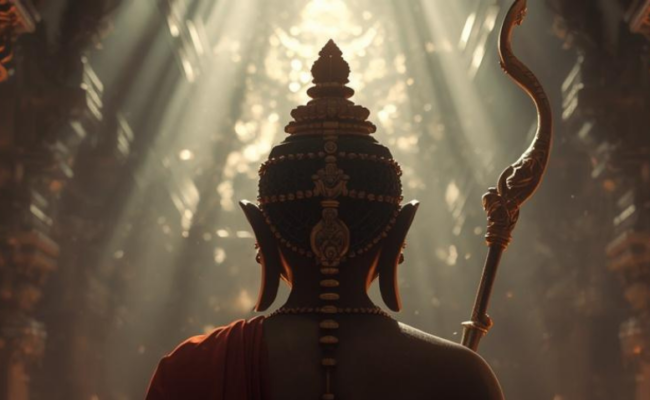
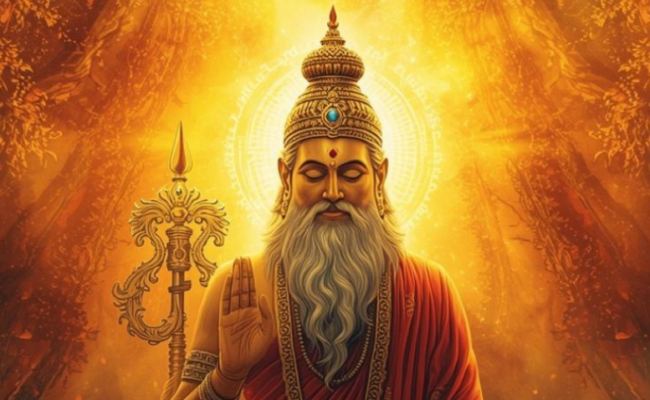
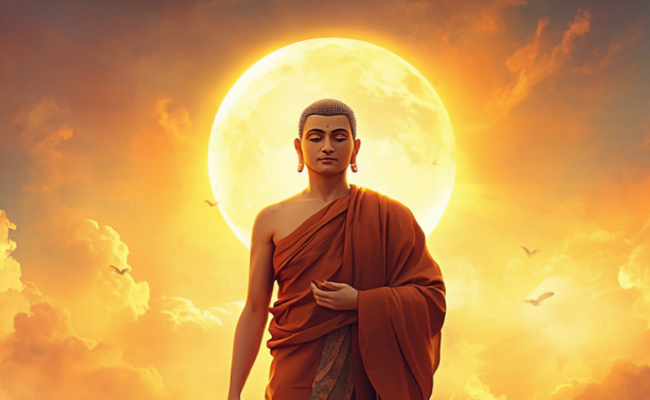
Sri Ramana Maharshi does not belong to history alone. He belongs to that silent space within every human being where the question “Who am I?” first arises and finally dissolves. To speak of Ramana Maharshi is not to describe a person; it is to gesture toward a presence — luminous, unmoving, and eternally awake.
He did not come to teach a philosophy.
He did not come to establish a religion.
He did not come to gather followers.
He came as Silence itself — seated at the feet of Arunachala — allowing Truth to radiate without effort.
🌍 Birth & Sacred Geography — Where the Sage Appeared
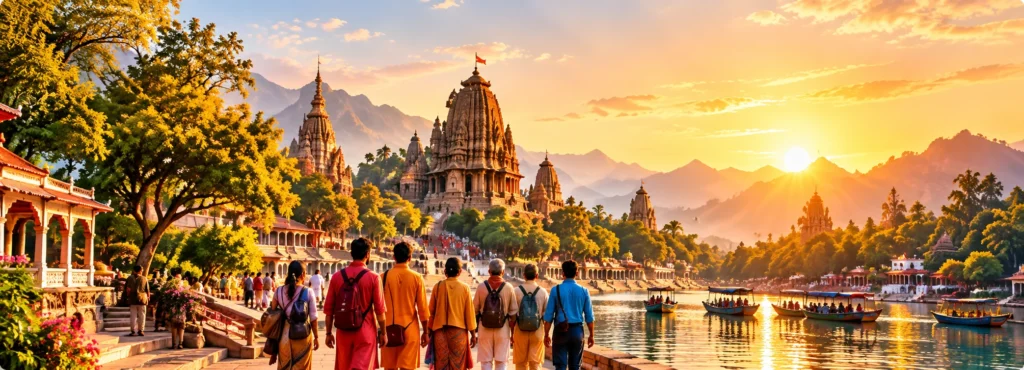
Sri Ramana Maharshi was born as Venkataraman on 30 December 1879 in the small village of Tiruchuzhi, located in present-day Tamil Nadu, India.
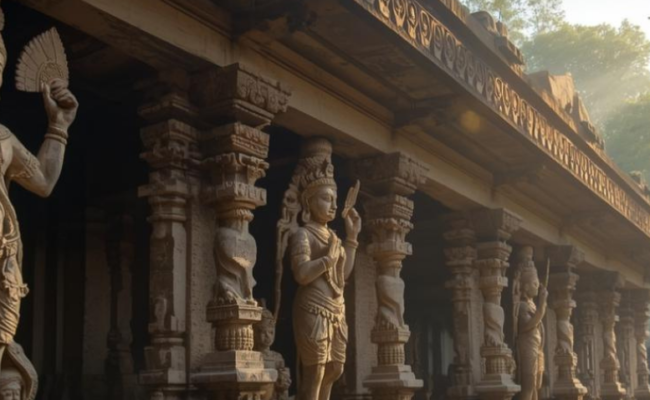
Tiruchuzhi is no ordinary village. It is home to the ancient Bhuloka Nathar Temple, a sacred Śiva kṣetra with deep spiritual roots. The land carries the quiet intensity of Tamil Śaiva devotion — a culture steeped in hymns, temple rhythms, and inward reverence.
Though nothing extraordinary marked the outer circumstances of his birth, the soil into which he was born had already been sanctified by centuries of devotion. It was as if the land itself was preparing to release one of its most silent flames.
Yet, the destiny of Ramana Maharshi was not to remain where he was born.
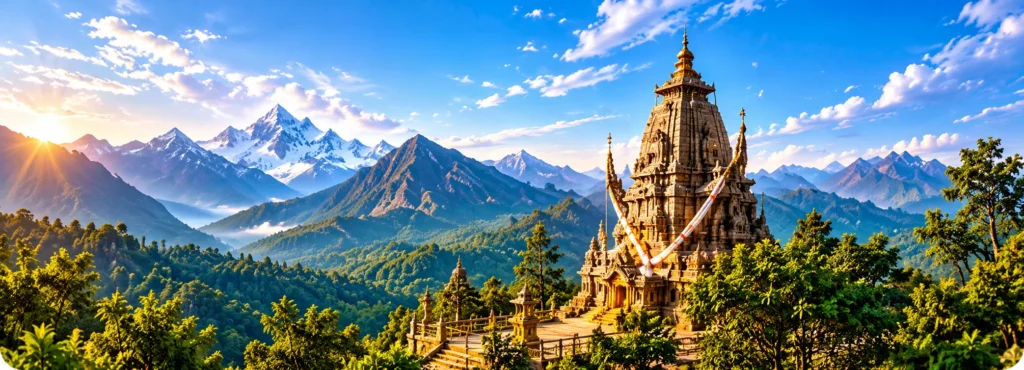
The mountain Arunachala — the fire-linga of Śiva — was already calling.
🌱 Early Life — The Ordinary Boy with an Unseen Depth
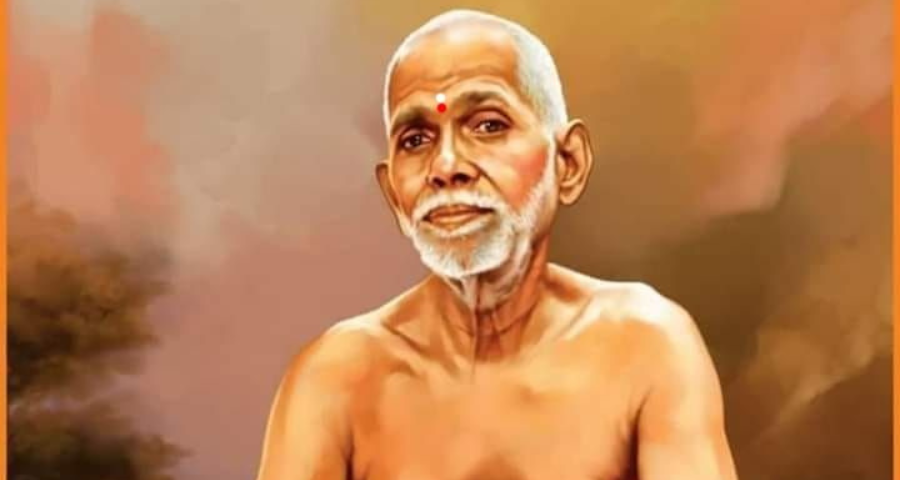
Venkataraman’s early life appeared simple, even unremarkable. He was a healthy, strong, and playful boy, fond of sports and physical activity. Those who knew him did not see a saint in the making.
And yet, something unusual lived quietly within him.
He possessed:
- An intense inwardness
- A natural fearlessness
- A capacity for deep absorption
- A mysterious seriousness beneath his playful exterior
He was not drawn to rituals or scriptures in childhood. In fact, he knew very little of religion in any formal sense. There was no early sign of scholarship or asceticism.
But life was preparing him — not through teaching, but through shock.
🔥 The Great Awakening — Death of the Ego, Birth of the Self
At the age of 16, something extraordinary happened.
One afternoon, while alone in a room at his uncle’s house in Madurai, Venkataraman was suddenly seized by an overwhelming fear of death. There was no illness. No external danger. Just a sudden, undeniable certainty: “I am going to die.”
Instead of panic, something deeper arose.
He lay down, stretched his body as if lifeless, and began an inward inquiry:
“This body is going to die.
But I — am I dying with it?
Who is this ‘I’?”
In that moment, the body was experienced as inert. Breath stopped voluntarily. Speech ceased inwardly. Attention turned entirely toward the sense of I.
And then — without effort, without instruction, without practice — the ego dissolved.
What remained was pure awareness, untouched by birth or death.
Later, Ramana would say that this was not a trance, not a vision, not an experience — but a permanent shift of identity.
The “I am the body” vanished.
The “I am” remained.
From that moment onward, the Self shone continuously.
⛰️ The Call of Arunachala — Journey Without Return
Six weeks after his awakening, the name Arunachala arose spontaneously within him. Though he had never visited the place, it exerted an irresistible pull.
Without informing his family, without money, without possessions, the 16-year-old boy boarded a train and traveled to Tiruvannamalai.
When he finally stood before Arunachala Hill, he did not see a mountain.
He saw his Guru.
Arunachala was not a place to him — it was the Self in form.
He entered the great temple, stood before the inner shrine, and silently offered himself:
“Father, I have come according to your will.”
And he never truly left.
🌿 Life of Silence — The Sage Without Identity
In the early years at Arunachala, Ramana Maharshi lived as a silent ascetic, absorbed in the Self. He inhabited temple halls, underground vaults, caves, and forest shelters.
He did not speak.
He did not seek food.
He did not defend his body.
Ants, insects, neglect, and harsh conditions left him indifferent. The body was no longer experienced as “me.”
Eventually, devotees found him, recognized the depth of his realization, and began to care for his physical needs.
But Ramana never assumed the role of a teacher.
He simply was.
🌸 Presence as Teaching — The Power of Darshan
Those who came to Ramana Maharshi often said:
“We did not receive teachings. We received peace.”
Sitting in his presence, minds became still. Thoughts slowed. Questions dissolved before being asked.
His silence was not emptiness.
It was radiant fullness.
Animals gathered around him — monkeys, cows, birds, dogs. He treated all beings with the same gentle attention, seeing no hierarchy of life.
He cut vegetables in the ashram kitchen.
He stitched leaf plates.
He lived as one among all.
And yet, his presence transformed lives.
📿 Core Teaching — Self-Inquiry (Ātma-Vichāra)
When asked for guidance, Ramana gave a teaching of breathtaking simplicity:
“Who am I?”
Not as a question to be answered intellectually — but as a tool to dissolve the false self.
🔹 The Essence of His Teaching:
- The root of suffering is the false identification with the body and mind
- The ego is only a thought — the “I-thought”
- Trace this “I” back to its source
- When the ego dissolves, the Self shines naturally
He emphasized:
- Silence over speech
- Direct experience over belief
- Inquiry over ritual
- Grace over effort
He never encouraged renunciation of the world — only renunciation of ignorance.
✨ The Godly Aura — Divinity Without Claim
Ramana Maharshi never claimed to be divine.
And yet, many experienced him as something beyond human.
His eyes reflected boundless compassion.
His stillness felt ancient and vast.
His laughter dissolved fear.
People from across the world — scholars, seekers, skeptics — found themselves transformed simply by being near him.
Not through miracles.
Not through sermons.
But through Being.
🌍 Impact on Humanity — Beyond Time and Culture
Sri Ramana Maharshi influenced:
- Advaita scholars
- Western philosophers
- Psychologists
- Mystics across traditions
Thinkers like Carl Jung, Aldous Huxley, Paul Brunton, and many others recognized him as one of the greatest spiritual figures of modern times.
In an age of anxiety, identity crisis, and constant stimulation, his message remains profoundly relevant:
“You do not need to become anything. You only need to stop mistaking yourself for what you are not.”
🪔 Stories of Transformation — Mirrors of the Self
A man once asked, “How long will it take to realize the Self?”
Ramana replied gently:
“As long as it takes to drop the idea that you have not realized it.”
Another devotee asked if effort was necessary.
He smiled:
“Effort is required until you realize that no effort is required.”
Such were his teachings — subtle, precise, liberating.
🌄 Mahāsamādhi — Death as a Passing Cloud
In April 1950, Ramana Maharshi’s body was afflicted with cancer. He refused special treatment, remaining serene and detached.
As devotees wept, he said:
“Why are you crying?
Where could I go?”
On 14 April 1950, as devotees chanted, a brilliant meteor crossed the sky over Arunachala. At that moment, Ramana Maharshi left the body.
But no one felt his absence.
His presence only deepened.
🌱 Living Legacy — Arunachala Still Speaks
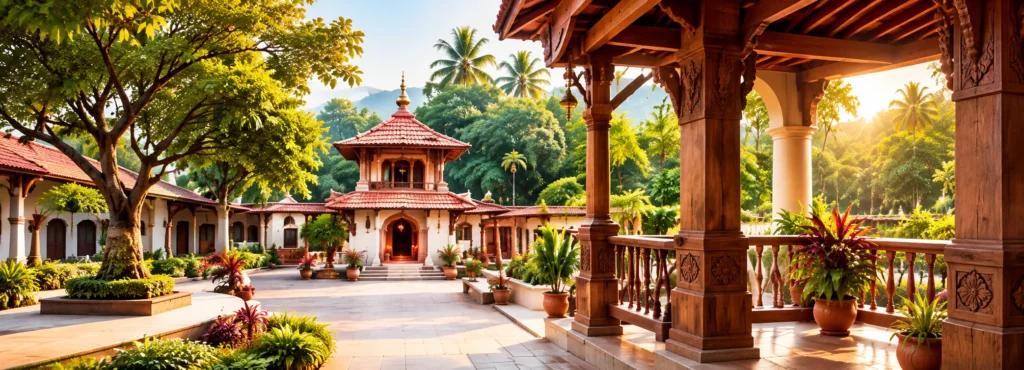
Today, Sri Ramanasramam stands at the foot of Arunachala, welcoming seekers from across the world.
But the true ashram is not a place.
It is the Heart.
Ramana Maharshi left no institution, no hierarchy, no dogma.
He left Silence.
🕉️ Final Invitation — Turn Within
Sri Ramana Maharshi does not ask you to believe in him.
He asks you to question yourself.
Not who you think you are —
but who is thinking.
In that turning inward, words fade.
Thoughts dissolve.
And what remains…
…has always been here.
Arunachala.
The Self.
You. 🙏