
🌍 Scriptural Identity & Why the Journey Begins Here
The Īśā (Īśāvāsya) Upaniṣad 🌍 holds a position of rare significance within Sanātana Dharma. Rooted in the Śukla Yajurveda 📜, it appears not at the conclusion of the Vedic corpus, but at its very beginning. This placement is deliberate and deeply symbolic. It announces that spiritual vision must precede action, not follow it. Before rituals are performed, before duties are assumed, before the world is engaged, the seeker is reminded that reality itself is already permeated by the Divine 🕯️.
For SanathanaYatra, this insight defines the very reason for existence. Travel, like life, should not begin in distraction or impulse. 🧭 It must begin with awareness. A journey undertaken without inner orientation becomes consumption; a journey grounded in vision becomes transformation. Just as the Īśā Upaniṣad bridges karma-kāṇḍa ⚙️ and jñāna-kāṇḍa🌌, SanathanaYatra bridges movement and meaning.
Our Yatras are therefore not escapes from life but re-entries into life with clarity. Temples, rivers, forests, and ancient cities are approached as living scriptures 🛕. The traveler is invited to step into a continuum of wisdom that predates tourism and outlasts modernity. Scripture does not remain confined to texts; it unfolds through footsteps, silence, and presence 🔑.
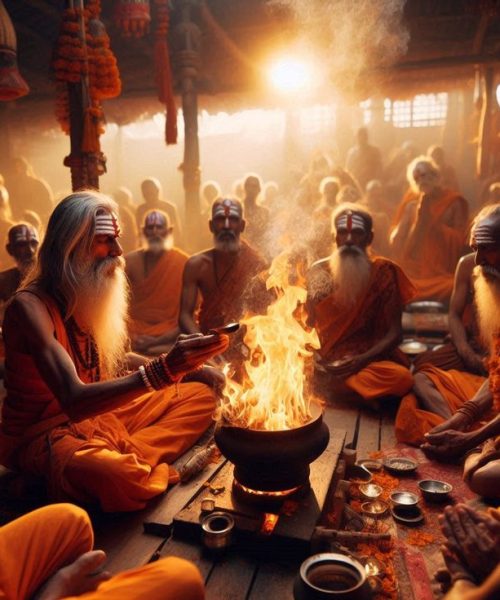
🪶 Īśāvāsyam — Seeing the Divine in Every Destination
The opening mantra Īśāvāsyam idam sarvam declares that everything in this moving universe is enveloped by the Divine 🌌. This vision fundamentally alters how one relates to place. There is no longer a division between sacred and secular, destination and transit, temple and town. Every space becomes meaningful when seen through awareness 🌿.
SanathanaYatra embodies this vision by designing journeys that cultivate seeing before consuming. 🛕 Travelers are guided to approach destinations not as checklists but as presences. A river is not merely a landmark; it is a flowing continuity of prayer. A temple is not only architecture; it is a breathing cosmology.
This principle shapes how itineraries are structured. Speed is reduced. Pauses are intentional. Silence is respected 🧘. Photography follows darśana, not the reverse. When travelers truly see, their relationship with place changes.
This approach encourages:
- 🌱 Respect for land and ecology
- 🪔 Reverence for living traditions
- 🧭 Presence over possession
Travel becomes an act of recognition rather than acquisition. When the world is experienced as enveloped by Īśa, movement itself becomes sacred.
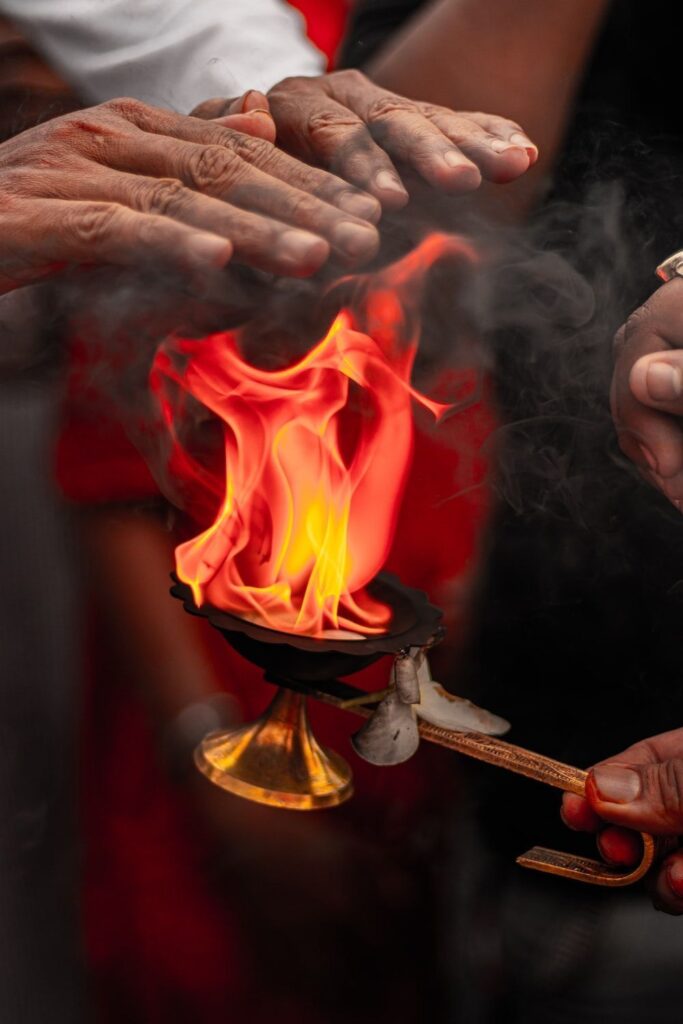
⚖️Renunciation Without Rejection — Conscious Enjoyment in Travel
The Īśā Upaniṣad offers a radical teaching through the phrase tena tyaktena bhuñjīthāḥ 🕊️—“enjoy through renunciation.” This is not a call to abandon comfort, beauty, or pleasure. It is an invitation to relinquish ownership, excess, and inner dependency. SanathanaYatra reflects this principle by redefining comfort. 🌿 We do not equate luxury with indulgence, nor do we glorify hardship. Instead, we curate environments that support reflection—clean spaces, nourishing food, humane pacing, and uncluttered schedules 🧘.
Renunciation in travel means freedom from distraction. When excess is removed, attention returns. The traveler begins to notice sound, rhythm, ritual, and silence. Enjoyment becomes deeper because it is no longer driven by craving 🔥.
This philosophy translates into:
- 🛏️ Comfort that restores rather than distracts
- 🌾 Simplicity that sharpens perception
- ⚖️ Enjoyment without inner burden
Such travel does not tire the seeker; it clarifies them. Renunciation here is not loss—it is spaciousness.
⚙️ Karma Yatra — Action That Purifies, Not Binds
The Īśā Upaniṣad affirms that action is inevitable and sacred when aligned with awareness 🔄. It teaches that one may live fully in the world, performing actions for a lifetime, without bondage. SanathanaYatra takes this teaching seriously by framing travel itself as karma yoga.
Every aspect of a journey—guiding, transporting, hosting, walking—is treated as purposeful action 🕯️. Guides are trained as cultural custodians, not performers. Drivers are respected as partners in the journey, not invisible labor. Local communities are engaged with dignity and fairness 🤝.
Travelers are encouraged to participate rather than spectate. They walk sacred paths, observe rituals patiently, and listen to stories rooted in place 🚶. Action becomes offering when done with presence.
When travel is approached this way, it purifies rather than exhausts. The seeker returns not depleted but aligned. Karma becomes a means of refinement, not accumulation.
🌑 Avoiding Asuric Travel — Rejecting Ignorance and Speed
The Īśā Upaniṣad warns against lives lived in ignorance, describing them as entering realms of darkness 🌑. In the context of travel, ignorance manifests as haste, exploitation, and superficial engagement.
SanathanaYatra consciously rejects asuric travel patterns—checklist pilgrimages, rushed darśanas, overcrowded itineraries, and the reduction of sacred spaces into consumable content ⚖️. Speed may promise efficiency, but it erodes meaning.
We believe that depth requires restraint. Fewer places, more presence. Less movement, more absorption 🪔. Darkness lifts when attention slows.
By refusing exploitative models, we protect both the traveler and the destination. Sacred places retain dignity. Seekers retain sensitivity 🌿.
Light enters travel when ignorance exits.
🌞 Stillness Within Movement — Designing Inner Pause
The Upaniṣad describes the Self as unmoving yet swifter than the mind 🌞. SanathanaYatra reflects this paradox by designing journeys that balance movement with stillness.
Modern travel often overwhelms the senses. Constant transit without pause leaves no space for assimilation. We intentionally design still points—sunrise silence, riverbank sitting, temple courtyards, monastery stays 🌊.
These pauses are not empty time. They are where insight arises. Movement without stillness exhausts; stillness within movement transforms 🧘.
By anchoring journeys in silence, travelers reconnect with their own inner axis. The journey then supports clarity rather than distraction.
🌈 Unity of Paths — One Dharma, Many Expressions
The Īśā Upaniṣad teaches that one who sees all beings in the Self transcends fear 🕊️. SanathanaYatra embodies this vision by honoring multiple sacred traditions—Hindu, Buddhist, Jain, Sikh, and indigenous spiritual paths—as expressions of one civilizational consciousness 🌍.
Travelers are guided to understand difference without division. Each tradition is approached on its own terms, with context, respect, and humility 🪔. Unity is not imposed; it is discovered.
This approach dissolves narrow identity and expands understanding. Diversity becomes harmony when seen through awareness.
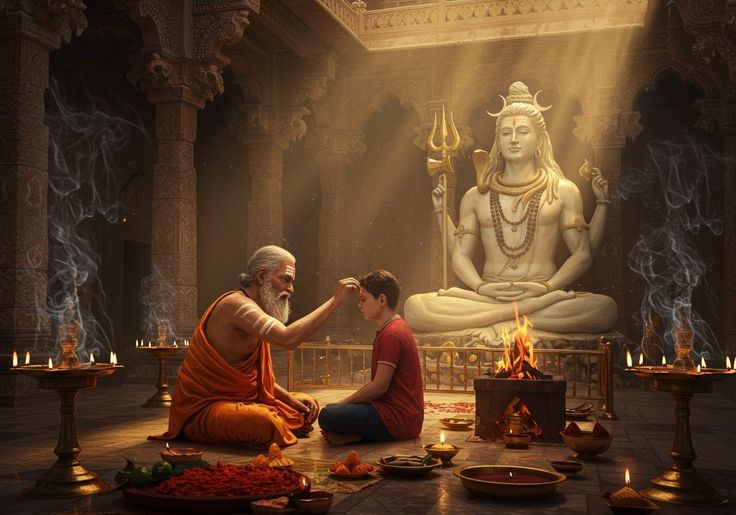
⚖️ Knowledge and Ignorance — Balanced Pilgrimage
The Īśā Upaniṣad issues a subtle yet powerful warning: those who cling only to ignorance fall into darkness, and those who cling only to abstract knowledge also fall into limitation ⚖️. Liberation arises not from choosing one extreme, but from understanding both together. Knowledge without lived experience becomes dry intellectualism, while experience without understanding becomes blind habit.
SanathanaYatra embodies this balance by designing journeys where learning and living walk side by side 🧭. Scripture is not delivered in lecture halls detached from place. It is explained where it was lived—on temple steps, beside rivers, within ancient streets, and under sacred trees. Symbols are not reduced to decorative art; they are decoded within their spatial, ritual, and cosmological context.
At the same time, SanathanaYatra avoids turning pilgrimage into an academic tour. Silence, observation, and personal reflection are given equal importance. 🪔 Travelers are not overloaded with information; they are guided toward insight. Understanding deepens experience, and experience grounds understanding.
This balance keeps pilgrimage alive. It prevents sacred travel from becoming either mechanical ritual or spiritual tourism. Knowledge illuminates the path, but experience allows the path to be walked. When neither dominates, the seeker matures naturally. Pilgrimage then becomes education of the whole being, not merely the mind.
🌌 Manifest and Unmanifest — Beyond Surface Darśana
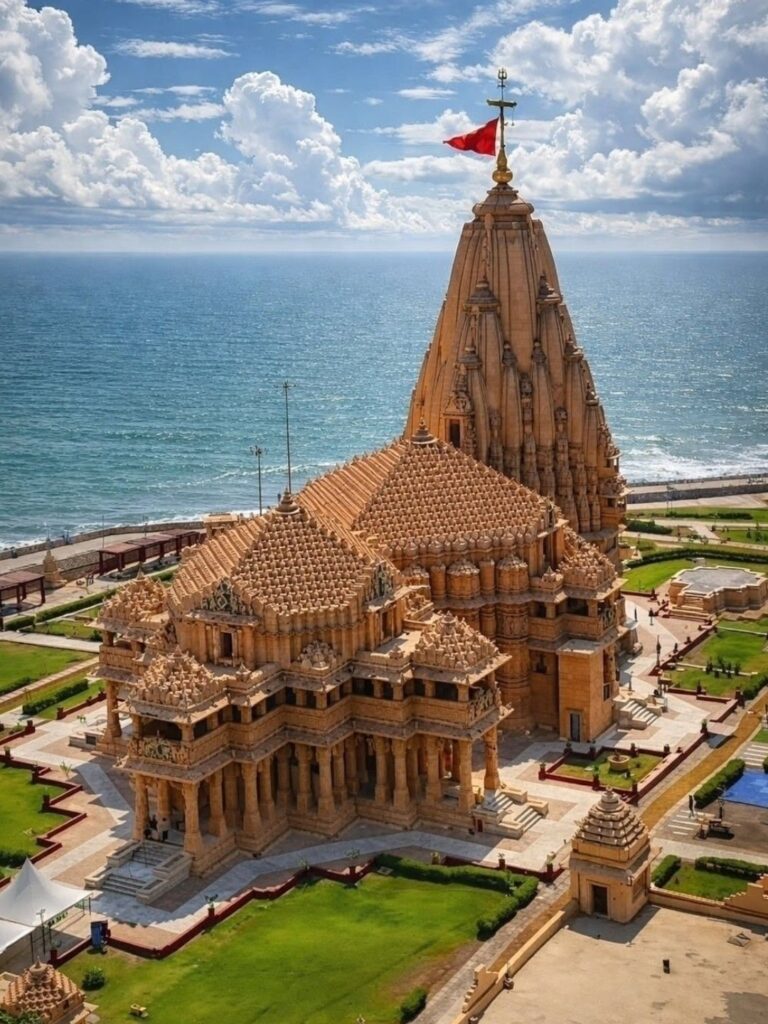
The Īśā Upaniṣad teaches that reality is both manifest and unmanifest 🌌. To see only form is incomplete, and to deny form is equally limiting. Truth reveals itself when both are held together. SanathanaYatra brings this insight into sacred travel, reminding seekers that the visible world is always supported by an unseen depth.
Temples, rivers, mountains, and kṣetras are not merely physical locations but thresholds between worlds 🛕. Temple architecture becomes cosmology in stone, while a river’s flow mirrors the movement of time itself. Each sacred space invites the traveler to pause, observe, and sense the presence that lies beyond appearance.
SanathanaYatra guides pilgrims to recognize these layers of meaning 🪔. Rituals become symbolic languages, and darśana transforms from seeing into recognition. As the outer journey unfolds, an inner shift begins—what was once visited becomes understood, and what was understood begins to be felt, turning pilgrimage into realization.
🪔 Removing the Golden Veil — Beyond Attractive Spirituality
The Īśā Upaniṣad offers a profound prayer: to remove the golden lid that covers truth 🪔. This veil is not darkness, but something more deceptive—attractive illusion. Beauty, ritual, and symbolism can mesmerize the senses while still concealing deeper understanding.
SanathanaYatra takes this warning seriously. While we honor beauty, architecture, and tradition, we do not confuse aesthetic richness with spiritual depth 🌿. Spectacle is never allowed to replace insight. Every visually powerful experience is supported by context, meaning, and silence.
Modern spiritual travel often stops at admiration—photographs, visuals, and emotional highs. SanathanaYatra goes further by gently guiding travelers beyond surface impressions. Why is this form shaped this way? Why is this ritual performed at this moment? Why does this place demand silence rather than celebration? 🧭
By lifting the golden veil, travel becomes clarifying rather than intoxicating. The seeker is not dazzled; they are awakened. Beauty remains, but it points inward rather than outward. Truth is not obscured by ornament—it is revealed through understanding.
🌬️ Journey as Preparation — Remembering What Matters
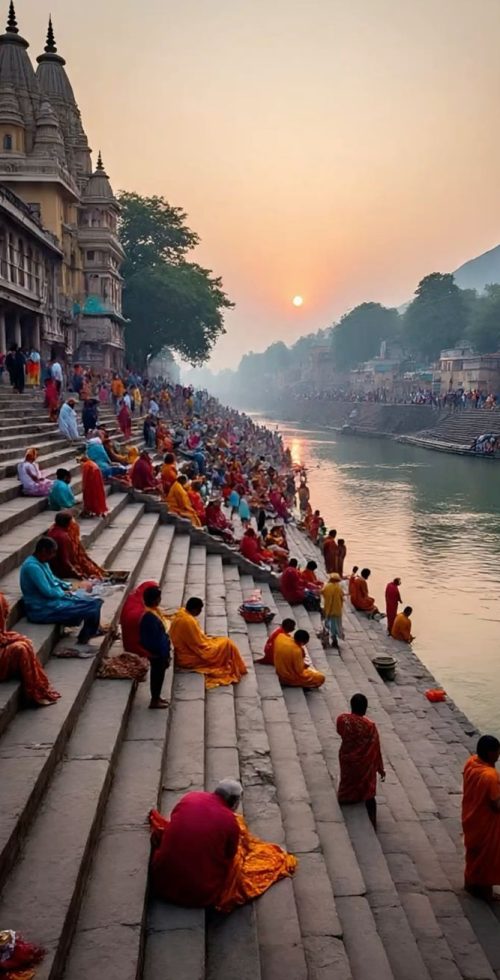
The Īśā Upaniṣad frames human life as a preparation—not for escape, but for remembrance 🌬️. In this light, travel is not a break from life but a mirror that reveals what truly matters. SanathanaYatra designs journeys with this orientation.
Movement away from daily routines creates space for reflection. Familiar distractions fall away. In temples, rivers, forests, and ancient towns, priorities quietly reorder themselves 🧘. What once felt urgent loosens its grip. What was ignored begins to speak.
SanathanaYatra does not promise transformation through intensity. Instead, it allows clarity to arise naturally through conscious pacing, silence, and context. The journey becomes a rehearsal for living with awareness—walking, observing, letting go.
Travel, in this sense, prepares the seeker not just for spiritual insight, but for life itself. Relationships soften. Values simplify. Attention returns to the essential 🌿. The seeker returns not with souvenirs, but with orientation.
A true Yatra leaves one lighter, clearer, and aligned—not because something new was acquired, but because something unnecessary was released.
🕉️ SanathanaYatra — The Īśā Upaniṣad Lived
SanathanaYatra exists to make the Īśā Upaniṣad walkable. 🕉️ It is not tourism, because it does not consume places. It is not retreat, because it does not withdraw from life. It is not performance, because it does not stage spirituality.
It is Vedānta in motion 🚶🛕.
Every journey is shaped by the Upaniṣadic vision that the world is enveloped by the Divine, that action can liberate, that renunciation can coexist with enjoyment, and that truth must be lived—not merely studied. Scripture becomes road. Philosophy becomes footstep. Awareness becomes destination.
SanathanaYatra invites travelers to move through sacred landscapes as participants in an ancient continuity of wisdom. The journey does not end at the destination; it completes itself in perception. Seeing changes. Relating changes. Living changes 🌿.
This is the promise of SanathanaYatra:
Not to take you away from life, but to return you to it—aligned, aware, and anchored in truth.